


 English
 русский
 Español
 简体中文
简体中文
From solutions to productions, we’re specialized in making the products you need.
Home / News / Industry News / Are You Using the Right Vacuum Air Filter — and Is It Clean Enough to Actually Protect Your Home?
Content
Vacuum air filters are among the most overlooked yet most consequential components in any vacuum cleaner. While most people focus on suction power, brush roll performance, or canister capacity, the air filter is what determines whether your vacuum is genuinely cleaning your home's air or simply redistributing fine particles back into the room. A clogged, incorrect, or low-quality vacuum filter can reduce suction by up to 50%, shorten motor life significantly, and — critically — allow allergens, dust mite debris, mold spores, and fine particulate matter to bypass the filtration system entirely and re-enter your breathing environment. Understanding how vacuum air filters work, which type your machine uses, and how to maintain them properly is fundamental to getting real cleaning results.
Every vacuum cleaner moves air through a defined path: from the floor inlet, through the dust collection chamber, past the motor, and out through an exhaust vent. Air filters are placed at one or more points along this path to trap particles before they either reach the motor or exit back into the room. Without effective filtration, the motor ingests abrasive dust particles that accelerate wear on its components, and fine allergens pass straight through the machine and become airborne again — often at a higher concentration than before vacuuming began, since the machine's airflow disturbs settled dust from surfaces.
Most modern vacuums use a multi-stage filtration system with at least two filters: a pre-motor filter that protects the motor from larger debris, and a post-motor or exhaust filter that captures any fine particles that escaped the pre-motor stage before the air is expelled. In HEPA-equipped machines, the exhaust filter is where the finest particulate capture occurs — trapping particles as small as 0.3 microns with 99.97% efficiency, which includes bacteria, tobacco smoke particles, and fine allergen fragments that standard filters allow to pass through freely.
Not all vacuum filters are built the same way or perform to the same standard. The type of filter your vacuum uses has a direct bearing on both its cleaning effectiveness and the air quality it produces. Here is a breakdown of the most common vacuum filter types:
High Efficiency Particulate Air (HEPA) filters are the gold standard for vacuum filtration. To carry the HEPA designation, a filter must capture at least 99.97% of particles at 0.3 microns — the most penetrating particle size, referred to as the Most Penetrating Particle Size (MPPS). True HEPA filters use a dense mat of randomly arranged glass fibers that capture particles through a combination of interception, impaction, and diffusion mechanisms. They are essential for households with allergy or asthma sufferers, pet owners dealing with pet dander, and anyone seeking to maintain genuinely clean indoor air quality rather than simply visible surface cleanliness.
An important distinction exists between "True HEPA" and marketing terms like "HEPA-style" or "HEPA-type." The latter designations are unregulated and may capture only 85–95% of particles — a meaningful gap when the particles escaping capture include allergens and fine respiratory irritants. Always verify that a HEPA filter is tested and certified to the EN 1822 or equivalent standard before purchasing.
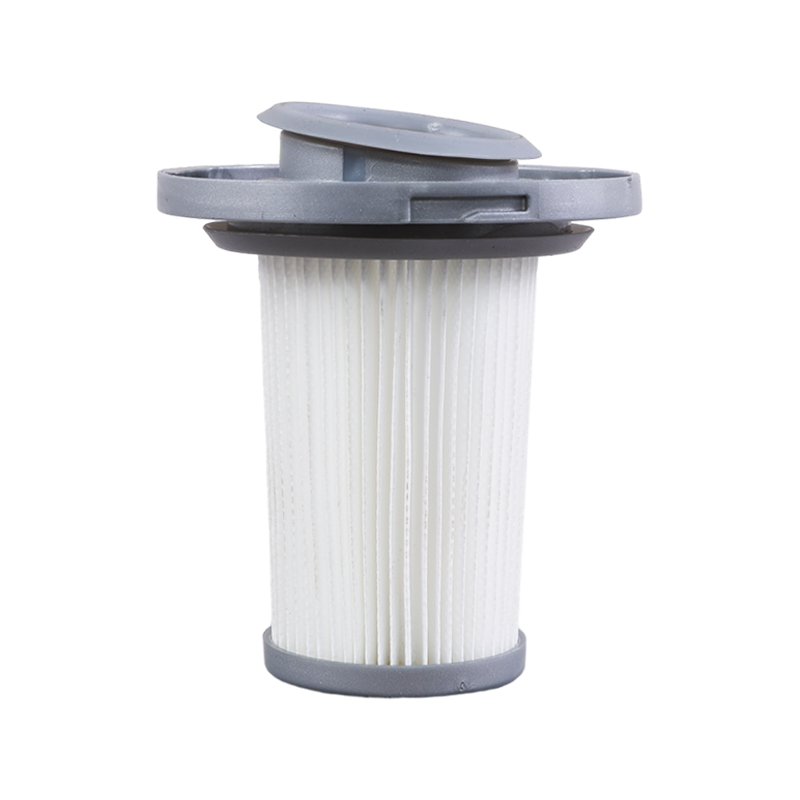
Foam filters are typically used as pre-motor filters in canister and upright vacuums, positioned to capture larger debris and protect the motor before finer filtration occurs downstream. They are made from open-cell polyurethane foam in various densities — coarser foam captures larger particles while finer foam handles smaller debris. Most foam filters are washable and reusable, making them cost-effective for long-term use. However, foam filters alone offer insufficient filtration for fine allergens and should always be paired with a secondary HEPA or high-efficiency exhaust filter in any system claiming to capture allergens effectively.
Pleated cartridge filters are found in many canister, stick, and robotic vacuums. The pleated design dramatically increases the filter's surface area compared to a flat panel of the same dimensions, which allows more air to pass through before resistance builds up due to particle loading. Pleated filters are made from various media including paper, synthetic nonwoven fabric, and electrostatically charged materials. The electrostatic variants use static charge to attract and hold particles, enhancing capture efficiency beyond what mechanical filtration alone can achieve at the same pressure drop. Many pleated cartridge filters are washable, though washing reduces electrostatic charge and therefore filtration efficiency until the filter dries completely — typically 24 hours.
Disk filters are circular flat filters commonly used in handheld and small cordless vacuums. Panel filters are flat rectangular media used in some upright models. Both types offer less surface area than pleated designs and therefore load up with particles more quickly, requiring more frequent cleaning or replacement. They are generally found in entry-level or compact vacuum designs where space constraints limit the use of larger filter formats.
| Filter Type | Filtration Efficiency | Washable | Best For |
| True HEPA | 99.97% at 0.3 microns | No (replace only) | Allergy/asthma households, fine particle capture |
| Foam | Low–medium (coarse particles) | Yes | Pre-motor protection, paired with secondary filter |
| Pleated Cartridge | Medium–high (varies by media) | Many are washable | General use, canister and stick vacuums |
| Electrostatic | High (charge-enhanced capture) | Yes (reduces charge when wet) | Fine dust and allergen capture, moderate budget |
| Disk/Panel | Low–medium | Some models | Compact and handheld vacuums, light-duty use |
Vacuum filters degrade gradually, which means many users do not notice the decline in performance until it has become severe. Watching for these specific indicators will help you intervene at the right time rather than running a compromised machine for months.
Proper maintenance of washable vacuum filters extends their effective service life and preserves filtration performance between replacement cycles. However, incorrect cleaning methods damage filter media and can actually worsen filtration efficiency even when the filter appears clean.
For most washable foam and pleated cartridge filters, the recommended first step is dry tapping — gently tapping the filter against the inside of a trash can to dislodge loose surface dust before any water is applied. Do this outdoors or over a waste bin to avoid redistributing the dust into your cleaning environment. Following dry tapping, rinse the filter under cold running water, directing the flow from the clean side of the filter outward through the dirty side. Never use hot water, dish soap, or detergents on vacuum filters unless the manufacturer explicitly states these are safe — soaps leave residue that traps dirt more aggressively and can degrade filter media.
Reinstalling a damp filter is one of the most damaging things you can do to a vacuum cleaner. Moisture inside the filter housing creates conditions for mold and bacterial growth, causes paper and fiber media to weaken and tear, and in extreme cases allows moisture to reach the motor windings. All washable filters must be air-dried completely — minimum 24 hours at room temperature, longer in humid climates — before reinstallation. Never use a hair dryer, oven, or microwave to speed up drying, as high heat warps and melts synthetic filter media.
Even washable filters have a finite service life. Over time, repeated washing gradually degrades filter media, breaks down electrostatic charge in charged filters, and causes physical wear that allows particles to pass through areas that no longer provide effective filtration. Following a consistent replacement schedule is as important as regular cleaning.
The aftermarket vacuum filter market includes a wide range of OEM-compatible and generic replacement filters at varying price points and quality levels. Making the right choice requires attention to several practical factors.
Vacuum air filters are not passive accessories — they are active, performance-critical components that determine whether your vacuum is a genuine cleaning tool or simply a dust-redistribution machine. Choosing the right filter type for your needs, maintaining it correctly, and replacing it on schedule transforms your vacuum cleaner from an appliance that makes noise into one that genuinely improves your home's air quality and surface cleanliness every time you use it.
Are Medium Efficiency Air Filters the Right Choice for Your HVAC System?
How Do Activated Carbon Air Filters Actually Remove Odors and Harmful Gases from Your Indoor Air?














Copyright 2023 Nantong Henka Environment Solutions Co.,Ltd. All Rights Reserved
 HEPA Air Filters Manufacturers Customized HEPA Air Filters Factory
 Tel: +86-13813766750
 E-mail:
  Add: 5169, Bin'gang Ave, Binjiang Subdistrict, Haimen City, Jiangsu, China