


 English
 русский
 Español
 简体中文
简体中文
From solutions to productions, we’re specialized in making the products you need.
Industry News
Jul 21,2026
How Do You Choose the Right HEPA Air Filter for Your Home?
Content
What Makes a Filter Qualify as True HEPA
A genuine HEPA air filter must meet a specific technical standard, capturing at least 99.97% of airborne particles measuring 0.3 microns in diameter. This particle size was chosen as the testing benchmark because it represents the most difficult size for filters to capture, sitting at what engineers call the most penetrating particle size. Particles larger or smaller than 0.3 microns are actually captured more easily through different physical mechanisms, meaning a filter that passes this specific benchmark performs even better against particles outside this narrow range.
Many products on the market use terms like "HEPA-type" or "HEPA-like" without meeting the actual certified standard, and these products can capture significantly fewer particles than a true HEPA filter. Checking for the specific HEPA designation, along with any relevant certification numbers from recognized testing standards, helps buyers distinguish genuine performance from marketing language designed to suggest similar quality without matching the actual filtration capability.
How HEPA Filters Physically Capture Particles
HEPA filters work through a dense mat of randomly arranged fibers, typically made from fiberglass or polypropylene, that trap particles through several distinct physical mechanisms rather than simply blocking them like a sieve. Larger particles are captured through direct interception, where they collide with fibers as they attempt to pass through the mat. Smaller particles are captured through diffusion, a process where microscopic particles move in an erratic, random pattern due to collisions with air molecules, increasing their likelihood of striking and sticking to a fiber even though the openings in the filter mat are technically large enough to let them pass through.
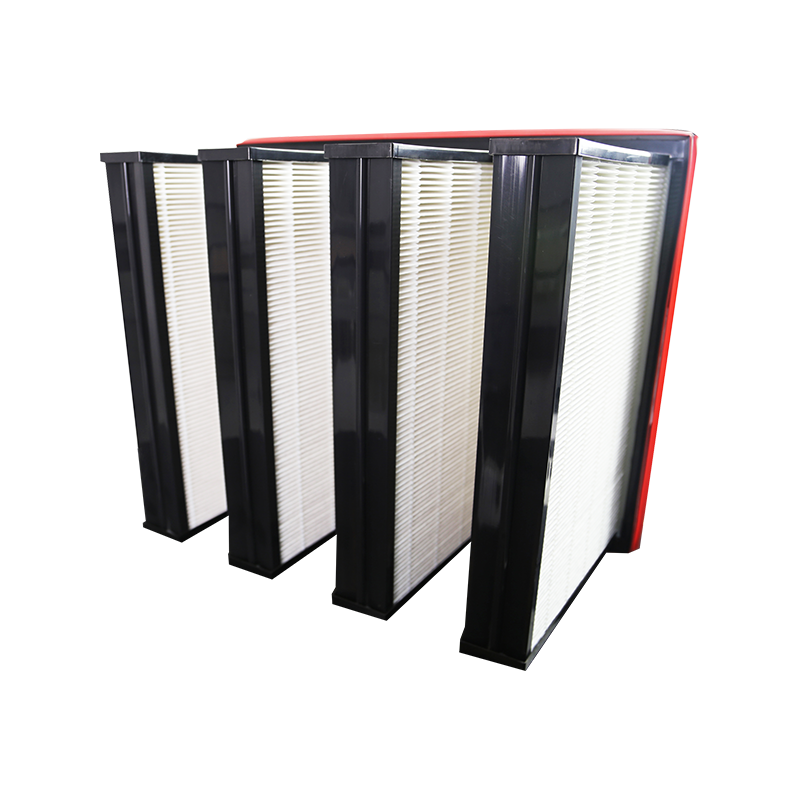
Mid-sized particles, which fall into the most penetrating particle size range, are captured through a combination of interception and diffusion working together, which is precisely why this size range is used as the standard testing benchmark for HEPA certification. Understanding this layered capture mechanism explains why HEPA filters remain effective across such a wide range of particle sizes, from large dust and pollen down to microscopic smoke particles and some bacteria.
Particle Capture Mechanisms
- Interception: larger particles collide directly with fibers
- Diffusion: smaller particles move erratically and strike fibers
- Impaction: heavier particles are forced into fibers by airflow
- Combined capture: mid-sized particles trapped by multiple mechanisms
Matching Filter Capacity to Room Size and Needs
Selecting an appropriately sized HEPA air purifier requires looking at the Clean Air Delivery Rate, commonly listed as CADR, alongside the manufacturer's recommended room size coverage. A unit that is undersized for its intended space will run constantly at high speed to compensate, leading to increased noise and faster filter wear, while an oversized unit for a small room may cycle on and off more than necessary without providing meaningfully better air quality. Matching CADR ratings to actual room square footage, rather than relying solely on marketing claims about "whole home" coverage, gives a more accurate picture of real-world performance.
Specific needs also affect which features matter most. Households dealing with pet dander may prioritize units with strong pre-filters designed to capture larger particles before they reach the HEPA layer, extending the main filter's lifespan. Those concerned about odors or chemical fumes should look for units that pair HEPA filtration with an activated carbon layer, since HEPA filters alone do not effectively capture gases or odors, only particulate matter.
Choosing Based on Common Concerns
| Concern | Feature to Prioritize |
| Pet Dander | Strong pre-filter layer |
| Odors and Fumes | Added activated carbon layer |
| Allergies | High CADR rating for room size |
| Noise Sensitivity | Unit rated for larger room than needed |
Recognizing When a Filter Needs Replacement
HEPA filters gradually lose effectiveness as trapped particles accumulate and restrict airflow through the fiber mat, and continuing to use a filter well past its recommended lifespan reduces both air quality improvement and overall unit efficiency. Most manufacturers recommend replacement every six to twelve months for standard residential use, though households with pets, allergy sufferers, or significant dust exposure may need to replace filters more frequently. A noticeable decrease in airflow from the unit, combined with a return of previously reduced odors or visible dust settling on surfaces, often signals that a filter has reached the end of its effective life even before the calendar-based replacement schedule would suggest.
Some units include a filter replacement indicator that tracks usage hours, providing a more precise gauge than a generic time-based estimate, since actual filter lifespan depends heavily on how much particulate matter the unit has processed rather than simply how many months have passed since installation.
Getting the Most Out of a HEPA Air Filter System
Positioning a HEPA air purifier in a location with good air circulation, away from walls or furniture that could obstruct intake and exhaust vents, allows the unit to process room air more efficiently. Running the unit continuously at a lower speed setting often proves more effective for maintaining consistent air quality than running it only intermittently at high speed, since continuous operation prevents particle levels from building back up between cycles. Combining a quality HEPA filter with basic household habits, such as regular vacuuming with a HEPA-equipped vacuum and reducing sources of indoor particulate matter, creates a more comprehensive approach to improving indoor air quality than relying on filtration alone.
related products

 Tel: +86-13813766750
 E-mail:
  Add: 5169, Bin'gang Ave, Binjiang Subdistrict, Haimen City, Jiangsu, China
partners













Copyright 2023 Nantong Henka Environment Solutions Co.,Ltd. All Rights Reserved
 HEPA Air Filters Manufacturers Customized HEPA Air Filters Factory