


 English
 русский
 Español
 简体中文
简体中文
From solutions to productions, we’re specialized in making the products you need.
Industry News
Jul 08,2026
True HEPA vs HEPA-Type vs ULPA: How to Choose the Right Filter
Content
- 1 What Makes a Filter a True HEPA Filter
- 2 True HEPA Filters
- 3 HEPA-Type and Semi-HEPA Filters
- 4 ULPA Filters for Maximum Filtration Needs
- 5 HEPA Grades and Classification Standards
- 6 Matching Filter Type to Your Specific Needs
- 7 Sizing Considerations Beyond Filter Grade
- 8 Maintenance Practices That Preserve Filtration Performance
- 9 Making the Right Choice for Your Situation
What Makes a Filter a True HEPA Filter
The term HEPA refers to a specific performance standard rather than a single type of material or design. To legally carry the HEPA designation in the United States, a filter must capture at least 99.97 percent of airborne particles measuring 0.3 microns in diameter, a size range chosen because it represents the most penetrating particle size, meaning particles both larger and smaller than 0.3 microns are actually captured more easily. This standard was originally developed by the U.S. Department of Energy for filtering radioactive particles and has since become the benchmark used across air purifiers, vacuum cleaners, medical equipment, and industrial cleanroom systems.
Understanding this standard matters because manufacturers sometimes market products as "HEPA-type," "HEPA-like," or "99% HEPA," and these labels do not meet the true HEPA threshold. A genuine HEPA filter will typically display the exact standard it meets, such as the American ASHRAE or European EN 1822 classification, and buyers who need guaranteed filtration performance for allergies, asthma, or airborne pathogen concerns should specifically look for products stating compliance with true HEPA standards rather than similar-sounding marketing language.
True HEPA Filters
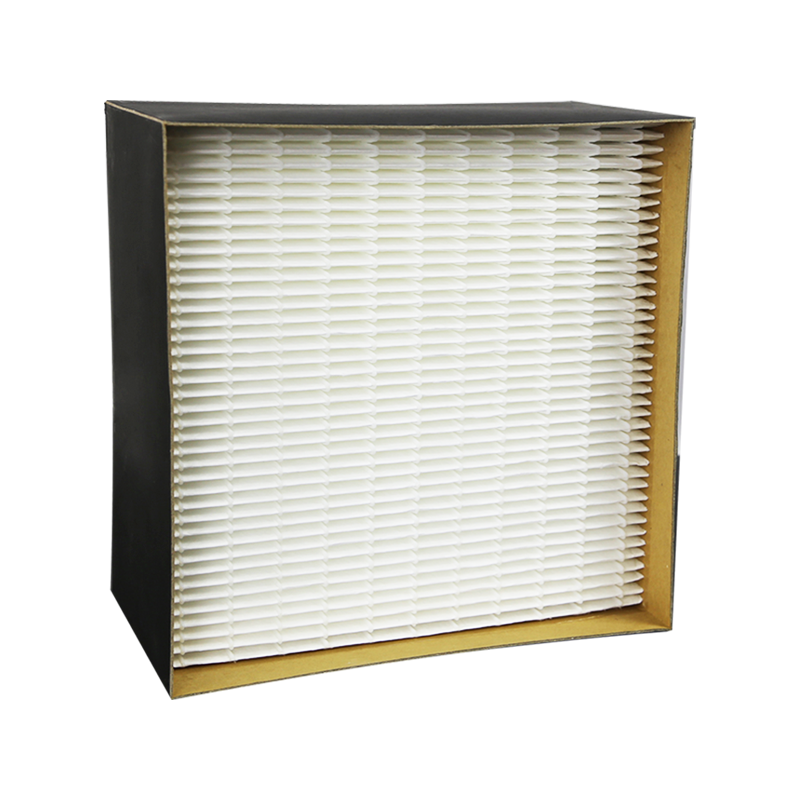
True HEPA filters meet the strict 99.97 percent capture rate at 0.3 microns and are constructed from a dense mat of randomly arranged fiberglass fibers, typically between 0.5 and 2.0 microns in diameter, folded into a pleated design that dramatically increases surface area within a compact housing. This pleating is essential, since it allows enough filter media to be packed into a small frame while still permitting adequate airflow through the unit without excessive resistance that would strain the fan or blower motor.
True HEPA filters are the standard choice for households managing severe allergies, asthma, or immune-compromised conditions, since they provide the most reliable and independently verifiable level of particle capture available in consumer air filtration. The tradeoff is a higher price point and, in some designs, slightly reduced airflow compared to lower-grade filters, since the dense fiber mat naturally creates more resistance to air passing through it.
HEPA-Type and Semi-HEPA Filters
HEPA-type filters, sometimes labeled semi-HEPA, use similar construction principles to true HEPA filters but are manufactured to a lower capture efficiency, typically between 90 and 99 percent depending on the specific product. These filters cost less to produce and purchase, making them a reasonable choice for general household dust and pet dander control where the strictest filtration standard is not medically necessary.
Buyers should be cautious about assuming a HEPA-type filter performs close enough to true HEPA for their needs, since even a difference of a few percentage points in capture rate translates into meaningfully more particles passing through over the course of continuous operation. For anyone managing a diagnosed respiratory condition or a household member with significant allergies, the gap between HEPA-type and true HEPA performance is usually significant enough to justify the additional cost of a certified true HEPA product.
ULPA Filters for Maximum Filtration Needs
Ultra-Low Penetration Air filters, known as ULPA filters, exceed even true HEPA performance, capturing at least 99.999 percent of particles at 0.12 microns, a smaller and more challenging particle size than the HEPA standard's 0.3 micron benchmark. This makes ULPA filters the standard choice in semiconductor manufacturing cleanrooms, pharmaceutical production environments, and certain specialized medical isolation settings where even minute particle contamination can compromise product quality or patient safety.
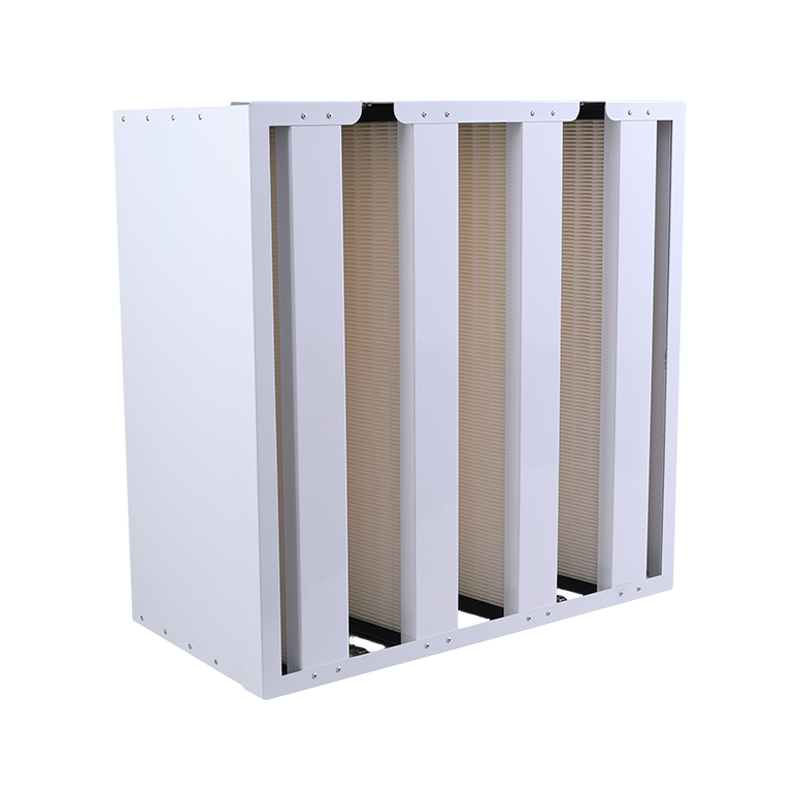
For typical residential or office use, ULPA filtration is generally unnecessary and often impractical, since the denser filter media required to achieve this level of capture creates significantly higher airflow resistance, which demands a more powerful fan system and increases both energy consumption and operating noise. Most consumer air purifier manufacturers reserve ULPA-equivalent filtration for specialized medical-grade devices rather than general household air purifiers.
HEPA Grades and Classification Standards
Beyond the basic true HEPA versus HEPA-type distinction, filters are further classified into specific grades under international standards, particularly the European EN 1822 classification system, which ranges from H10 through H14, with higher numbers indicating stricter capture requirements. This more granular classification helps buyers and facility managers compare filtration performance precisely, particularly in commercial or medical settings where a specific grade may be required by regulation or industry best practice.
EN 1822 HEPA Grade Comparison
| Grade | Minimum Efficiency | Common Application |
| H10 | 85% | General ventilation systems |
| H11 | 95% | Commercial air handling |
| H13 | 99.95% | Medical facilities, true HEPA products |
| H14 | 99.995% | Cleanrooms, pharmaceutical production |
Matching Filter Type to Your Specific Needs
Choosing the right HEPA filter grade depends primarily on why you need filtration in the first place, and buyers benefit from being honest about their actual requirements rather than defaulting to the most expensive option available. Someone managing general household dust with no specific medical concern can often achieve satisfactory results with a well-maintained HEPA-type filter at a lower price point, while someone managing severe allergies, asthma, or living with an immune-compromised family member should prioritize a certified true HEPA product, ideally rated H13 or higher.
Facility managers overseeing medical offices, laboratories, or any environment with specific regulatory filtration requirements should consult the applicable building codes or industry standards directly rather than assuming a standard true HEPA filter automatically satisfies a specialized compliance requirement, since some regulated environments mandate specific EN 1822 grades or additional testing documentation.
Key Questions to Ask Before Purchasing
- Does the product specifically state true HEPA compliance, or only "HEPA-type"?
- What EN 1822 or equivalent grade does the filter carry, if specified?
- Is the filter sized correctly for your room area and air changes per hour needs?
- Does your specific health or regulatory situation require a particular grade?
- What replacement schedule and cost does the manufacturer recommend?
Sizing Considerations Beyond Filter Grade
Filter grade alone does not guarantee effective air purification if the overall system is not sized correctly for the space it serves. A true HEPA filter installed in an air purifier too small for the room will struggle to complete enough air changes per hour to meaningfully reduce particle concentration, regardless of how effectively it captures particles that do pass through it. Manufacturers typically publish a Clean Air Delivery Rate, or CADR, figure alongside room size recommendations, and matching this figure to your actual room dimensions matters just as much as the filter's capture percentage.
As a general guideline, most air quality experts recommend a system capable of completing at least four to five air changes per hour for effective particle reduction in a room used for extended periods, such as a bedroom or living room. Buyers should check the manufacturer's recommended room size rating against their actual space rather than assuming a higher filter grade compensates for an undersized unit.
Maintenance Practices That Preserve Filtration Performance
Even the highest-grade HEPA filter loses effectiveness if not replaced according to the manufacturer's recommended schedule, since accumulated particles gradually clog the dense fiber mat and reduce airflow, which in turn reduces the volume of air actually passing through the filtration system per hour. Most true HEPA filters in residential air purifiers require replacement every six to twelve months depending on usage intensity and local air quality conditions, though households in high-pollution areas or with pets may need to replace filters more frequently.
Unlike some pre-filters that can be vacuumed or rinsed, true HEPA filter media should never be washed with water or cleaned with a vacuum, since this can damage the delicate fiber structure and create gaps that compromise filtration integrity. Always follow the specific manufacturer's cleaning and replacement guidance printed on the product or included in its documentation, since attempting to extend a filter's life through improper cleaning methods often does more harm than good to its actual performance.
Making the Right Choice for Your Situation
Selecting among true HEPA, HEPA-type, and ULPA filters ultimately comes down to matching the filtration grade to your genuine air quality needs, your budget, and any applicable regulatory requirements, rather than assuming the most expensive or highest-rated option is automatically the correct choice for every situation. General household use typically calls for a certified true HEPA filter paired with a properly sized unit for the room, while specialized medical, laboratory, or industrial environments may require the additional assurance of ULPA-grade filtration or a specific EN 1822 classification.
Whatever grade you choose, verify the manufacturer's certification claims through clearly stated standards rather than vague marketing language, confirm the unit is sized appropriately for your space using its CADR rating, and commit to the recommended replacement schedule to ensure the filter continues performing at its rated capture efficiency throughout its service life.
How Does a HEPA Filter Work and Why Should You Use One?
What Makes a Cylindrical Filter Cartridge the Right Choice for Your Filtration System?
related products

 Tel: +86-13813766750
 E-mail:
  Add: 5169, Bin'gang Ave, Binjiang Subdistrict, Haimen City, Jiangsu, China
partners













Copyright 2023 Nantong Henka Environment Solutions Co.,Ltd. All Rights Reserved
 HEPA Air Filters Manufacturers Customized HEPA Air Filters Factory