


 English
 русский
 Español
 简体中文
简体中文
From solutions to productions, we’re specialized in making the products you need.
Industry News
Jul 16,2026
How Does a HEPA Filter Work and Why Should You Use One?
Content
HEPA filters have become a standard feature in air purifiers, vacuum cleaners, and HVAC systems, prized for their ability to capture extremely small airborne particles that ordinary filters allow to pass through. Understanding exactly how these filters work, what makes them different from standard filtration media, and how to select and maintain the right one can help households and businesses make more informed decisions about indoor air quality. This guide breaks down the mechanics behind HEPA filtration and offers practical guidance for choosing and caring for these filters.
What Makes a Filter Officially HEPA-Rated
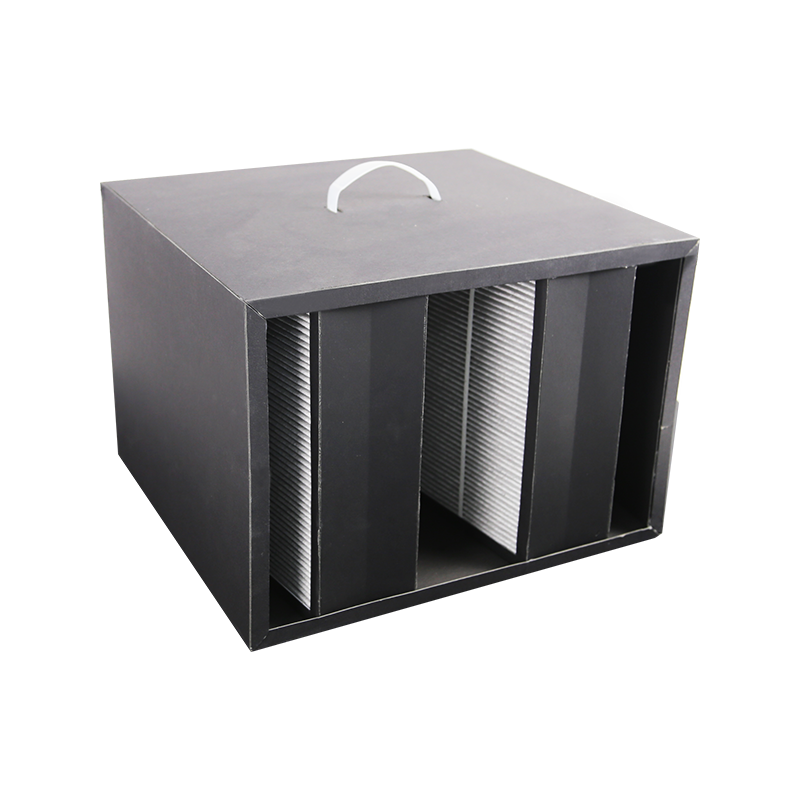
The term HEPA stands for High-Efficiency Particulate Air, and to legitimately carry this label, a filter must meet a specific performance standard. In the United States, a true HEPA filter must capture at least 99.97 percent of airborne particles measuring 0.3 microns in diameter, a size range chosen because it represents the most difficult particle size for filters to trap, often referred to as the "most penetrating particle size."
This standard means that particles both larger and smaller than 0.3 microns are actually captured at even higher efficiency rates, since different physical mechanisms become more effective as particle size increases or decreases away from this critical threshold. Products labeled "HEPA-type" or "HEPA-like" often do not meet this strict standard, so checking for genuine HEPA certification is important when air quality performance is a priority.
The Science Behind How HEPA Filters Capture Particles
Unlike simple mesh screens that work purely by blocking particles larger than their pore size, HEPA filters rely on a dense, randomly arranged mat of fine fibers, typically made from fiberglass or synthetic polymer materials, that captures particles through several distinct physical mechanisms working simultaneously.
Interception
Medium-sized particles traveling within the airstream come close enough to a fiber that they collide with it due to their physical size, even though they were following the air's flow path rather than moving directly toward the fiber.
Impaction
Larger, heavier particles have enough inertia that they cannot follow the curving path of air around a fiber, causing them to collide directly with the fiber and become trapped.
Diffusion
The smallest particles, including many viruses and fine smoke particles, move in an erratic, random pattern known as Brownian motion. This unpredictable movement increases the likelihood that they will eventually contact and stick to a fiber, which is why diffusion becomes more effective as particle size decreases.
These three mechanisms work together across the filter's dense fiber structure, which is why HEPA filters remain effective across such a wide range of particle sizes rather than only blocking particles larger than a specific pore size.
What HEPA Filters Can and Cannot Remove
HEPA filters are highly effective against a wide range of airborne contaminants, but understanding their limitations is equally important for setting realistic expectations.
| Contaminant | HEPA Effectiveness |
| Dust and dust mite debris | Highly effective |
| Pollen | Highly effective |
| Pet dander | Highly effective |
| Mold spores | Highly effective |
| Bacteria and many viruses | Effective |
| Odors and gases | Not effective alone |
| Volatile organic compounds (VOCs) | Not effective alone |
Because HEPA filters trap physical particles rather than adsorbing gas molecules, they do not remove odors, smoke smell, or chemical vapors on their own. Many air purifiers address this limitation by pairing a HEPA filter with an activated carbon layer, which uses adsorption to capture gaseous compounds that pass through the particulate filter unaffected.
Where HEPA Filters Are Commonly Used
HEPA filtration appears across a wide range of settings where air quality control is a priority.
- Residential air purifiers for allergy and asthma management
- Vacuum cleaners designed to prevent fine dust from being expelled back into the room
- Hospital operating rooms and isolation wards
- Cleanrooms used in electronics and pharmaceutical manufacturing
- Commercial HVAC systems in office buildings and schools
In healthcare and industrial cleanroom settings, HEPA filtration is often paired with even higher-grade ULPA (Ultra-Low Penetration Air) filters when extremely stringent contamination control is required, though these come with higher airflow resistance and cost.
Choosing the Right HEPA Filter for Your Needs
Selecting an appropriate HEPA filter involves matching the filter's specifications to the room size, air quality concerns, and device compatibility.
Clean Air Delivery Rate (CADR)
For air purifiers, CADR ratings indicate how quickly a unit can filter a specific volume of air for particular contaminants like dust, smoke, and pollen. Matching CADR to room square footage ensures the purifier can effectively cycle the air multiple times per hour.
True HEPA vs HEPA-Type Labeling
Always verify that a product specifies "True HEPA" or cites the 99.97 percent at 0.3 micron standard directly, since "HEPA-type" or "HEPA-like" filters are not held to the same certified performance level and may capture significantly fewer particles.
Maintenance Practices That Keep HEPA Filters Effective
HEPA filters gradually lose efficiency as trapped particles accumulate and restrict airflow, which is why regular replacement is essential for maintaining performance. Most manufacturers recommend replacing HEPA filters every six to twelve months under normal household conditions, though homes with pets, high pollen exposure, or smokers in the household may need more frequent replacement.
Unlike some other filter types, true HEPA filters generally cannot be washed and reused, since rinsing can damage the delicate fiber structure and permanently reduce filtration efficiency. Checking a manufacturer's specific maintenance guidelines before attempting to clean a filter helps avoid inadvertently reducing its effectiveness. By understanding how HEPA filtration works and selecting a properly rated, well-maintained filter suited to the intended space, households and businesses can meaningfully improve indoor air quality and reduce exposure to common airborne allergens and contaminants.
related products

 Tel: +86-13813766750
 E-mail:
  Add: 5169, Bin'gang Ave, Binjiang Subdistrict, Haimen City, Jiangsu, China
partners













Copyright 2023 Nantong Henka Environment Solutions Co.,Ltd. All Rights Reserved
 HEPA Air Filters Manufacturers Customized HEPA Air Filters Factory