


 English
 русский
 Español
 简体中文
简体中文
From solutions to productions, we’re specialized in making the products you need.
Home / News / Industry News / What Does a Dirty HEPA Filter Look Like? Visual Signs and When to Replace
Content
Open the front cover of an air purifier after heavy use and the first clue is visual. The HEPA media that started white or pale beige is now gray, sometimes brown, and in heavy smoke or soot conditions nearly black. A dirty HEPA filter shows a visible dust layer on the upstream face, feels stiff or fuzzy, and blocks more light than it did when new. When that is combined with noticeably lower airflow, replacement is overdue.
Color alone is not the whole story. A light gray haze on the pleat edges is normal after a few weeks in a dusty home. A thick, dark dust cake that hides the pleats and reduces outlet airflow is not a defect; it is a clear deadline.
Clean HEPA media has a consistent white or very light beige tone. The earliest sign of loading is a pale gray tint on the exposed face, darkest at the edges of each pleat. As more particles accumulate, the gray spreads across the face. A brown or tan color usually means house dust, pet dander, or pollen is in the mix. A dark gray or black face is usually linked to smoke, diesel soot, or urban particulate matter. In household air purifier applications, this discoloration starts on the inlet side; the downstream side should remain much lighter because the media is doing its job.
Beyond color, run your fingers lightly across the surface of the filter. A lightly used HEPA filter collects dust as a soft, even layer. A very dirty filter develops a stiff, felt-like dust cake, with hairs, lint, or fibrous clumps wedged between pleats. If large particles are stuck in the media, check whether the unit's pre-filter is still working. Some dust cakes feel almost greasy, which points to cooking oil or smoke rather than plain dry dust.
Hold the filter up under bright light. A lightly loaded filter still lets a noticeable amount of light through the pleats. A heavily loaded filter blocks most light, leaving only a few bright spots at the edges. Real HEPA media is dense, so a new filter may not let much light through either. The flashlight test works best as a comparison with the filter's own initial condition, or as a check for hard, dark dust cakes on the surface.
Because the visual signal depends on the type of pollution, a quick reference table can help you decide whether to replace or simply monitor.
| Appearance | Likely cause | What to do |
|---|---|---|
| Even gray dust layer | Household dust, pollen, normal indoor particles | Replace when airflow drops; otherwise check again in two to four weeks |
| Dark brown or black sticky coating | Cooking oil, tobacco smoke, vehicle exhaust, soot | Replace; washing cannot remove the oily film |
| Hair, lint, fibrous clumps | Pets, clothing fibers, carpet shedding | Remove loose clumps if possible, but replace once the pleats are packed |
| Green or black spots and musty odor | Mold or bacterial growth in humid conditions | Replace immediately and investigate the humidity source |
| White or chalky deposit | Renovation dust, plasterboard dust, high-mineral particles | Replace and add a pre-filter to protect the HEPA layer |
These contaminants usually create a light-to-medium gray deposit. Hairs and fibers sit on top of the media rather than becoming deeply embedded. If your pre-filter is doing its job, the HEPA layer may look dusty but not heavily soiled. Even so, total loading can be high because a pre-filter cannot stop the smallest particles.
Fine smoke particles penetrate deeper into the media and leave a dark brown or black color. Cooking oil creates a sticky film that traps more dust, making the surface look glossy. This combination speeds up clogging, which is why filters near kitchens or smoking areas need to be changed more often.
In a humid environment, or in a unit that has been idle for months, HEPA media can develop dark spots and a musty smell. This is biological growth, not simple dust. The correct response is replacement, not cleaning. A damaged or water-exposed HEPA filter can collapse its fiber structure and release very small particles instead of capturing them.
The same media can look different depending on the equipment. A filter in an HVAC system collects more fibrous material but less soot, while a filter in a fresh air ventilation system sees a cleaner but more varied outdoor particle mix.
A dirty HEPA filter can still remove particles, sometimes even more efficiently because the dust layer adds depth. But that gain comes with a cost: airflow resistance rises, the fan pushes less air, and the effective CADR drops. At a certain pressure drop, air starts to bypass the media through gaps in the frame or gasket. At that point a dark filter can look as if it is still working while actually allowing unfiltered air around the media.
The activated carbon layer complicates the visual check. Many modern filters combine HEPA media with activated carbon to handle odors, smoke, and VOCs. The carbon can be saturated even when the HEPA layer still looks light, because gases do not leave an obvious color change. If the original odor-removing performance has faded, replacement is needed even if the filter is not very dark.
Time also matters. For a typical household air purifier, a HEPA filter used continuously is usually near the end of its life after six to twelve months, depending on air quality and fan speed. If you see medium gray after four months but airflow remains strong, you can keep monitoring. If the same color appears after twelve months, change it regardless of how it looks.
These steps take less than two minutes. A HEPA filter does not have to look black to be replaced. If the media is torn, the pleats are bent, or the gasket has lost its seal, replace the filter even if the color looks normal. Damage creates a direct path for unfiltered air.
If your air purifier uses a cylindrical cartridge, pay attention to the end caps and center core. Many units rely on the cartridge to keep pleat spacing even. A replacement with continuous pleats and a sealed outer structure fits better and lasts longer. For that kind of unit, a cylindrical household HEPA filter is a practical choice.
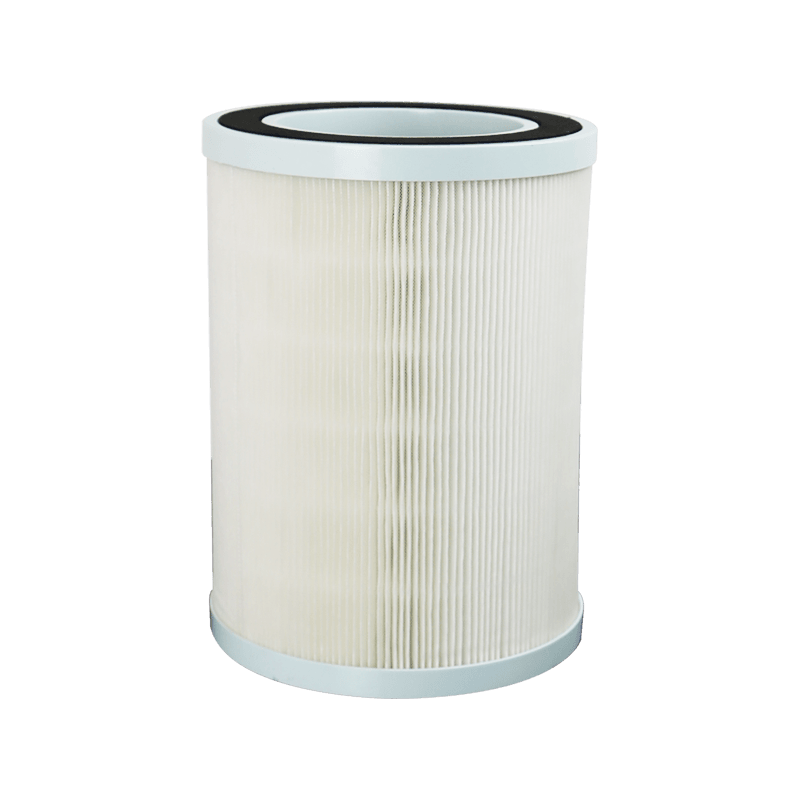 Cylindrical Air Filters for Household Suppliers, Company - Nantong Henka EnvironNantong Henka - Cylindrical Air Filter for Household Suppliers and Company in China, Wholesale Cylindrical Air Filters for Household, The...View Product →
For flat panel filters, the frame is not just a border; it holds the media in place and stops air from moving around the pleats. Look for a filter with rigid frame corners and consistent pleat spacing. A plastic-frame high-efficiency air filter gives you that stability in panel-type purifiers and many ventilation units.
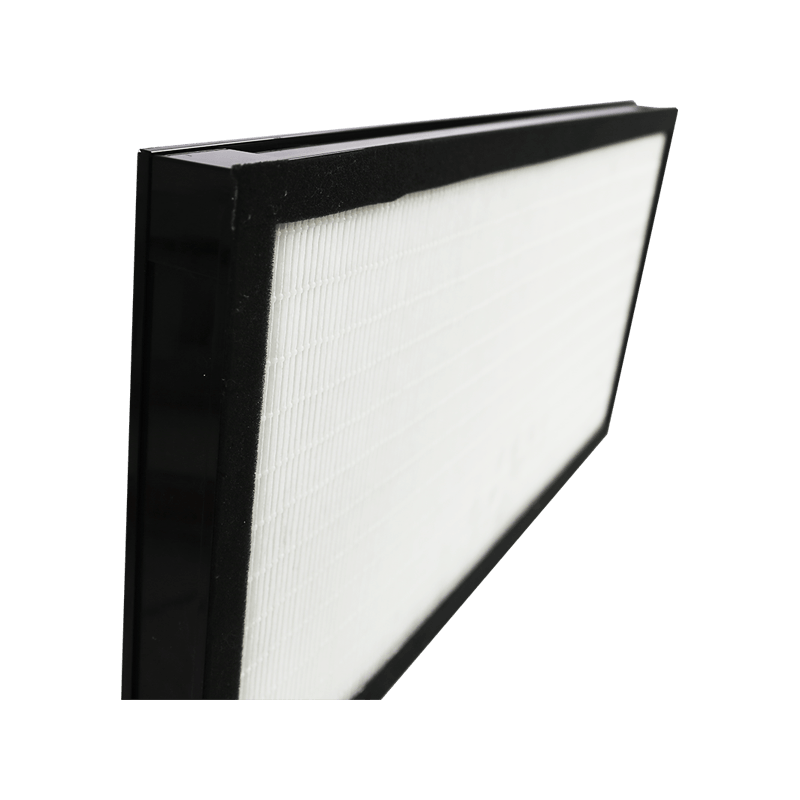 Plastic Frame High Efficiency Air Filters Suppliers, Company - Nantong Henka EnvNantong Henka - Plastic Frame High Efficiency Air Filter Suppliers and Company in China, Wholesale Plastic Frame High Efficiency Air Filt...View Product →
If the dirt you find is tied to smoke, cooking odors, or chemical gases, a pure HEPA filter solves the particle problem but not the gas problem. In that case, select a multifunctional activated carbon HEPA filter so the combined media handles both particles and volatile compounds. You will still have to replace it when the carbon is exhausted, but one slot is doing the work of two layers.
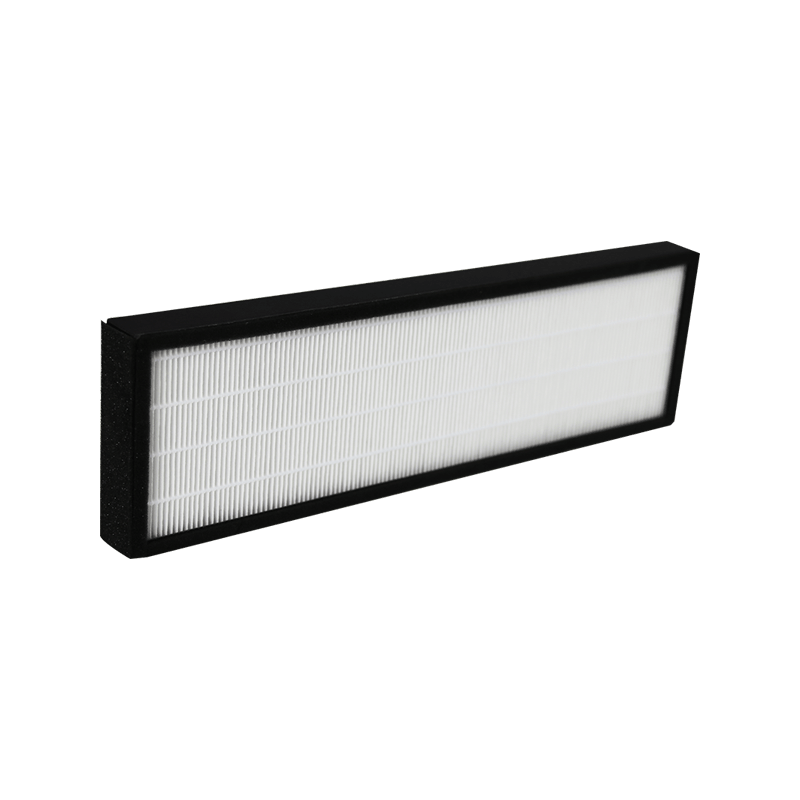 Multifunctional Activated Carbon HEPA Filters Suppliers, Company - Nantong HenkaNantong Henka - Multifunctional Activated Carbon HEPA Filter Suppliers and Company in China, Wholesale Multifunctional Activated Carbon H...View Product →
As a manufacturer of replacement filters for air purifier brands and HVAC equipment makers, we see used filters from many environments. A filter that is gray on one side and almost clean on the other tells us the pleat pack is well sealed. Dust on both sides or at the frame edges usually points to a poor seal or an oversized frame, and that feedback goes directly into filter design improvements.
Use the combination rule: visual dirt plus reduced airflow plus an age of more than six months equals replacement. If you want to extend the interval, use a washable pre-filter or keep a regular maintenance schedule. But once the HEPA layer itself is loaded, gray on the surface, stiff in the pleats, and dark under a flashlight, replacement is the only sensible option.
Vacuuming or washing a disposable HEPA filter is not a way to restore performance. Vacuuming may remove some surface lint, but it cannot remove dust embedded deep in the fibers. Washing can collapse the delicate fiber matrix, and the filter may look cleaner while its measured efficiency and airflow are worse. This is the most common misconception we encounter in air filter manufacturing.
A dirty HEPA filter is actually a good sign; it means the filter has done its job. The problem starts when you leave it in service too long or ignore the airflow loss. When the surface is packed and the fan is struggling, replace the filter without hesitation. Your air quality monitor, your energy bill, and your breathing will thank you.
ULPA Air Filter Guide: Efficiency, HEPA vs ULPA Comparison, and Selection Tips
HEPA Filter Rating Chart: Comparing MERV, EN 1822 H13/H14, and Efficiency














Copyright 2023 Nantong Henka Environment Solutions Co.,Ltd. All Rights Reserved
 HEPA Air Filters Manufacturers Customized HEPA Air Filters Factory
 Tel: +86-13813766750
 E-mail:
  Add: 5169, Bin'gang Ave, Binjiang Subdistrict, Haimen City, Jiangsu, China