


 English
 русский
 Español
 简体中文
简体中文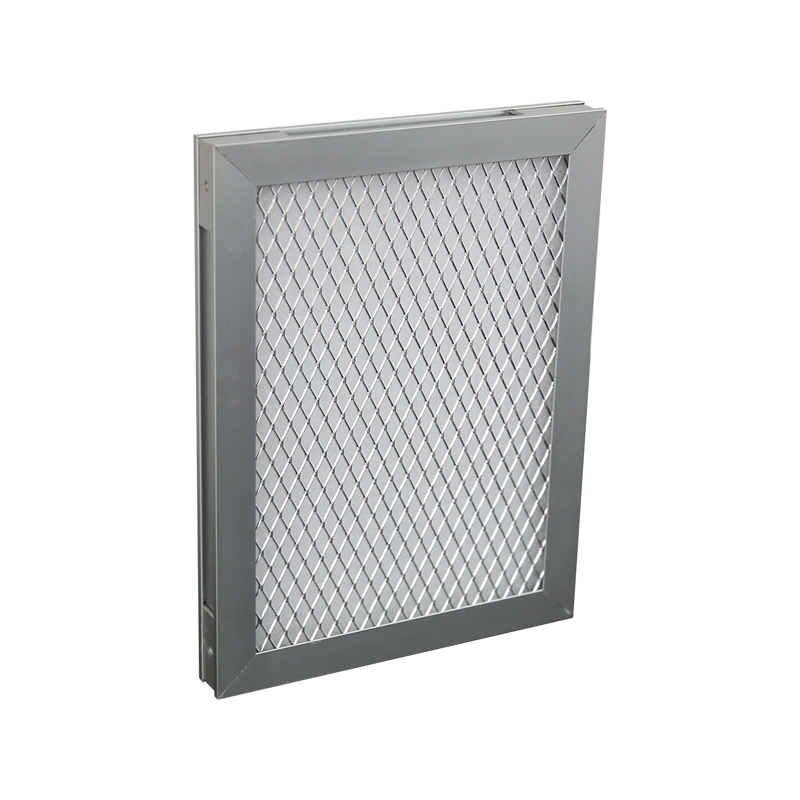
From solutions to productions, we’re specialized in making the products you need.
Home / News / Industry News / Can You Clean a HEPA Filter Instead of Replacing? A Manufacturer's Guide
Content
A few weeks ago, a maintenance manager asked us whether he could clean a HEPA filter instead of replacing it. He had rinsed the pleated panel under a tap, dried it in sunlight, and reinstalled it. Within days, the air purifier's airflow dropped and the filter developed a sour smell. That story is common, and it is the reason we are writing this guide. As an air filter manufacturer that has produced true HEPA filters for more than a decade, we can tell you plainly: in nearly all cases, a true HEPA filter should be replaced, not cleaned. The only exceptions are dedicated washable pre-filters and a few synthetic media filters that are explicitly labeled by the maker.
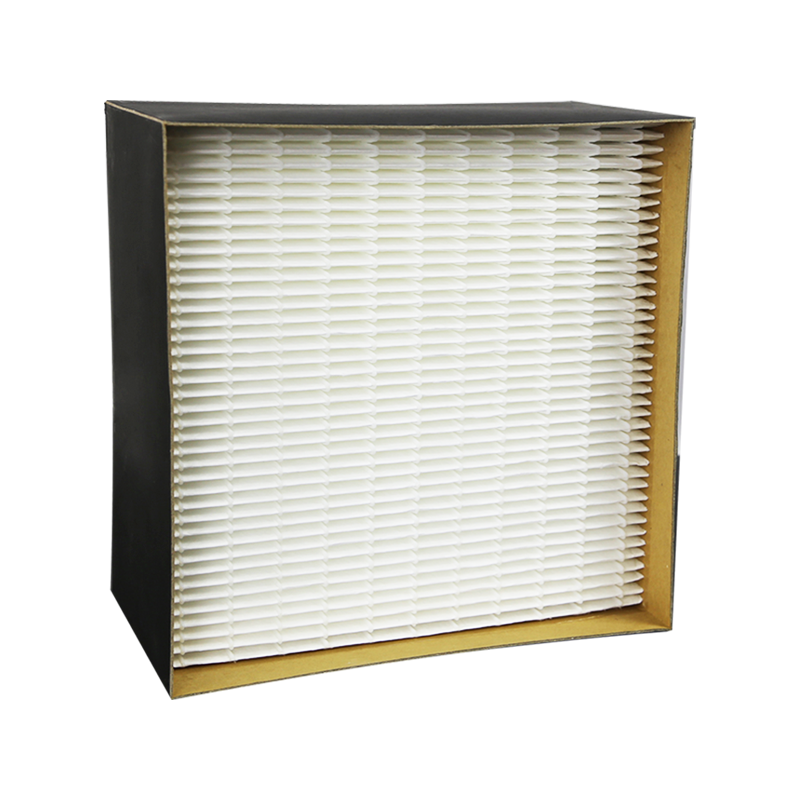
A true HEPA filter is not a screen that traps particles like a sieve. It is a deep bed of randomly arranged microfibers, usually glass or synthetic. Particles are captured through a combination of interception, inertial impaction, and diffusion. The efficiency of this process depends on the exact spacing and orientation of the glass fibers. When you vacuum or wash the media, you pull on those fibers, moving them out of position. Even a small shift can create a channel or a gap, and the filter starts to let particles slip through.
Washing introduces a harsher problem. Water has surface tension. When the media is submerged and dried, the surface tension pulls the fibers together, closing some spaces and opening others. The result is an irregular pore structure that performs far below the rated efficiency. In a filter designed to meet ISO 29463 or EN 1822 H13/H14 standards, with efficiency requirements around 99.95 percent or higher, this change is unacceptable. We have seen washed HEPA filters pass a visual inspection but fail a particle count test by a wide margin.
Moisture also damages the nonwoven media's bond with the frame. The pleat pack can separate from the frame, allowing unfiltered air to bypass the filter. This is especially dangerous in sensitive applications like medical, laboratory, or clean-room environments. If a filter is dirty, replacement is simpler, safer, and often cheaper than the cost of diagnosing an airborne contamination problem later.
Not every filter element is the same. The broad category of "filter" includes several media types with different cleanability. The safest way to know is to read the product label or the manufacturer's instruction. But as a general rule, true HEPA media and activated carbon media are not washable. The elements you can wash are almost always pre-filters, not final HEPA stages.
| Filter element | Can it be cleaned? | Recommended care | Typical replacement interval |
|---|---|---|---|
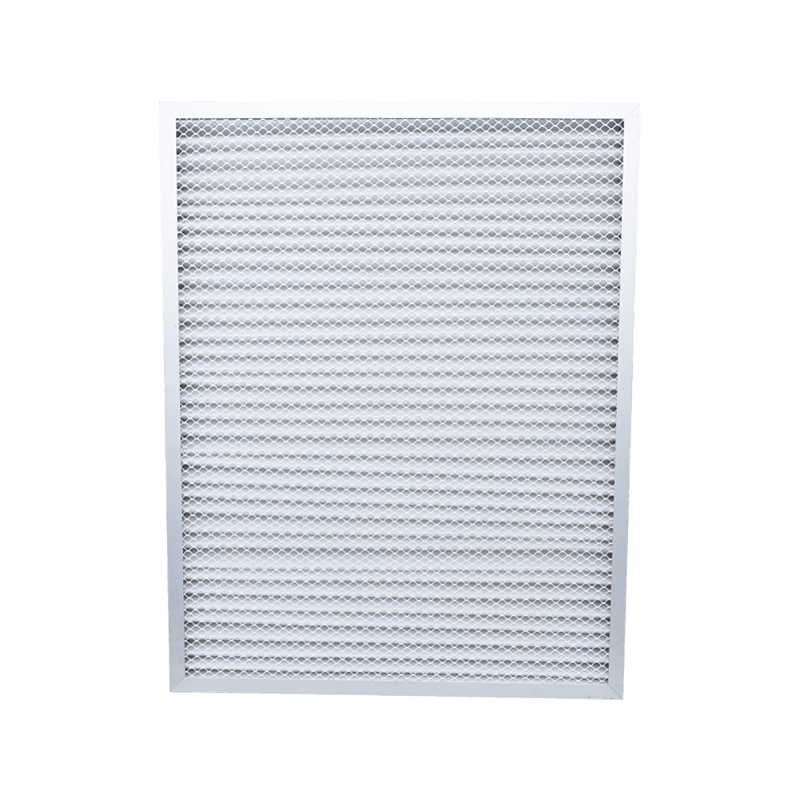
| Washable aluminum-frame primary filter | Yes | Rinse with water, let dry completely, no heating | Every 1-3 months for average home use |
| Electrostatic or synthetic pre-filter | Sometimes | Vacuum gently or rinse only if labeled washable | Every 1-3 months |
| Activated carbon layer | No | Cannot be regenerated at home; replace when odor returns | Every 3-6 months |
| True HEPA filter | No | Surface vacuum only as a temporary measure; replace when loading is visible | Every 6-12 months, depending on air quality and run time |
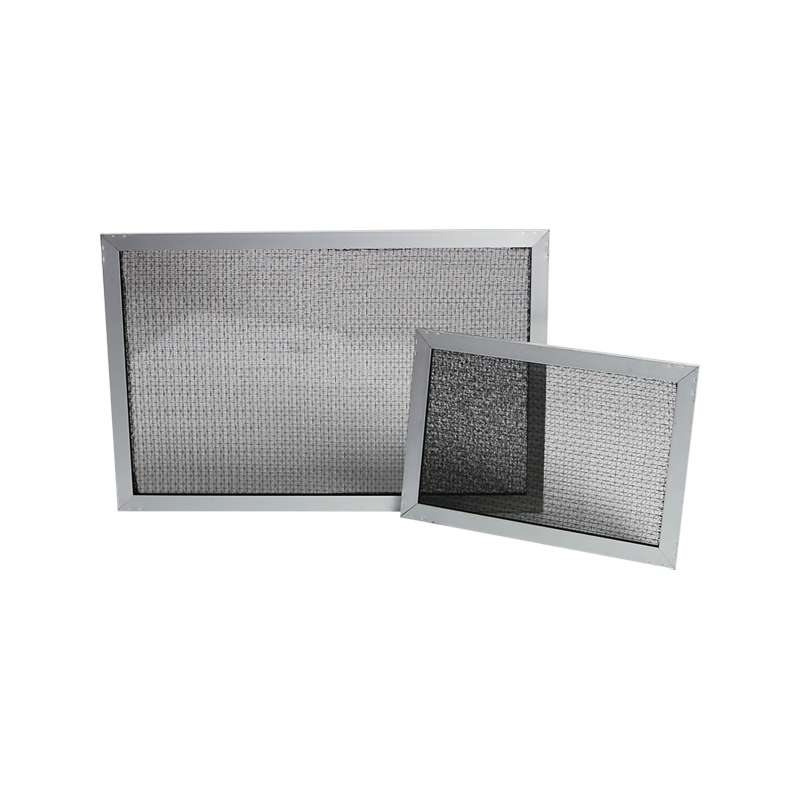
If you want to minimize filter waste, the most effective strategy is to put a washable pre-filter ahead of the HEPA element. A washable aluminum-frame primary filter stops coarse dust and reduces how quickly the HEPA stage loads. This is exactly how many HVAC and fresh-air systems are designed. But even the best pre-filter does not make the HEPA element itself cleanable.
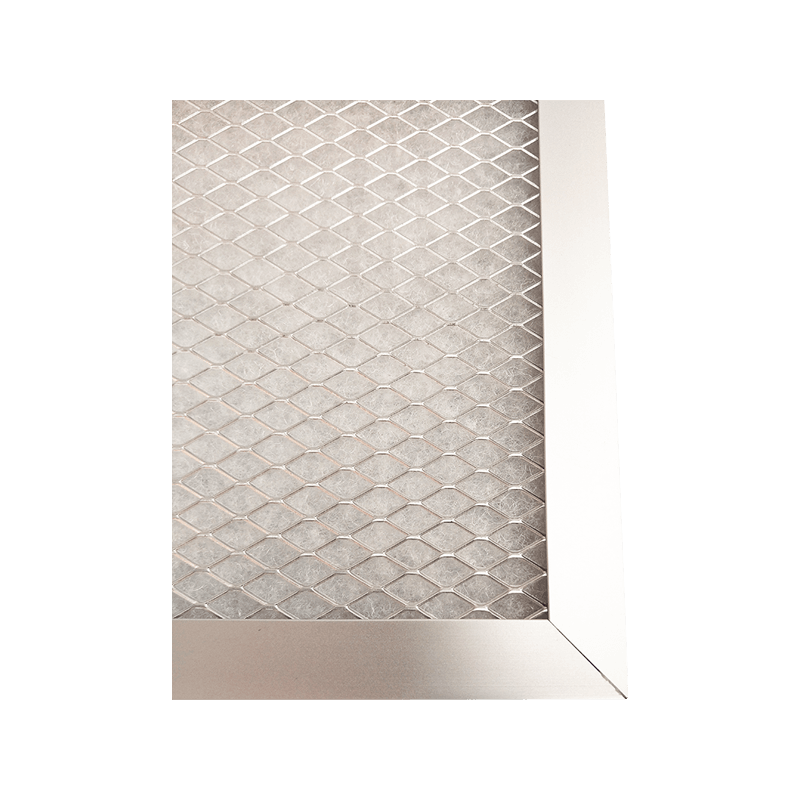 Aluminum Frame Washable Primary Filters Suppliers, Company - Nantong Henka EnvirNantong Henka - Aluminum Frame Washable Primary Filter Suppliers and Company in China, Wholesale Aluminum Frame Washable Primary Filters,...View Product →
Sometimes you need to squeeze a little more life out of a filter between replacements, for example after a week of wildfire smoke or a renovation project. Vacuuming a HEPA filter can remove some surface dust, but it will not restore the original airflow or the internal dust load. Use these steps as a temporary measure, not a long-term plan.
The filter's physical structure and geometry are decisive. In a compact cylindrical HEPA filter, the pleated media is wrapped around a hollow core, and the pleats are closely packed. Vacuuming with a narrow nozzle can crush or separate those pleats quickly. For this design, replacement is almost always more reliable than cleaning.
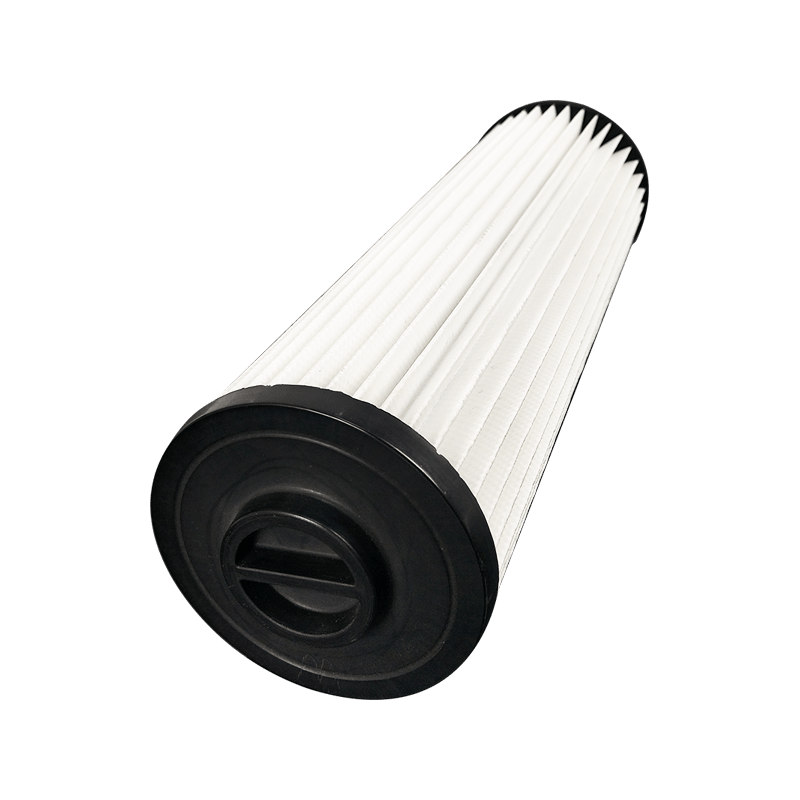 Cylindrical HEPA Filters Suppliers, Company - Nantong Henka Environment SolutionNantong Henka - Cylindrical HEPA Filter Suppliers and Company in China, Wholesale Cylindrical HEPA Filters, The compact HEPA cylindrical ...View Product →
Rather than deciding whether to clean a HEPA filter, the smarter goal is to keep it clean for as long as possible. This starts with the pre-filter. Whether you are running a household air purifier, a fresh-air ventilation system, or a commercial HVAC unit, a coarse filter upstream catches hair, lint, and dust, which are the main load that blinds the HEPA media. Replace or wash that primary filter regularly, and the HEPA stage will last far longer.
In household air purifiers, space is tight and filter area is often limited. Many designs use a cylindrical air filter for household air purifiers, which gives more media area inside a small cabinet. That compact geometry is precisely why cleaning is risky. Unless the manufacturer's label explicitly says the filter is washable, treat the filter as a consumable part and swap it according to the recommended schedule.
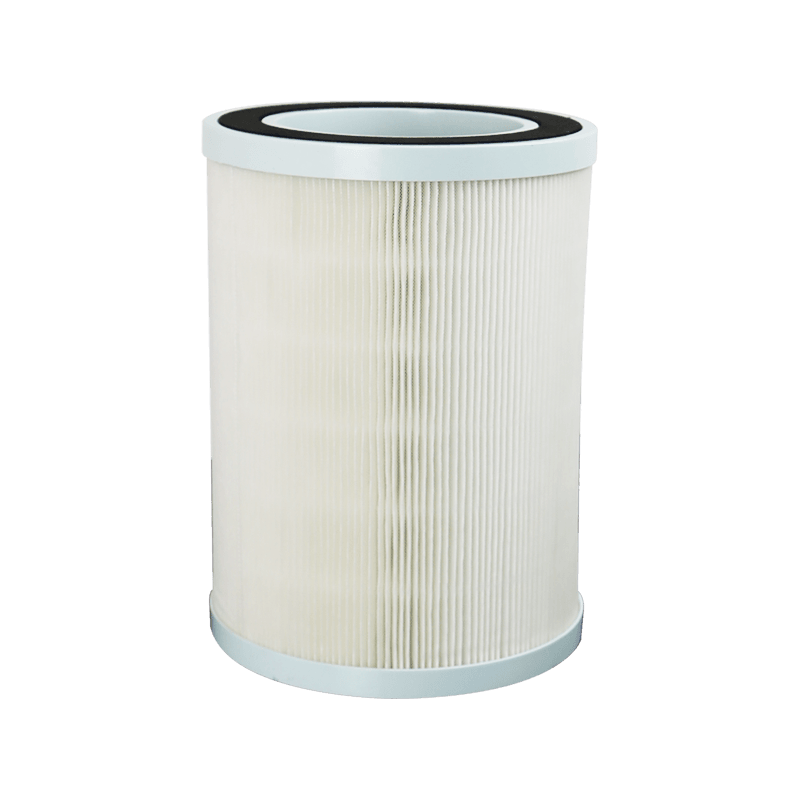 Cylindrical Air Filters for Household Suppliers, Company - Nantong Henka EnvironNantong Henka - Cylindrical Air Filter for Household Suppliers and Company in China, Wholesale Cylindrical Air Filters for Household, The...View Product →
You can also reduce particles that reach the filter by cleaning floors with a HEPA-equipped vacuum, keeping windows closed on high-pollution days, and checking that the purifier's door seals are intact. These small habits lower the load on the HEPA element and give you more predictable replacement intervals.
There are situations where cleaning is not just ineffective but unsafe. If a HEPA filter has a tear, a separated seal, a bent frame, or visible mold, do not attempt to reuse it. Mold can embed itself in the fiber matrix, and vacuuming will only spread contamination. The same applies if the filter has been in continuous use for a long period or reached its rated pressure drop.
In critical environments, the standard is stricter. Clean-room filtration requirements demand the full rated efficiency of the filter, and replacing HEPA filters is part of the protocol. The cost of one failed particle count far exceeds the price of a new filter. For hospital rooms, laboratories, and clean manufacturing lines, a cleaned filter is never an acceptable substitute.
In a household air purifier, the same principle applies even though the stakes are lower. A clogged HEPA filter forces the fan motor to work harder, which raises energy use and noise. Replacing the filter when it is due gives you back the original airflow and keeps the purifier efficient. Replacing is also cheaper than risking motor failure or indoor air quality degradation.
Can you clean a HEPA filter instead of replacing it? The short answer is usually no. You can vacuum some loose surface dust as a stopgap, but the structural integrity and efficiency loss are too great for long-term use. The better path is to protect the HEPA element with a washable pre-filter and to replace the HEPA stage at the interval recommended by the manufacturer. We design and build filters for commercial brands and industrial partners, and we always advise customers to follow the same rule: if the media shows visible loading, replace the filter. It is the only decision that keeps air quality predictable and the equipment working as designed.














Copyright 2023 Nantong Henka Environment Solutions Co.,Ltd. All Rights Reserved
 HEPA Air Filters Manufacturers Customized HEPA Air Filters Factory
 Tel: +86-13813766750
 E-mail:
  Add: 5169, Bin'gang Ave, Binjiang Subdistrict, Haimen City, Jiangsu, China