


 English
 русский
 Español
 简体中文
简体中文
From solutions to productions, we’re specialized in making the products you need.
Home / News / Industry News / HEPA Filter Rating Chart: Comparing MERV, EN 1822 H13/H14, and Efficiency
Content
Two filter spec sheets sit on the same desk. One is marked "HEPA, 99.97% at 0.3 microns." The other is marked "H13, 99.95% at MPPS." Both vendors describe their products as HEPA filters, yet the numbers do not match. Open a HEPA filter rating chart and the first thing you notice is that no single universal scale exists. The chart is a comparison tool, not a table built from one standardized scale.
The conclusion specifiers need comes first: any filter rated EN 1822 H13 or higher, or one that meets the U.S. DOE definition of HEPA, is a genuine high-efficiency particulate air filter. MERV ratings below that describe HVAC filters, not HEPA filters. Comparing a MERV percentage to a HEPA percentage without knowing the test behind each number is the fastest way to specify the wrong product.
A rating chart answers one practical question: how many particles of a given size will this filter remove under its most challenging operating condition. Every rating system expresses that as a percentage, but each system uses different test particles, different particle-size ranges, and a different definition of "minimum efficiency."
The MERV scale comes from ASHRAE Standard 52.2 and covers MERV 1 through 16. It was developed for HVAC filters and reports composite efficiency across three particle-size bands: 3.0 to 10.0 microns, 1.0 to 3.0 microns, and 0.3 to 1.0 microns. HEPA ratings come from a different tradition. The U.S. DOE defines HEPA as at least 99.97% efficiency at 0.3 microns, while the European EN 1822 standard and its international counterpart ISO 29463 grade filters from E10 up through H14 and U15 to U17 based on efficiency at the Most Penetrating Particle Size, or MPPS.
The result is that a chart can line up MERV ratings next to HEPA classes, but the columns are measuring different tests. HEPA starts where MERV ends. A HEPA class always implies far higher efficiency than any MERV rating because the challenge particles are smaller and the pass/fail threshold is far stricter.
MERV and HEPA do not describe the same kind of filter, and the gap between them is not a subtle one. A MERV 13 filter, commonly recommended for residential ventilation and allergy control, removes at least 90% of particles between 1.0 and 3.0 microns and at least 75% of particles between 0.3 and 1.0 microns. A genuine HEPA filter removes at least 99.97% of particles at 0.3 microns alone. One percentage describes a meaningful improvement in general indoor air quality; the other describes a near-total particle barrier.
Some manufacturers stretch the MERV scale to 17, 18, or 20 to describe HEPA-class products, but those extended numbers are not part of ASHRAE 52.2. When a datasheet shows "MERV 17" or "MERV 20," check which standard produced that number. The recognized HEPA criteria remain the U.S. DOE 99.97% at 0.3 microns test and the EN 1822 MPPS classes.
| Rating | Minimum efficiency | Test basis |
|---|---|---|
| MERV 8 | ≥ 85% at 3.0–10.0 µm | ASHRAE 52.2 |
| MERV 11 | ≥ 85% at 1.0–3.0 µm and ≥ 85% at 3.0–10.0 µm | ASHRAE 52.2 |
| MERV 13 | ≥ 75% at 0.3–1.0 µm, ≥ 90% at 1.0–3.0 µm, ≥ 90% at 3.0–10.0 µm | ASHRAE 52.2 |
| MERV 14 | ≥ 75% at 0.3–1.0 µm, ≥ 90% at 1.0–3.0 µm, ≥ 95% at 3.0–10.0 µm | ASHRAE 52.2 |
| U.S. DOE HEPA | ≥ 99.97% at 0.3 µm | U.S. DOE test method |
| EN 1822 H13 | ≥ 99.95% at MPPS | MPPS, usually 0.1–0.3 µm |
| EN 1822 H14 | ≥ 99.995% at MPPS | EN 1822 / ISO 29463 |
| EN 1822 U15 | ≥ 99.9995% at MPPS | EN 1822 / ISO 29463 |
For HVAC system installations, MERV 8 to 14 is the practical working range because pressure drop and energy consumption stay manageable at high airflow. HEPA belongs at the end of a staged filtration train, usually behind a pre-filter, where the final barrier receives air that has already been cleaned of larger particles.
EN 1822 divides the efficiency scale into grades worth memorizing because they appear on virtually every European and international HEPA datasheet. H13 requires at least 99.95% efficiency at MPPS. H14 requires at least 99.995%. U15 requires 99.9995%, and U16 requires 99.99995%. Expressed as penetration, the amount that gets through is 0.05% for H13, 0.005% for H14, 0.0005% for U15, and 0.00005% for U16. Each step up is an order-of-magnitude reduction in leakage.
MPPS stands for Most Penetrating Particle Size, normally between 0.1 and 0.3 microns for HEPA media. At that size, every removal mechanism works at its weakest, which is why the rating is anchored there. A filter tested at MPPS will generally perform better at both larger and smaller particle sizes.
In practical terms, H13 is the class that most household air purifiers use, H14 is the usual specification for hospitals and cleanrooms, and U15 or higher appears in semiconductor fabs and pharmaceutical facilities where even trace contamination is unacceptable.
HEPA filtration works through physics rather than sieving. Large particles are caught by impaction and interception as they follow air streams around fibers. Very small particles, below about 0.1 microns, are caught by diffusion as they collide with gas molecules and wander into the filter media. Efficiency dips in the middle range, around 0.3 microns, where both mechanisms are relatively weak. That is why 0.3 microns became the reference point: if the filter stops particles of that size, it will stop almost everything else.
The same logic explains why a 0.3 micron rating does not mean poor removal of smaller particles. A genuine HEPA filter typically captures sub-0.1 micron particles at efficiencies higher than the certified 99.97% threshold.
For buyers of air purifiers and ventilation equipment, efficiency is only part of the calculation. Airflow rate, pressure drop, filter surface area, and the unit's CADR determine how much clean air actually reaches the room. A filter that is highly efficient but starves the fan of airflow delivers worse real-world results than a slightly lower efficiency filter matched to the system's performance curve.
For residential air purifiers, H13 is usually the specification sweet spot. It delivers the certified 99.95% efficiency at MPPS, satisfies consumer expectations for "true HEPA," and keeps media area, pressure drop, and cost within reasonable bounds. In compact appliances, cylindrical filter geometries maximize media surface area inside a small plastic housing. A cylindrical high-efficiency HEPA filter can be manufactured to H13 or H14 to match the enclosure size and fan curve of a specific purifier model. OEM teams working on household air purifier applications typically evaluate the filter and the appliance as one system, because the rating chart alone will not tell you whether the combination will hold pressure drop over the filter's service life.
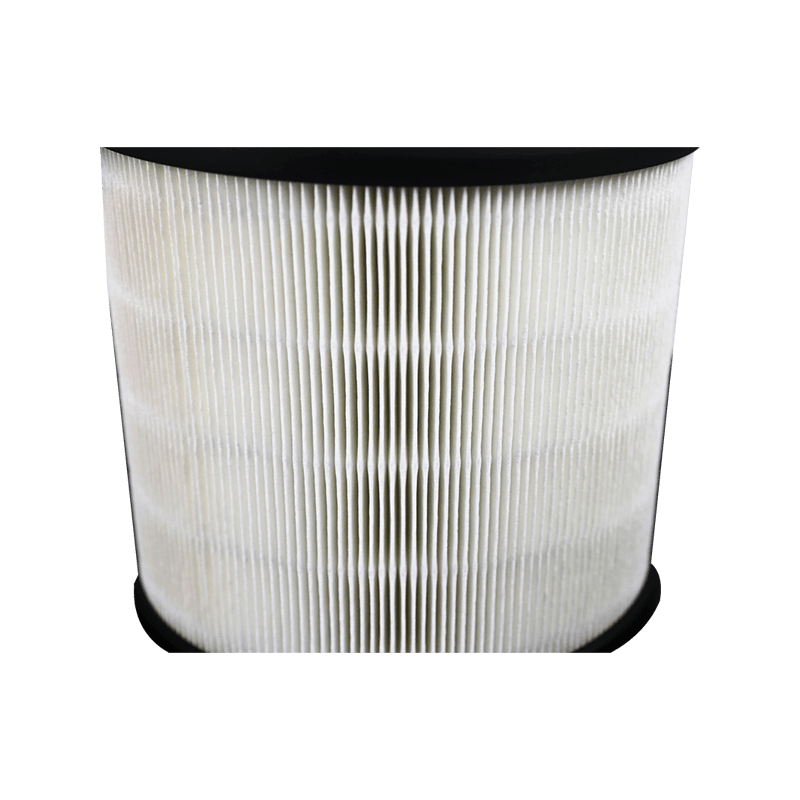 Cylindrical High Efficiency Air Filters Suppliers, Company - Nantong Henka EnvirNantong Henka - Cylindrical High Efficiency Air Filter Suppliers and Company in China, Wholesale Cylindrical High Efficiency Air Filters,...View Product →
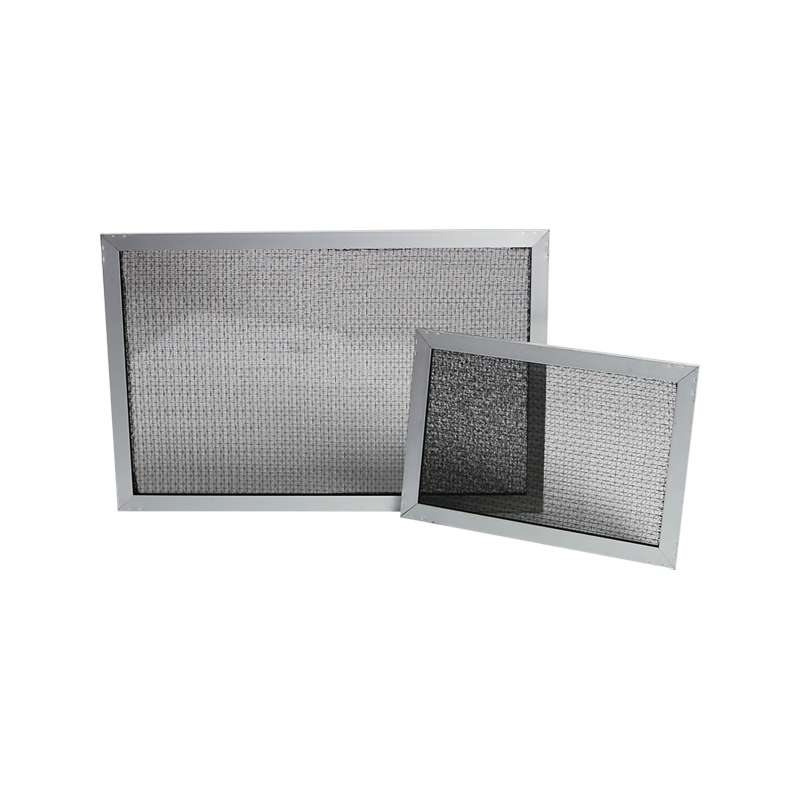
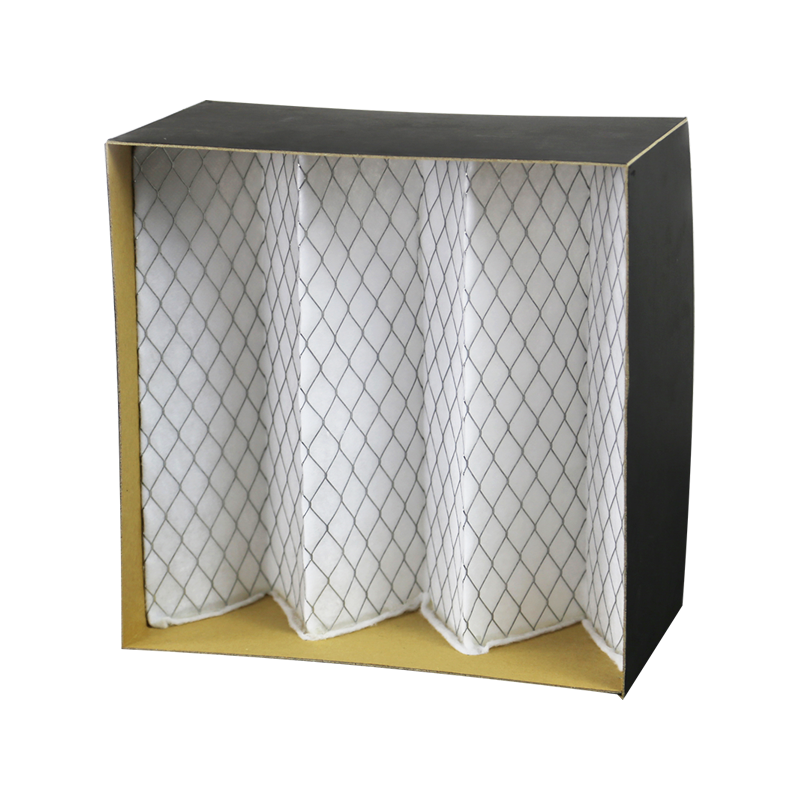
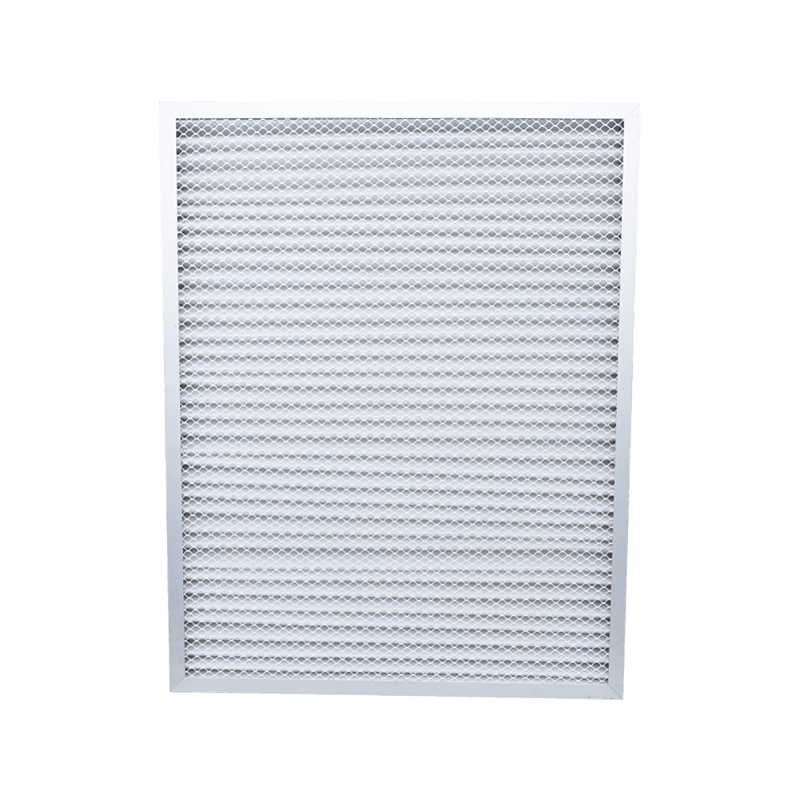
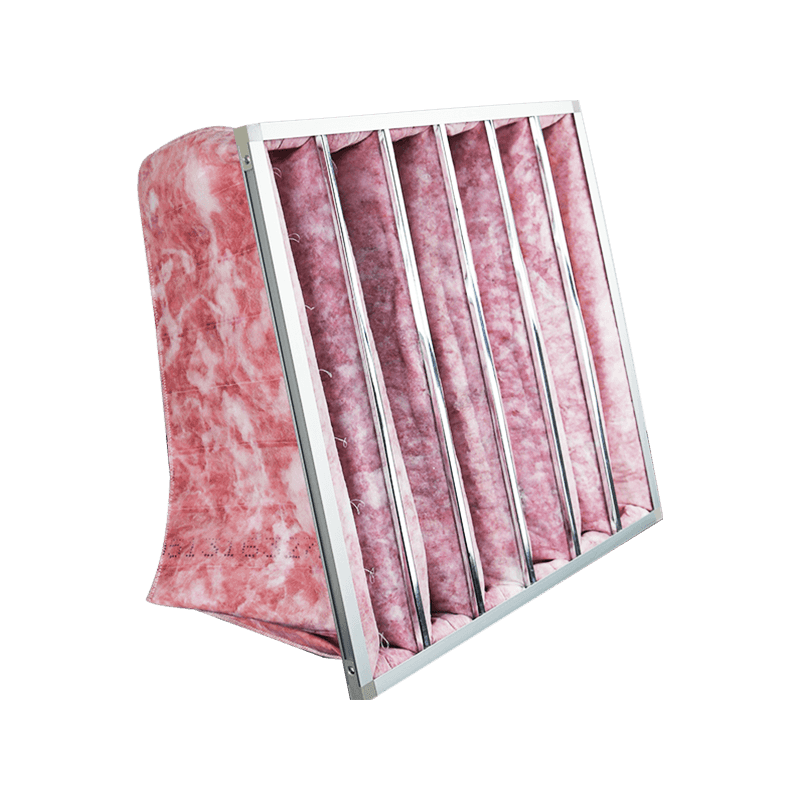
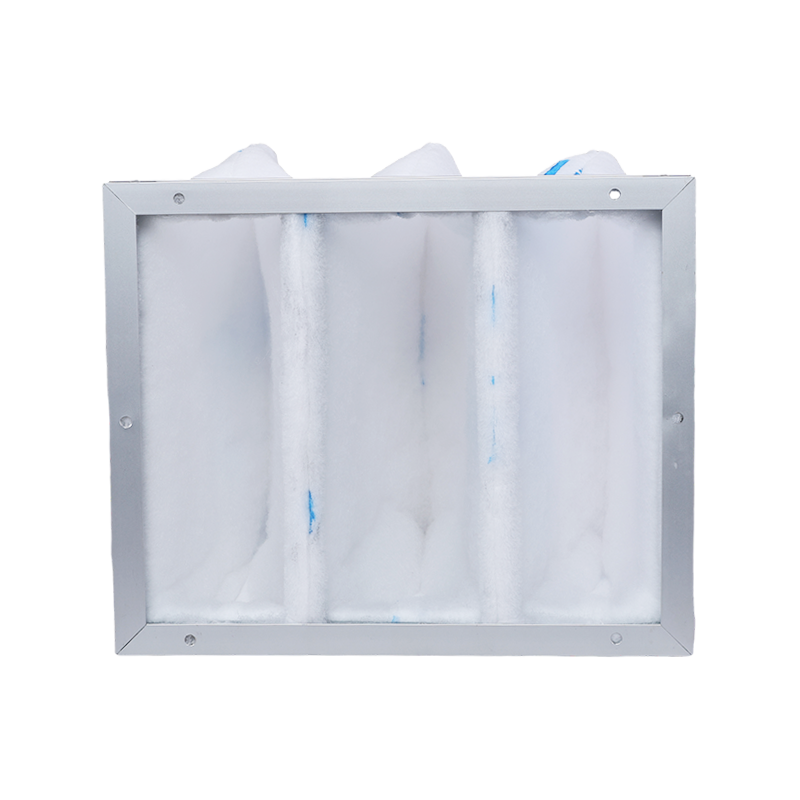
In central ventilation and fresh air systems, filtration is usually staged. A washable or low-cost primary filter removes lint, dust, and insects before the air reaches a high-efficiency stage. If the design target requires HEPA-level output, a V-bank high-efficiency HEPA filter increases the available media area inside a compact frame, which lowers face velocity and pressure drop across the final barrier. V-bank and mini-pleated formats are common where duct space is limited but airflow demand is high.
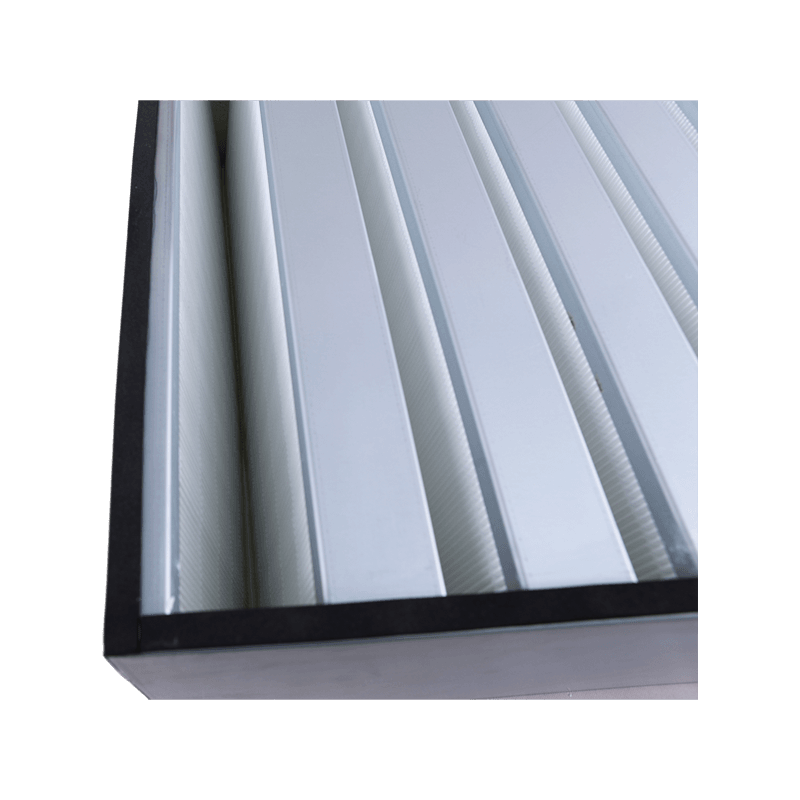 V-BANK High Efficiency Air Filters Suppliers, Company - Nantong Henka EnvironmenNantong Henka - V-BANK High Efficiency Air Filter Suppliers and Company in China, Wholesale V-BANK High Efficiency Air Filters, V-BANK de...View Product →
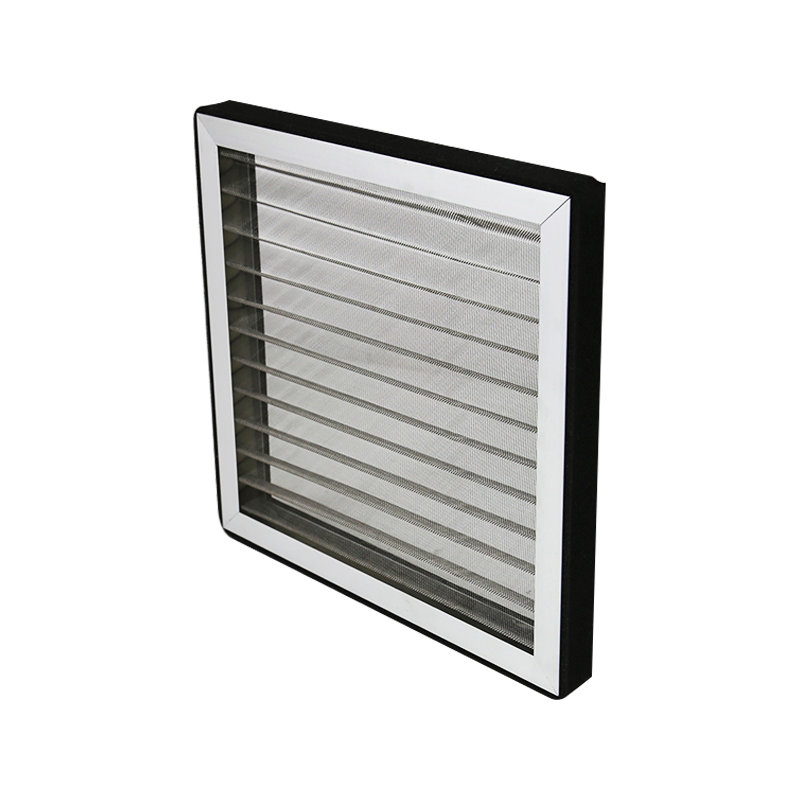
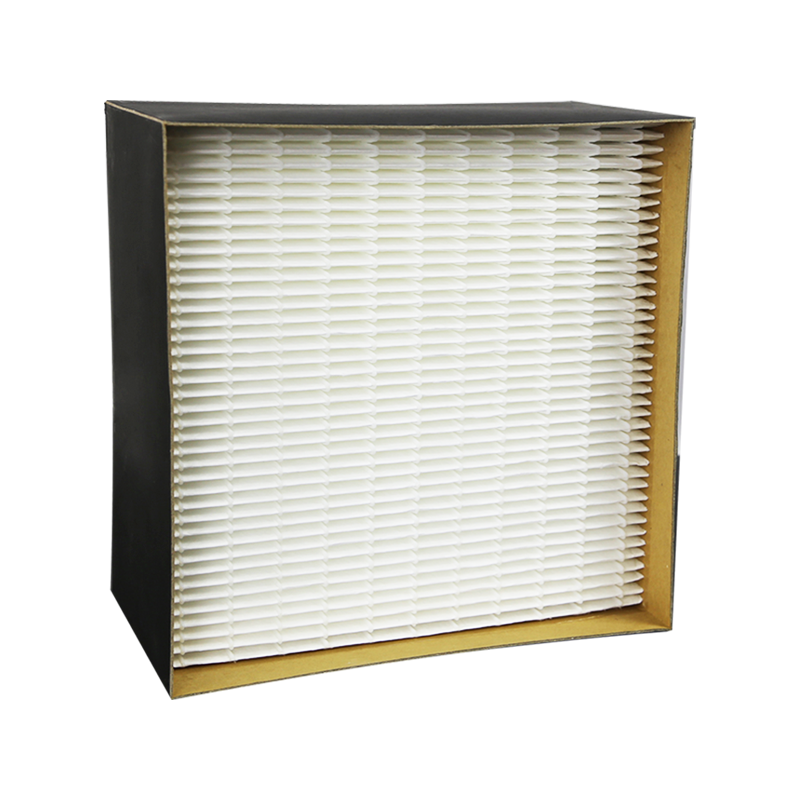
For cleanroom filtration and hospital isolation areas, reliability outweighs initial cost. H14 is a common specification, with U15 used where contamination control is critical. A mini-pleated HEPA filter without separators is a typical final barrier in cleanroom ceiling grids and laminar flow hoods, because the continuous pleat pack delivers uniform airflow and consistent efficiency across the entire filter face.
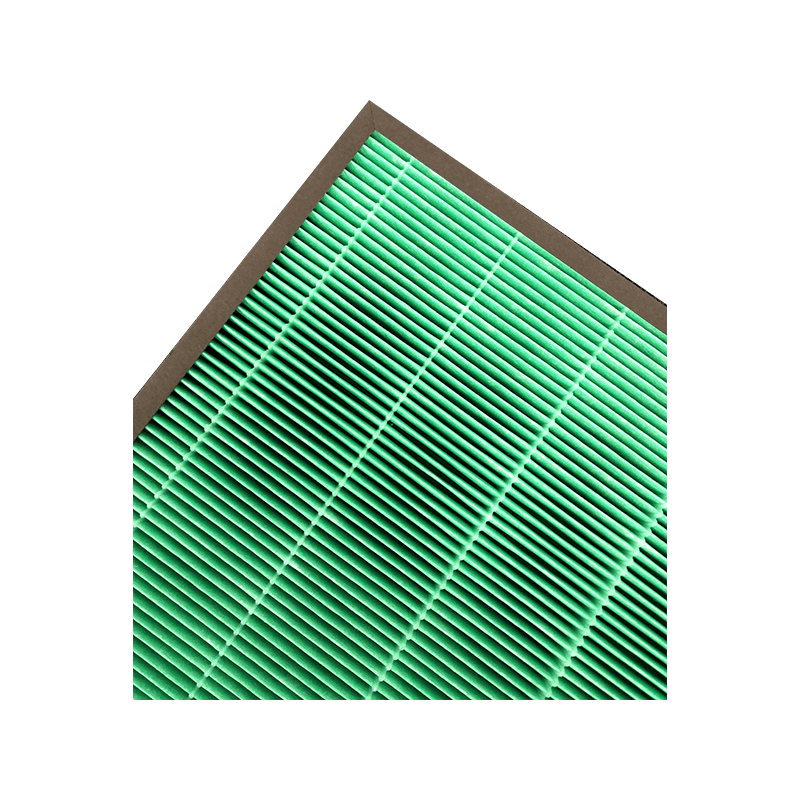 High Efficiency Filters without Partitions Suppliers, Company - Nantong Henka EnNantong Henka - High Efficiency Filter without Partitions Suppliers and Company in China, Wholesale High Efficiency Filters without Parti...View Product →
A rating number on a chart is a starting point, not a certificate. Before committing to a filter specification, verify the following:
For OEM and ODM projects, the chart should also prompt questions about customization. A filter that is rated H14 in a standard panel may need a different frame height, a combined activated carbon layer, or a special gasket for your enclosure. Manufacturers experienced in custom filtration, like Henka, usually provide sample testing and performance data before full production, which is the only reliable way to confirm that the rating on the chart translates into the performance you need in the field.
What Does a Dirty HEPA Filter Look Like? Visual Signs and When to Replace
Mold on Air Filter: What It Means, Why It Grows, and How to Fix It Safely?













Copyright 2023 Nantong Henka Environment Solutions Co.,Ltd. All Rights Reserved
 HEPA Air Filters Manufacturers Customized HEPA Air Filters Factory
 Tel: +86-13813766750
 E-mail:
  Add: 5169, Bin'gang Ave, Binjiang Subdistrict, Haimen City, Jiangsu, China