


 English
 русский
 Español
 简体中文
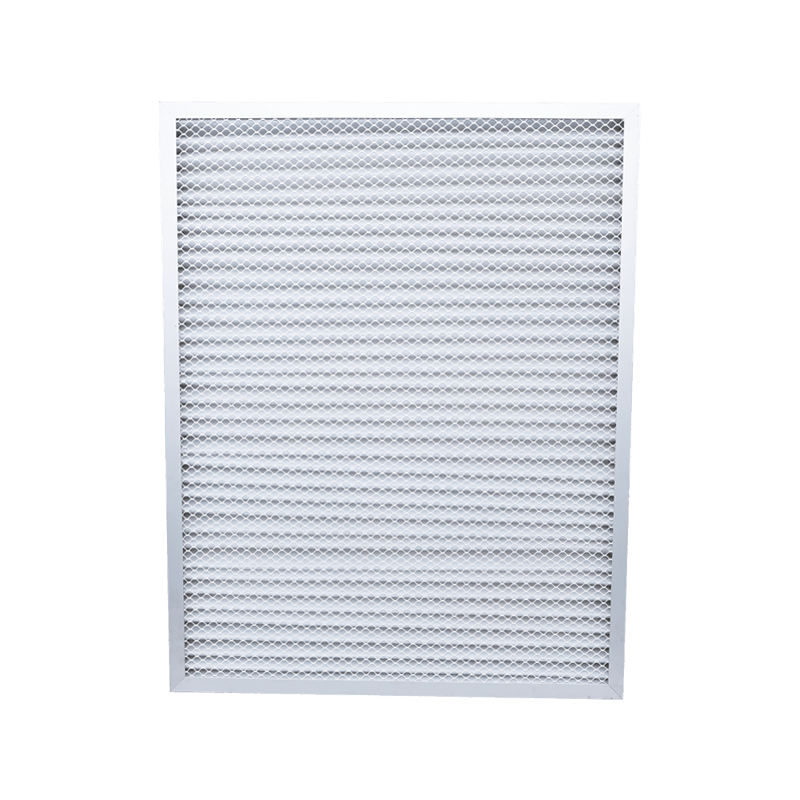
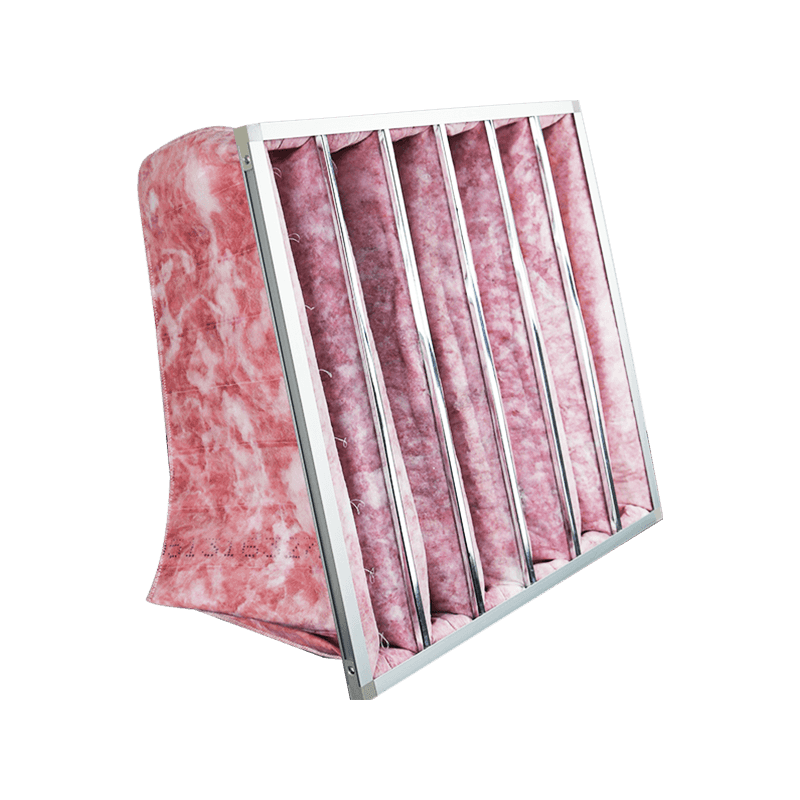
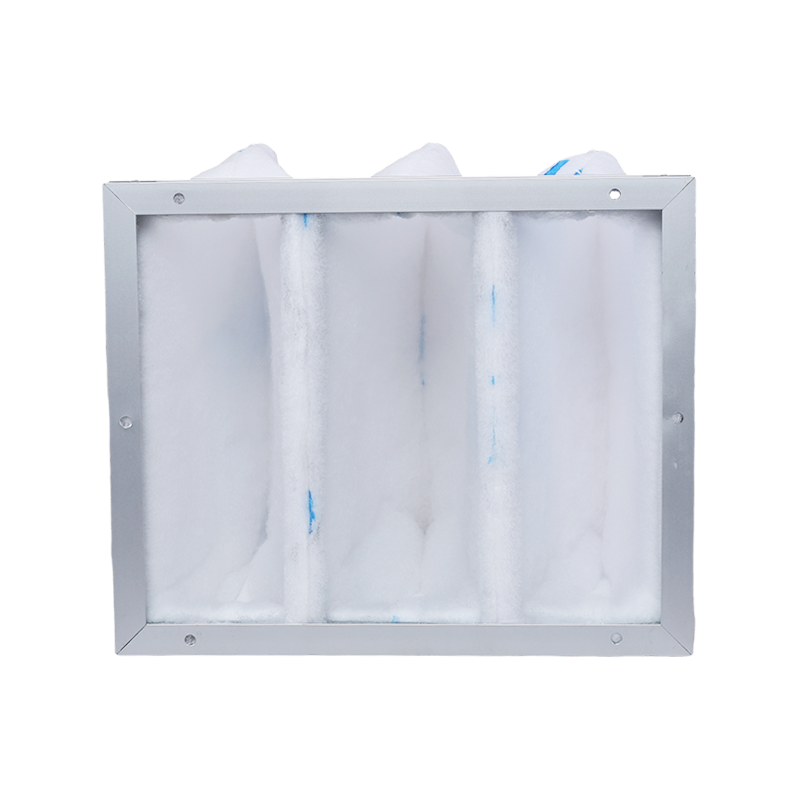
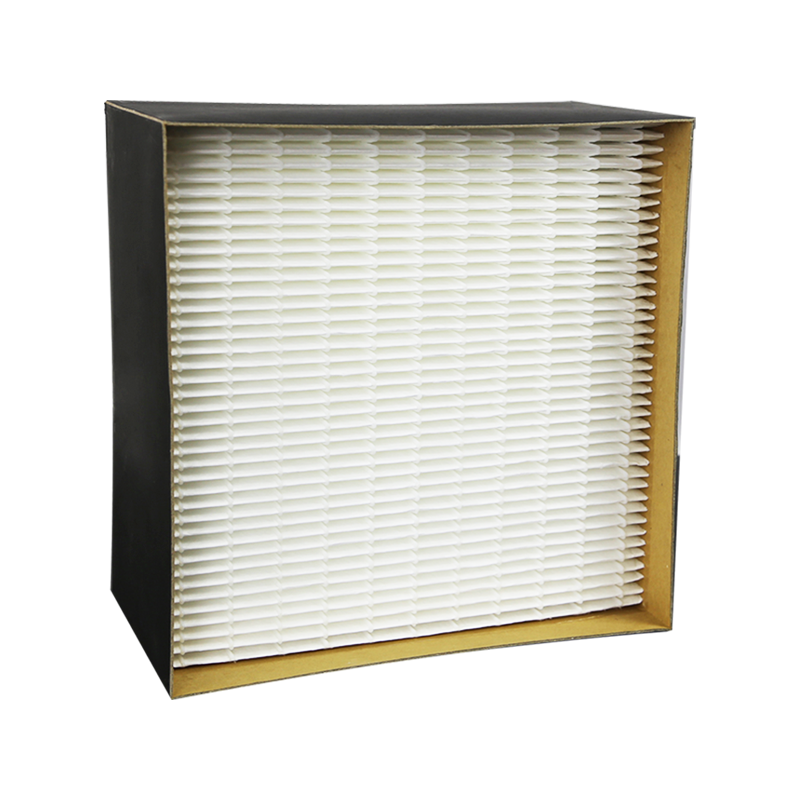
From solutions to productions, we’re specialized in making the products you need.
Home / News / Industry News / Activated Carbon Filter Media: A Practical Guide for Air Filter Designers
Content
Activated carbon filter media is one of those materials that looks straightforward on a specification sheet and becomes far more interesting once you try to make it work inside a real air filter. Carbon can remove odors, VOCs, ozone and other trace gases, but only when the media grade, the amount of carbon, the airflow path and the housing around it are designed as one system. Since 2004, our team at Henka has built carbon filters for air purifiers, fresh-air units, HVAC equipment and specialty applications. The notes below are the practical lessons we share with engineers who are choosing carbon media for a new filter or improving an existing one.
Activated carbon is a highly porous form of carbon. Its internal surface area is enormous for its weight, and that surface is where gas molecules collect through adsorption. The process is not the same as sieving particles out of the air. Odor molecules, solvent vapors and other volatile organic compounds are held on the carbon surface by weak physical forces, while some specially treated carbons use chemical reactions to capture gases such as ammonia or hydrogen sulfide.
That distinction matters during filter design. A carbon stage is usually placed after a coarse pre-filter and, in many purifiers, after or alongside a HEPA stage. The pre-filter protects the carbon from dust that would otherwise block its pores. The carbon then handles the gases and odors that particulate filters cannot remove. If the carbon is expected to do both jobs at once, the filter often becomes thicker, heavier and harder to seal properly.
Humidity is the quiet variable in carbon selection. Water vapor competes with target gases for adsorption sites, so a carbon grade that performs well in a dry laboratory may lose capacity in a humid climate. Temperature has a similar effect: adsorption generally becomes weaker as temperature rises. Good carbon filter design accounts for the real operating conditions, not only the clean, dry test conditions used on a data sheet.
There is no single best form of carbon media. The right choice depends on the target gas, the available space, the acceptable pressure drop and the service life expected by the customer.
| Media form | Typical construction | Strong points | Watch-outs |
|---|---|---|---|
| Granular activated carbon | Loose fill in trays, panels or cylindrical cartridges | Broad VOC and odor removal; flexible loading | Can settle or channel; needs retaining screens |
| Powdered activated carbon | Coated or bonded into nonwoven or fiber media | Thin profiles; suitable for light odor control | Lower holding capacity; dust control in production |
| Extruded or pellet carbon | Binder-formed cylindrical pellets | Low dust and good mechanical strength | Higher pressure drop if packed too deeply |
| Honeycomb carbon block | Extruded honeycomb structure containing carbon | Low pressure drop, high face area, self-supporting | Poor sealing can create bypass paths |
| Carbon-impregnated foam or fiber | Carbon dispersed in foam, felt or nonwoven | Conformable, lightweight and useful in tight spaces | Lower carbon loading and shorter service life |
The table is a starting point, not a ranking. A thin carbon nonwoven can be perfect in a compact purifier where space is limited, while a deep honeycomb block may be the better choice in a fresh-air unit that needs low pressure drop and a long service interval.
Carbon data sheets are full of numbers, and not all of them predict field performance. The useful way to read them is to connect each number to the design decision it supports.
Ask for the test method, sample preparation and conditioning details behind each value. A carbon grade that is tested dry and then installed in a humid fresh-air system may behave quite differently from the laboratory result.
Good carbon filter design is as much about the frame and seal as it is about the carbon itself. Carbon dust can contaminate downstream components, so the media must be contained. Adhesives must be compatible with the carbon and the frame material. The filter must also tolerate handling, shipping and the pressure changes that occur across the filter during operation.
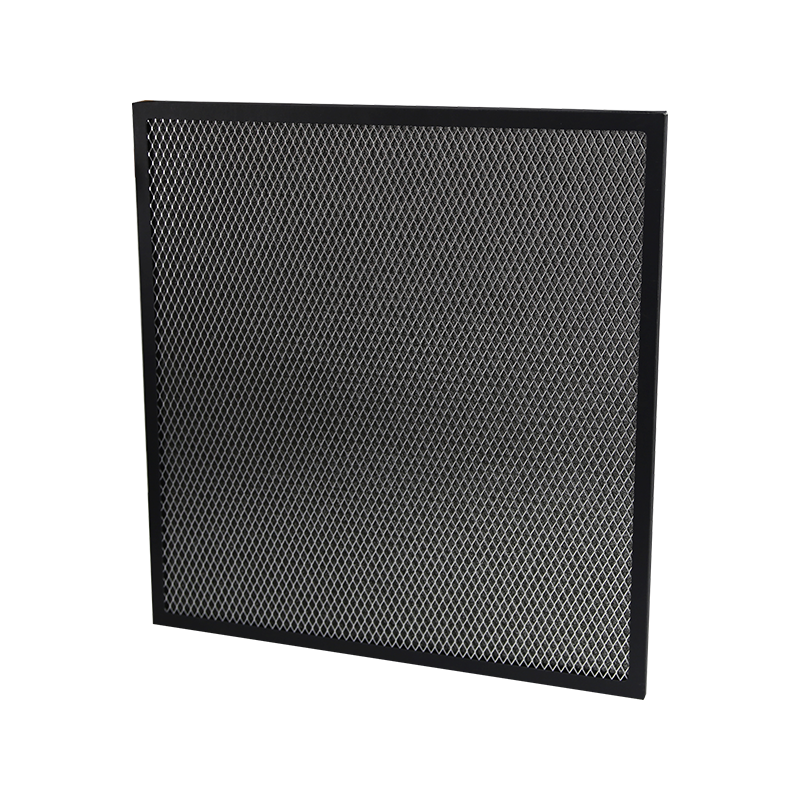
One of the most common requests we receive is for a low-pressure-drop carbon stage that fits into a standard fresh-air or HVAC cabinet. A honeycomb block is often a clean answer because the structure is self-supporting and the channels are uniform. Our honeycomb activated carbon filter is one example of this approach, with a rigid block that can be sealed into a frame and handled as a single component.
 Customizable Honeycomb Activated Carbon FilterA rigid honeycomb block with customizable carbon filling and cell material, suited to framed installations where a self-supporting, uniform-channel carbon stage is needed.View Product →
Corrugated carbon media is another route. It creates a high-surface-area pack with a defined airflow path, and it can be cut and framed for different housing shapes. The corrugated activated carbon filter is useful when the design needs more carbon mass without turning the filter into a deep, heavy box.
 Corrugated Activated Carbon Air FilterPlate-type carbon filter with a corrugated structure for low-resistance airflow in large-volume systems, useful where carbon mass is needed without a deep housing.View Product →
When carbon has to be combined with fine particulate filtration in the same footprint, a composite construction often makes more sense than two separate filters. A multifunctional activated carbon HEPA filter can reduce the number of sealing interfaces and simplify assembly for the equipment manufacturer.
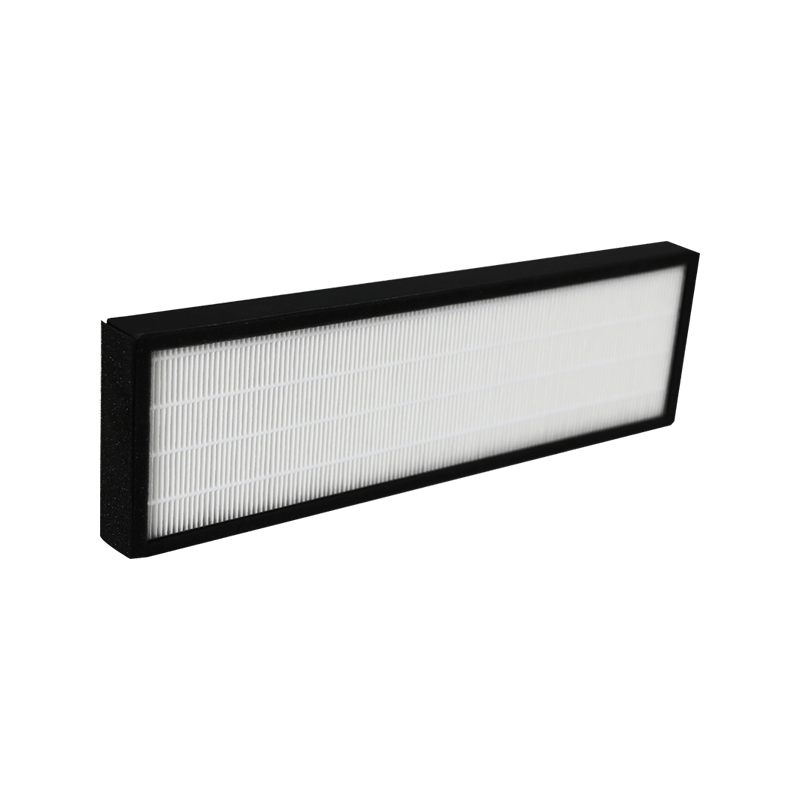 Multifunctional Activated Carbon HEPA FilterCombines HEPA particulate capture with modified activated carbon for formaldehyde, VOC and odor removal, with frame and paper-card options for customized air-filter assemblies.View Product →
In household air purifiers, the carbon stage often has to be thin, light and quiet. The airflow is relatively low, but the customer expects odor removal from cooking, pets and everyday indoor sources. A carbon nonwoven, a thin honeycomb block or a composite carbon and HEPA filter can all work, provided the pressure drop stays inside the fan curve.
Fresh-air systems present a different balance. The carbon stage may see higher airflow and a wider range of outdoor conditions, so media depth and sealing quality become more important. Our fresh air system filters are designed around this trade-off between contact time and pressure drop.
HVAC and cleanroom projects usually need a documented performance target, a defined service interval and a filter that fits a standard frame. In those cases, the carbon media is often specified together with a pre-filter and a final particulate stage. The carbon stage should be selected for the specific gas profile, not simply as a generic odor-control layer.
For air purifier brands, the design conversation often starts with the housing and the fan curve. That is why our household air purifier filters are developed around the whole air path rather than as a standalone carbon sheet.
A clear specification prevents most of the back-and-forth during sampling and production. We recommend covering these points before the first prototype is built.
Carbon is not inert during storage. It can adsorb solvent vapors from packaging, cleaning agents or the surrounding workshop, so we pay attention to how finished filters are bagged and stored. We also check adhesive compatibility carefully. Some adhesives release vapors that the carbon will happily capture, which can reduce the capacity available for the actual application.
Sealing is another detail that deserves more attention than it usually gets. A carbon filter that is 95 percent carbon and 5 percent bypass can behave like a much smaller filter, because air takes the easy path around the media. We often run first-article checks on frame fit, gasket compression and carbon dust control before a new design moves to volume production. Our quality system is based on ISO 9001:2015 and ISO 14001:2015, and several products in our range carry UL certification.
Activated carbon filter media is a small part of the filter by weight and a large part of the performance by design. If you are weighing honeycomb, corrugated, granular or composite carbon for your next project, our team is happy to review the application with you and suggest a construction that fits the housing, the airflow and the service life you have in mind.














Copyright 2023 Nantong Henka Environment Solutions Co.,Ltd. All Rights Reserved
 HEPA Air Filters Manufacturers Customized HEPA Air Filters Factory
 Tel: +86-13813766750
 E-mail:
 Add: 5169, Bin'gang Ave, Binjiang Subdistrict, Haimen City, Jiangsu, China