


 English
 русский
 Español
 简体中文
简体中文
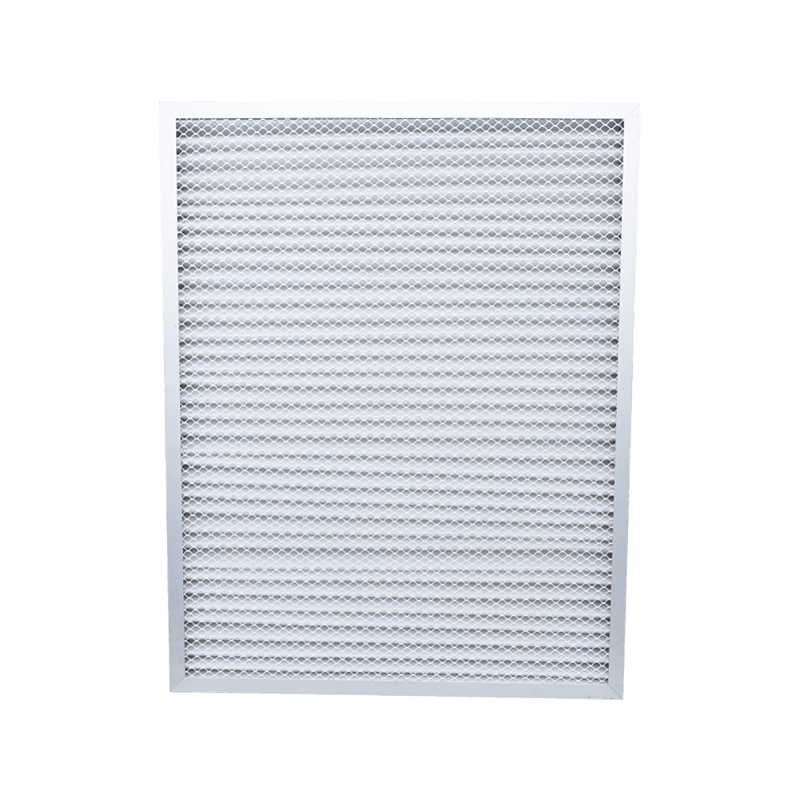
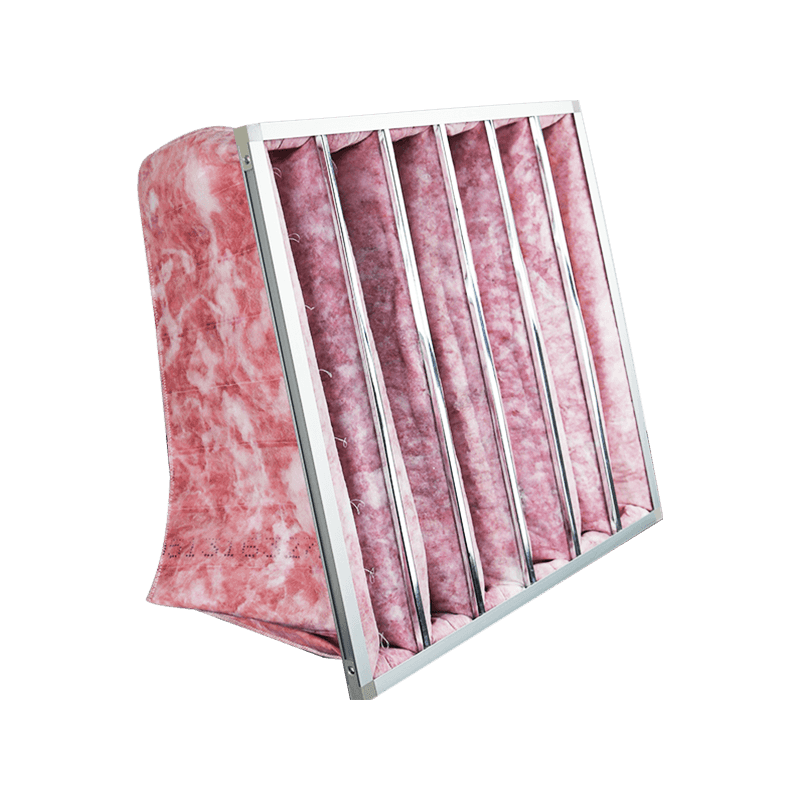
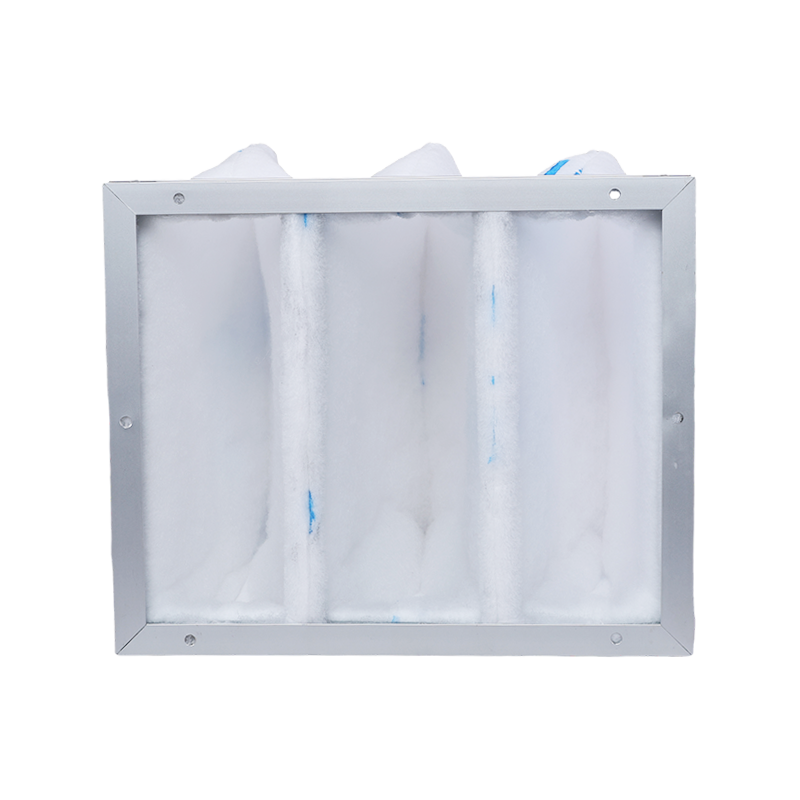
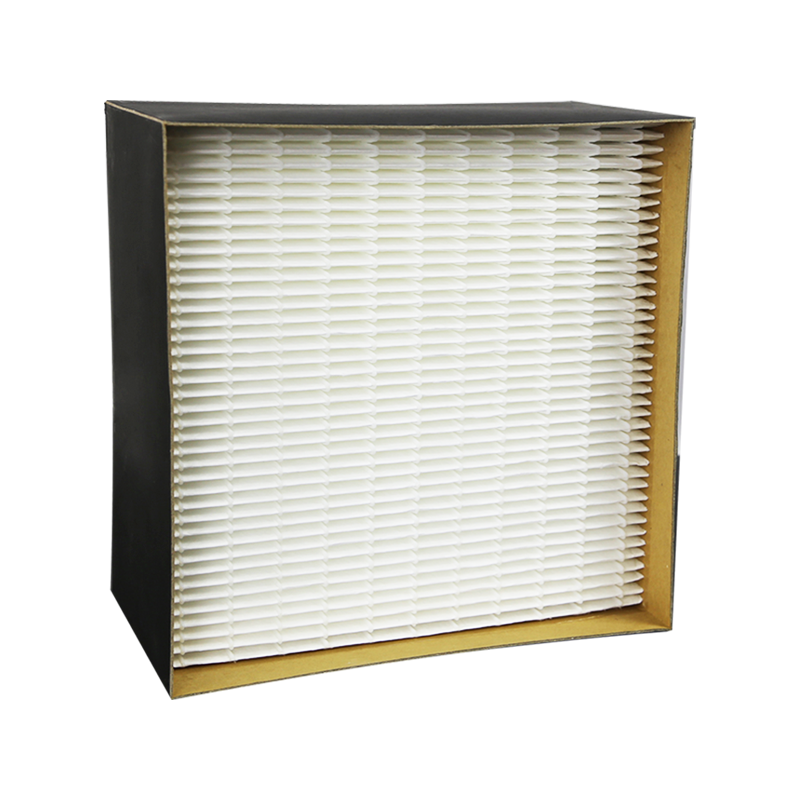
From solutions to productions, we’re specialized in making the products you need.
Home / News / Industry News / Air Filter Pressure Drop Explained: What It Is, Why It Matters, and How to Choose Filters
Content
A compact fresh air unit delivers barely half its rated airflow on the first day of commissioning. A residential air purifier tests well in the lab but hums loudly on the customer's nightstand. A hospital air handling unit needs more fan speed every month until the maintenance team finally checks the filter gauge. These failures share one root cause: air filter pressure drop was treated as an afterthought.
The key insight is simple: pressure drop is as important as filtration efficiency. A filter that captures particles effectively but restricts airflow too much will lower clean air delivery rate, increase energy consumption, raise noise levels, and shorten equipment life. For OEMs and system designers, the time to understand pressure drop is during filter selection, not after field installation.
Pressure drop, also called flow resistance, is the loss of static pressure that occurs when air passes through a filter element. It is measured in pascals (Pa) or inches of water gauge (in. W.G.). Every filter creates some resistance because the media forces air to weave through fine fibers, and the frame, pleats, and spacers add turbulence along the way.
The practical meaning is simple: the higher the pressure drop, the harder the fan must push to deliver the same amount of air. That extra effort translates into reduced airflow, higher power consumption, and more noise at the discharge.
One relationship every design engineer should internalize: pressure drop rises with face velocity. Double the face velocity through the same filter, and the pressure drop can increase three to four times in typical HVAC airflow conditions. This is why the same filter model can have very different pressure drop readings in different units, and why comparing filters without specifying airflow is meaningless.
Every filter has two pressure drop values that matter in system design.
A filter spends most of its service life between these two values. If you size the fan for the initial drop only, airflow will decline progressively and the system will perform below specification for a large portion of the filter's life. If you size for the final drop, the fan will be oversized during the early months. The practical compromise is to plot both values on the fan curve and select a fan that delivers acceptable airflow throughout the service interval.
Filtration efficiency and pressure drop are two sides of the same coin. Higher efficiency filters use denser media and finer fibers, which create more resistance at the same airflow. A MERV 13 filter will almost always have a higher initial pressure drop than a MERV 8 filter used in the same housing.
But the trade-off is not fixed. Filter construction has a large influence on how much pressure drop is needed for a given efficiency:
For high-flow applications, galvanized V-bank high airflow filters are a common solution because they combine compact dimensions with low resistance at rated capacity.
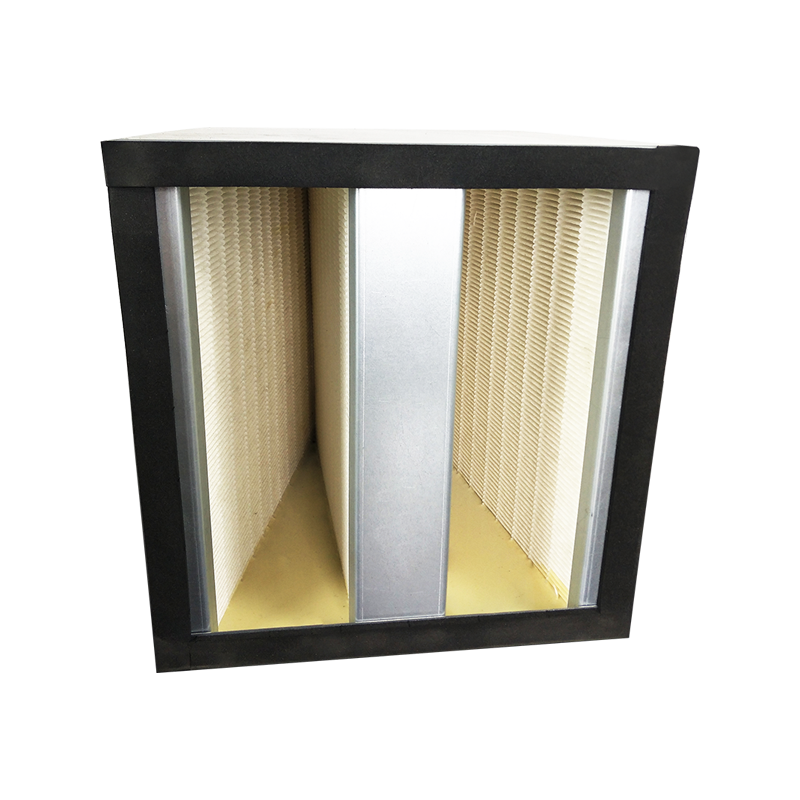 Galvanized V-Bank / W Type Combined High Air Flow Air Filters Suppliers, CompanyNantong Henka - Galvanized V-Bank / W Type Combined High Air Flow Air Filter Suppliers and Company in China, Wholesale Galvanized V-Bank ...View Product →
The table below shows typical initial pressure drop ranges for common filter categories. Actual values vary with face velocity, media selection, and frame design, so use the data as a planning reference, not a substitute for manufacturer test reports.
| Filter Type | Efficiency Range | Typical Initial Pressure Drop (Pa) |
|---|---|---|
| Panel pre-filter | G3-G4 / MERV 6-8 | 25-60 |
| Pleated medium-efficiency filter | F5-F7 / MERV 11-13 | 60-120 |
| Pocket bag filter | F7-F8 / MERV 13-14 | 80-150 |
| V-bank high airflow filter | F7-F9 / MERV 13-16 | 90-180 |
| Mini-pleat HEPA filter | H13-H14 | 200-350 |
| Cylindrical HEPA filter | H13-H14 | 150-300 |
A few patterns stand out. HEPA-grade filters carry the highest resistance and need careful fan selection. Medium-efficiency filters sit in a manageable band, provided the housing allows adequate media area. Pre-filters protect the higher stages and help keep the overall pressure drop from climbing too quickly.
Finer fibers capture smaller particles but create more resistance per unit of media area. Electret media, which uses charged fibers to attract particles, can achieve high efficiency with lower pressure drop than purely mechanical media at the same efficiency target.
More pleats mean more media surface area, which lowers the face velocity through the media and reduces pressure drop. However, over-pleating can actually increase resistance because airflow becomes restricted in the narrow pleat channels. The optimum pleat count depends on the media permeability and the available frame depth.
This is the most direct lever available to designers. A 4-inch-deep filter can hold roughly twice the media area of a 1-inch filter at the same efficiency, cutting pressure drop substantially. That is why commercial air handling units use deep pocket and box filters instead of flat panels whenever space allows.
Aluminum separators, embossed spacers, and glue lines all affect airflow patterns inside the filter. Mini-pleat designs with continuous glue lines generally have lower resistance than designs with individual separators because they create less turbulence at the media surface.
Measuring pressure drop is straightforward when done correctly. Install static pressure taps upstream and downstream of the filter housing, connect them to a differential pressure gauge or digital manometer, and record the difference.
For laboratory-grade data, filter manufacturers test pressure drop in standardized duct rigs following ASHRAE 52.2 or EN ISO 16890. These standards report pressure drop at defined airflow rates and provide the data needed for fan curve matching and product comparison.
The acceptable pressure drop depends on the application, the fan's available static pressure, and the energy cost of moving air through the system over the filter's lifetime.
In commercial HVAC design, a common guideline is to keep the initial filter pressure drop below 20 to 30 percent of the total fan static pressure. Beyond that level, the filter consumes too much of the pressure budget, airflow drops, coil performance degrades, and occupants start complaining about stuffy rooms. For a full discussion of filter selection in ventilation and air conditioning, see our HVAC system filtration overview.
In residential air purifiers, CADR depends on airflow, and airflow depends on pressure drop. A filter with lower resistance allows a smaller, quieter fan to achieve the same clean air delivery rate, which is a decisive advantage in consumer products where noise and power consumption drive purchase decisions. Many compact purifiers use cylindrical filters for household air purifiers because the wrap-around media surface offers more area than a flat panel of the same footprint, reducing pressure drop while keeping the product compact. OEM buyers can learn more in our household air purifier filter guide.
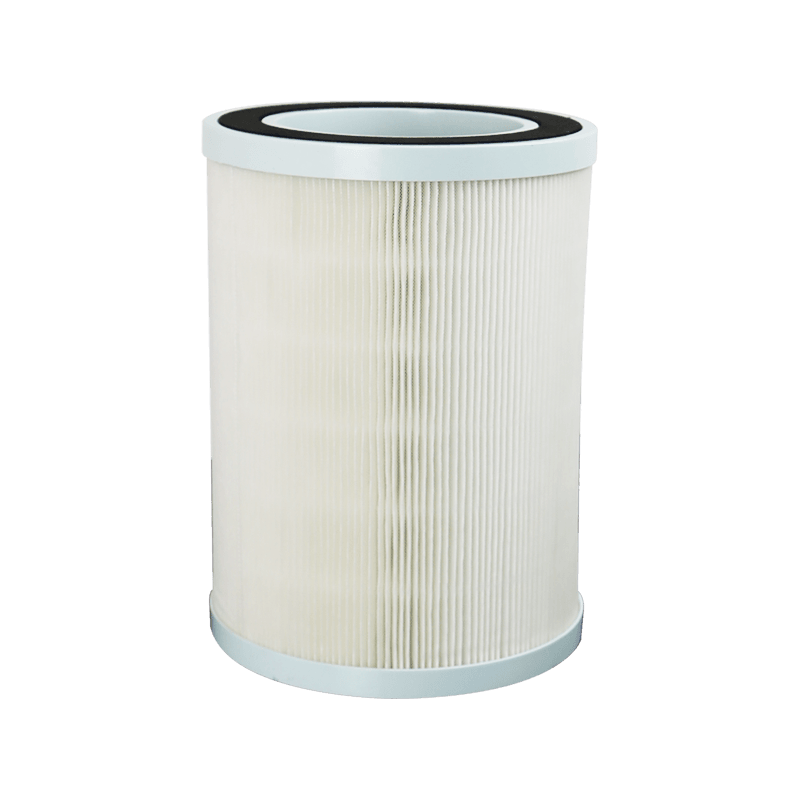 Cylindrical Air Filters for Household Suppliers, Company - Nantong Henka EnvironNantong Henka - Cylindrical Air Filter for Household Suppliers and Company in China, Wholesale Cylindrical Air Filters for Household, The...View Product →
Fresh air units often have tight pressure budgets because the fan must move air through ducting, heat exchangers, and dampers in addition to the filter. A filter with high initial resistance will starve the unit of airflow, reducing the ventilation rate and potentially causing condensation issues. For space-constrained products, integrated solutions such as the DN250 and DN150 purification box units combine filter stages and fan control in a single casing, simplifying pressure drop matching for fresh air system manufacturers.
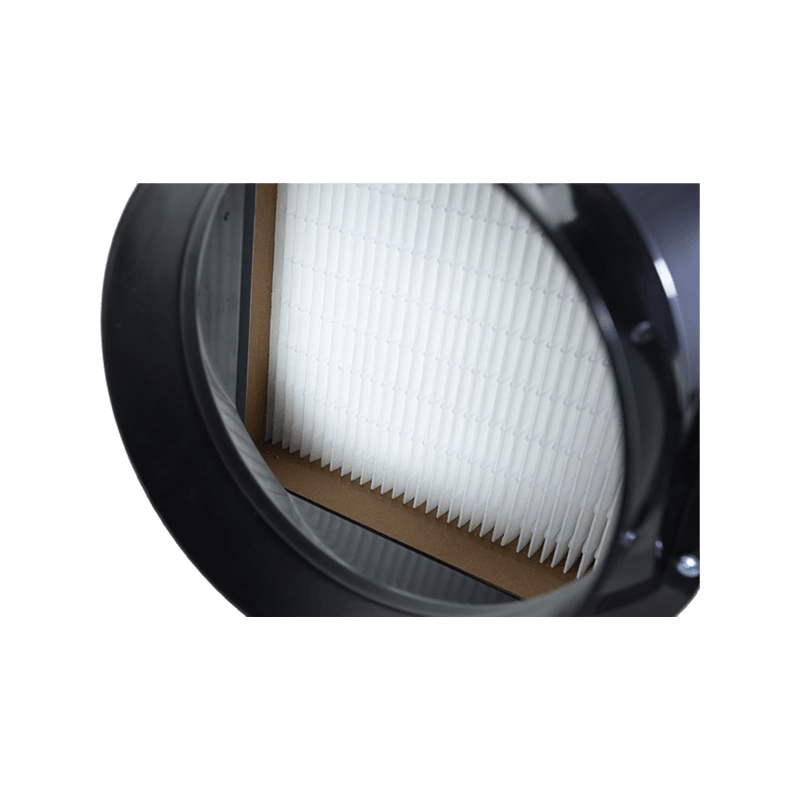 Purification Box DN250/DN150 Suppliers, Company - Nantong Henka Environment SoluNantong Henka - Purification Box DN250/DN150 Suppliers and Company in China, Wholesale Purification Box DN250/DN150, This kind of flanged...View Product →
The following points will help you avoid pressure drop problems before they surface in the field.
Air filter pressure drop is not a hidden parameter reserved for laboratory engineers. It is a fundamental part of system performance, energy efficiency, and user experience. When you select a filter, keep the pressure drop curve in one hand and the efficiency rating in the other. Both deserve equal weight.














Copyright 2023 Nantong Henka Environment Solutions Co.,Ltd. All Rights Reserved
 HEPA Air Filters Manufacturers Customized HEPA Air Filters Factory
 Tel: +86-13813766750
 E-mail:
  Add: 5169, Bin'gang Ave, Binjiang Subdistrict, Haimen City, Jiangsu, China