


 English
 русский
 Español
 简体中文
简体中文
From solutions to productions, we’re specialized in making the products you need.
Home / News / Industry News / How Do HEPA Filters Work? Four Capture Mechanisms Explained in Plain English
Content
HEPA filters work by forcing air through a dense mat of randomly arranged fibers, where airborne particles are captured by four physical mechanisms: inertial impaction, interception, diffusion, and electrostatic attraction. At the most penetrating particle size of about 0.3 microns, a genuine HEPA filter removes at least 99.97% of particles, and many certified designs reach 99.995%. That performance is not a marketing claim; it is a measured standard defined by EN 1822, ISO 29463, and IEST-RP-CC001. Understanding the mechanics behind that number helps you choose the right filter, size an air purification system correctly, and ask better questions when you evaluate a supplier's efficiency data.
The HEPA designation is a performance rating, not a material specification. A filter can only be called HEPA if it is tested with a standardized aerosol and proven to capture a defined minimum percentage of particles at the most penetrating particle size (MPPS). For most commercial and industrial filters, that benchmark is 99.97% at 0.3 microns. Higher grades such as H13 (99.95%) and H14 (99.995%) follow the same test procedure under EN 1822. If you are sourcing media for an air purifier or ventilation unit, ask for a true HEPA filter and verify the rating against the relevant standard rather than accepting the label at face value.
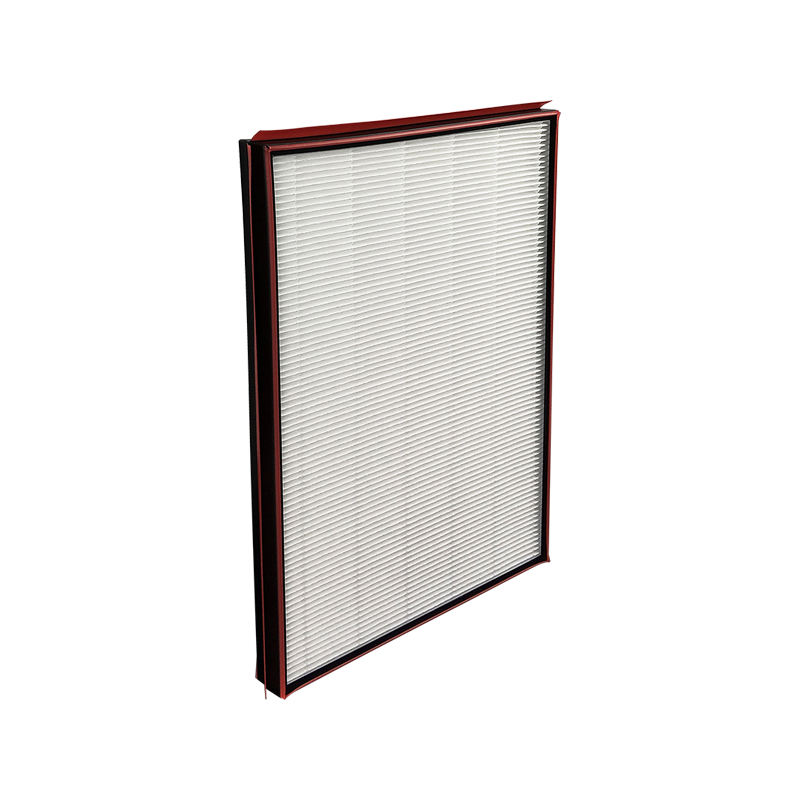 Custom True Hepa Air Filters Suppliers, FactoryAs China Custom True Hepa Air Filters Suppliers and True Hepa Air Filter Factory, Henka offer OEM/ODM True Hepa Air Filters for sale.View Product →
The 0.3 micron test size is not arbitrary. It is the particle diameter at which a given HEPA media is least efficient. Above 0.3 microns, particles are heavy enough to be caught by impaction and interception. Below 0.3 microns, particles are small enough to diffuse into fibers. Because capture efficiency is better on both sides of this middle size, test standards require the filter to meet its rating at exactly the worst-case point.
HEPA media does not work like a sieve. A sieve blocks every particle larger than its opening and lets everything smaller pass through. Filter fibers, by contrast, capture particles across a wide size range using several mechanisms at the same time, and a single particle is often captured by a combination of effects. Each mechanism dominates in a different particle size range.
Particles larger than roughly 0.5 microns have enough mass that they cannot follow the air when it bends around a fiber. Their inertia carries them in a straight line, and they collide with the fiber surface and adhere. This is why higher face velocity can actually improve capture for large particles: the faster the airflow, the harder they crash into the fiber. It is also why pre-filters remove most coarse dust before it reaches the HEPA layer.
Interception captures particles in the 0.1 to 1 micron range that follow the airflow path precisely. When a particle travels along a streamline that passes within one particle radius of a fiber, the particle touches the fiber and is held there by van der Waals forces. No collision takes place, and capture depends on how close the streamline comes to the fiber, not on the velocity of the air. Interception is therefore relatively insensitive to airflow changes, which makes it a dependable mechanism across different operating conditions.
The smallest particles, below 0.1 microns, behave almost like gas molecules. Random collisions with air molecules give them a continuous zig-zag motion called Brownian motion. That random walk greatly increases the chance of a particle wandering into a fiber, so the smaller the particle, the more efficiently diffusion removes it. This is the reason HEPA filters capture virus particles and submicron aerosols better than they capture 0.3 micron test aerosol.
Many synthetic HEPA media carry an electrostatic charge, either applied during manufacturing or generated triboelectrically as air passes through. Charged fibers attract oppositely charged particles and polarize neutral ones, adding capture efficiency without increasing pressure drop. The practical caveat is that some charged media lose efficiency when exposed to high humidity or certain chemical aerosols. A reliable supplier tests media in both charged and discharged states; mechanical HEPA media, which relies only on the three physical mechanisms above, does not have this limitation.
| Mechanism | Dominant particle range | How capture occurs | Effect of higher velocity |
|---|---|---|---|
| Inertial impaction | above 0.5 microns | particle leaves the airstream and collides with the fiber | capture improves |
| Interception | 0.1 to 1 micron | particle follows the streamline and touches the fiber | largely unchanged |
| Diffusion | below 0.1 microns | Brownian motion drives the particle into the fiber | capture weakens |
| Electrostatic attraction | 0.01 to 1 micron | charged fiber attracts or polarizes the particle | unchanged |
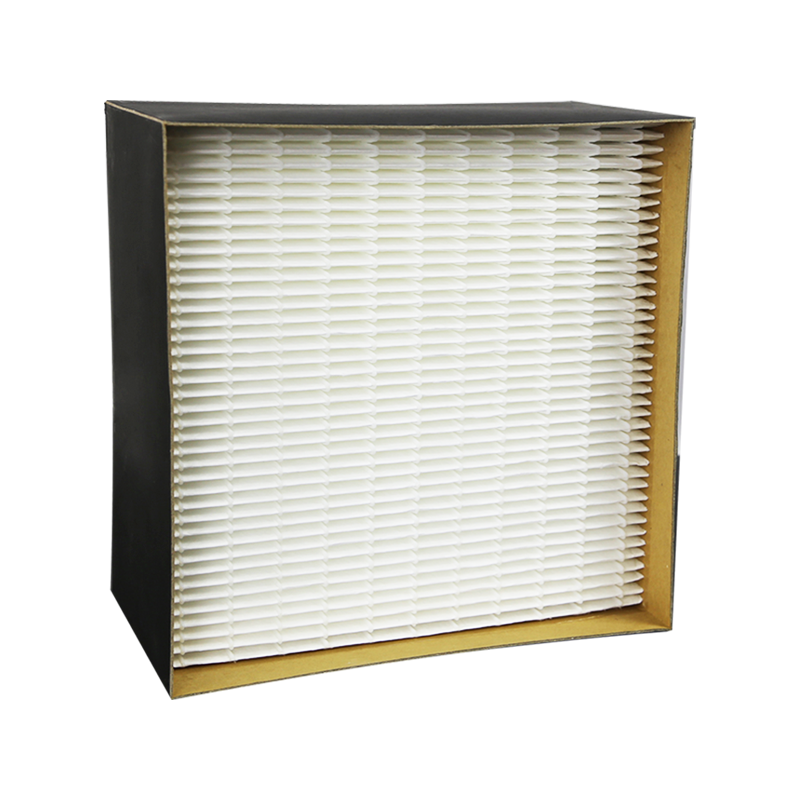
A HEPA filter is never a flat sheet of media. It is pleated into a zig-zag pack so that a large media area fits into a compact frame. Pleating serves two purposes. More media area means more room for particles to deposit, which raises dust-holding capacity and extends service life. It also reduces the velocity of air passing through the media, which protects the diffusion mechanism and limits pressure drop. When these factors are balanced correctly, a mini-pleated HEPA filter can achieve high efficiency at a lower air resistance than a flat design.
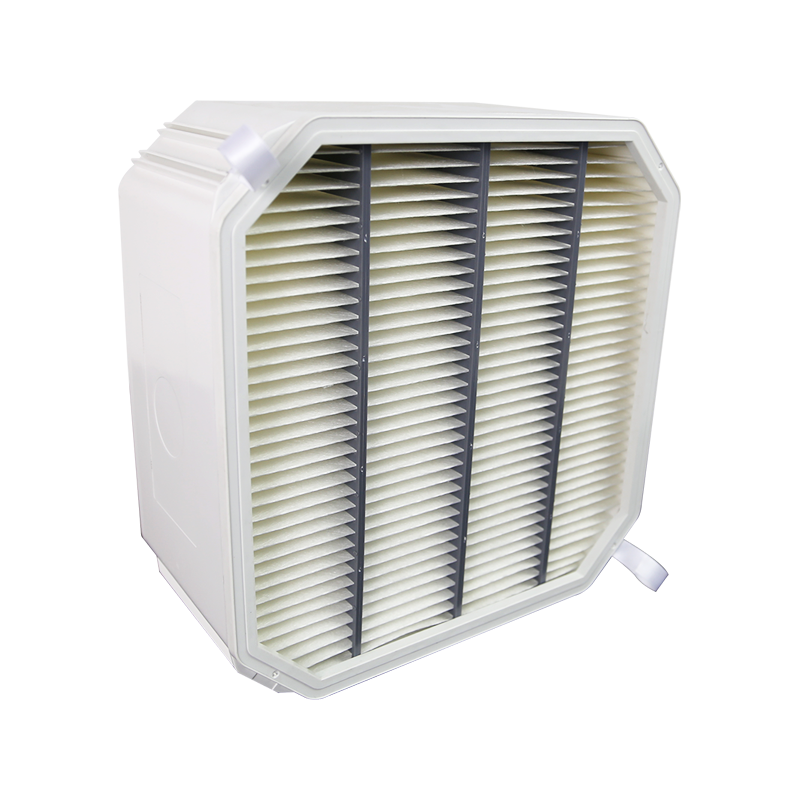 Custom Mini Pleated HEPA Air Filters Suppliers, FactoryAs China Custom Mini Pleated HEPA Air Filters Suppliers and Mini Pleated HEPA Air Filter Factory, Henka offer OEM/ODM Mini Pleated HEPA A...View Product →
The geometry is only as good as the manufacturing. If pleats are compressed too tightly, the media blocks its own surface area and pressure drop climbs. If the frame seal is weak, unfiltered air bypasses the media entirely, and the media efficiency no longer determines what the system delivers. A rigid frame, a well-formed pleat pack, and a verified seal are not optional details. They determine whether the filter reaches its rated efficiency in real operation.
A HEPA filter removes solid and liquid aerosols across a broad spectrum. In practice, it catches pollen and dust, mold spores, bacteria, PM2.5, and the submicron aerosols that carry viruses. Typical particle sizes for common contaminants are:
HEPA has a clear limit: it does not remove gases or vapors. Formaldehyde emitted by pressed wood furniture, VOCs from paints and cleaning products, and odors such as ammonia or cigarette smoke pass straight through the fiber media. That is why complete air purification systems typically combine a particulate filter with an adsorption layer, usually activated carbon. A multifunctional activated-carbon HEPA filter addresses both particulate and gas-phase contaminants in a single cartridge, which is the most common construction in residential air purifiers.
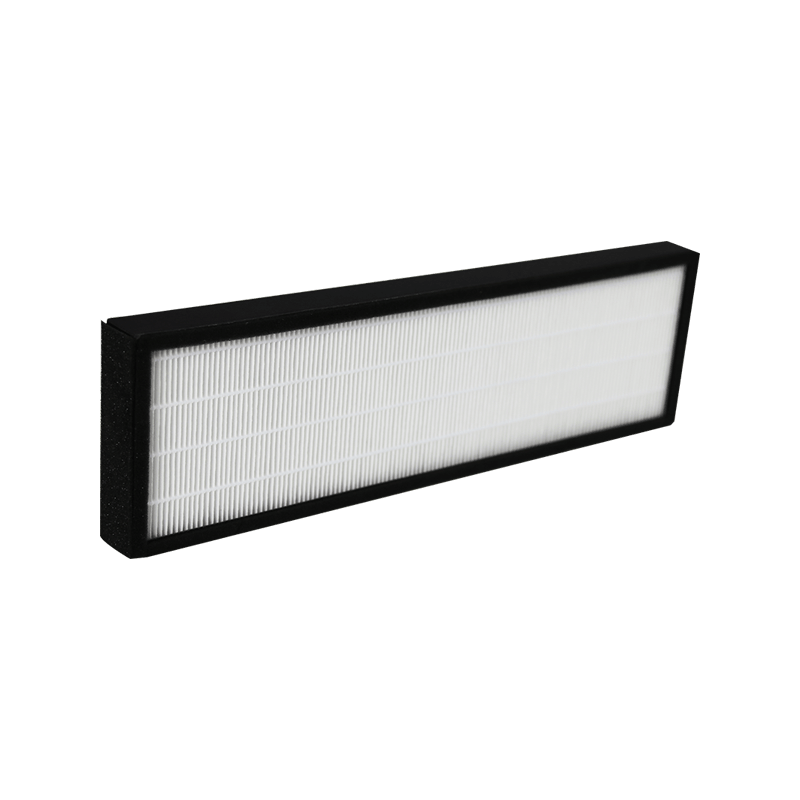 Multifunctional Activated Carbon HEPA Filters Suppliers, Company - Nantong HenkaNantong Henka - Multifunctional Activated Carbon HEPA Filter Suppliers and Company in China, Wholesale Multifunctional Activated Carbon H...View Product →
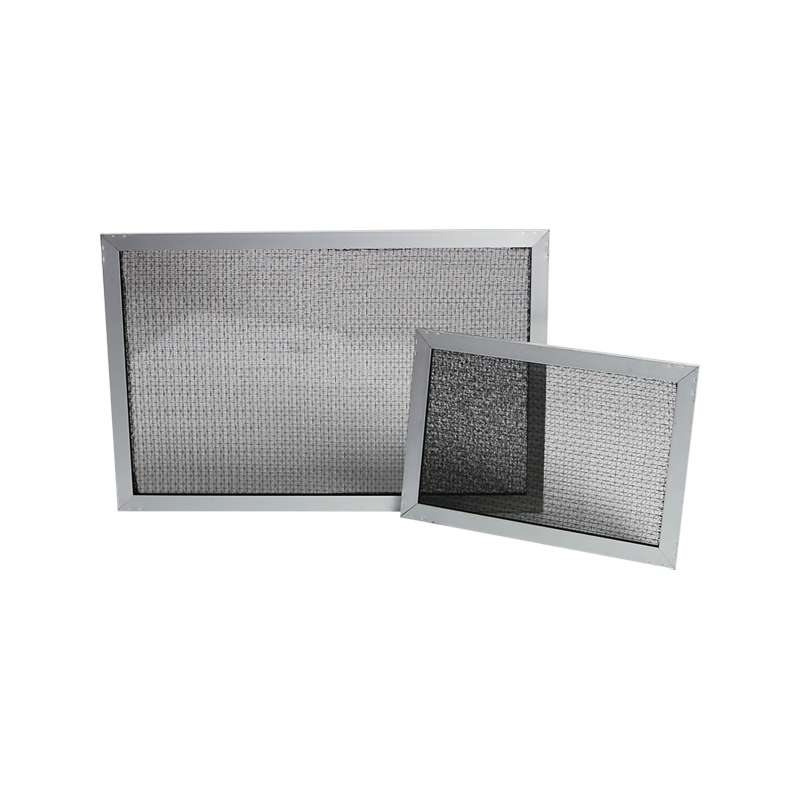
A pre-filter should be part of the same design conversation. A coarse, often washable primary filter placed upstream removes lint, hair, and large dust before they reach the HEPA element. This simple staging typically doubles HEPA service life and is standard practice in both residential purifiers and central ventilation systems.
Choosing a HEPA filter is more than comparing a single efficiency percentage. The specifier also has to balance airflow resistance, filter depth, media area, frame material, sealing method, and replacement interval. A filter that achieves 99.99% efficiency but creates a pressure drop that the fan cannot overcome will perform worse in practice than a slightly less efficient filter that fits the system's pressure budget. This is why responsible manufacturers quote both minimum efficiency and maximum initial pressure drop.
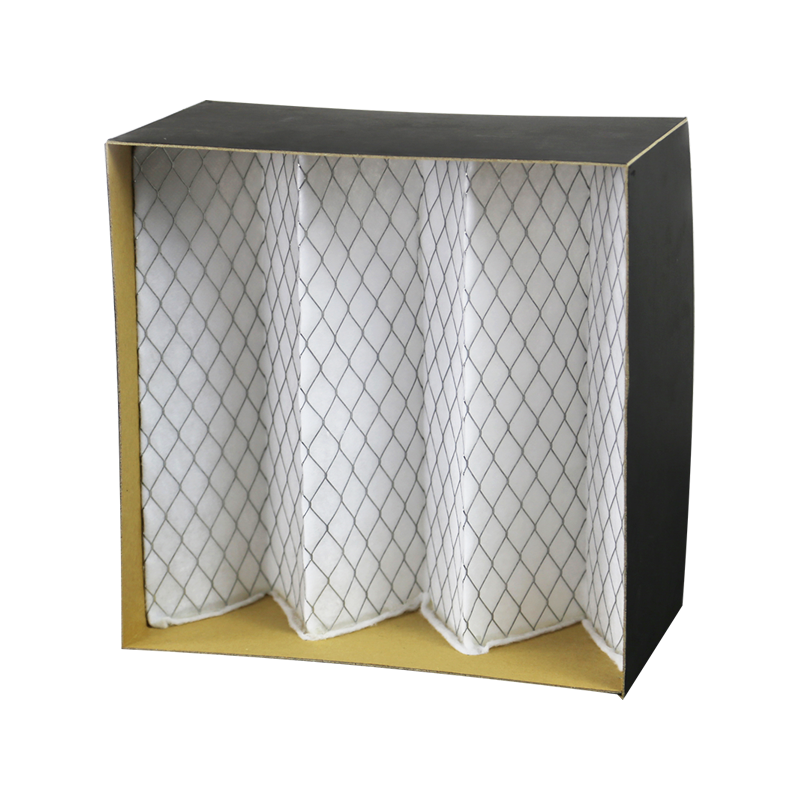
The application dictates the format. A household air purifier cartridge must run quietly at moderate airflow for many months. A cleanroom or hospital installation demands validated media and robust seals under continuous duty. An HVAC system filter must keep pressure drop low while handling seasonal dust and moisture loading. The same HEPA media can be formed into cylindrical cartridges, V-bank panels, or flat packs to match these installations, so the structural format is as important as the media grade.
The practical answer to how HEPA filters work is that they use four independent physical mechanisms to catch particles across the entire size range, with a measured efficiency of 99.97% or better at the hardest-to-catch particle size. Use that knowledge by verifying the efficiency rating against a recognized standard, confirming that the pressure drop fits the system, adding a pre-filter and a carbon layer where the application needs them, and choosing a filter format that matches the installation. Get those decisions right, and the filter will deliver years of dependable air cleaning.
No next article
Air Filter Pressure Drop Explained: What It Is, Why It Matters, and How to Choose Filters














Copyright 2023 Nantong Henka Environment Solutions Co.,Ltd. All Rights Reserved
 HEPA Air Filters Manufacturers Customized HEPA Air Filters Factory
 Tel: +86-13813766750
 E-mail:
  Add: 5169, Bin'gang Ave, Binjiang Subdistrict, Haimen City, Jiangsu, China