


 English
 русский
 Español
 简体中文
简体中文
From solutions to productions, we’re specialized in making the products you need.
Industry News
Mar 11,2026
What Does a Primary Air Filter Do and When Should You Replace It?
Content
- 1 What Is a Primary Air Filter and What Function Does It Serve?
- 2 Types of Primary Air Filters and Their Construction
- 3 Key Performance Parameters for Evaluating Primary Air Filters
- 4 Primary Air Filter Applications Across Industries
- 5 How to Determine When a Primary Air Filter Needs Replacing
- 6 Can Primary Air Filters Be Cleaned and Reused?
- 7 Selecting the Right Primary Air Filter for Your Application
What Is a Primary Air Filter and What Function Does It Serve?
A primary air filter is the first and main filtration stage in an air intake system, designed to remove particulate contaminants — dust, dirt, pollen, debris, soot, and other airborne particles — from incoming air before it reaches an engine, compressor, HVAC unit, industrial machine, or ventilation system. The word "primary" distinguishes this filter from secondary or safety filters positioned further downstream in the same system. While a secondary filter serves as a backup to catch particles that bypass or pass through a compromised primary element, the primary filter does the overwhelming majority of the filtration work under normal operating conditions and bears the brunt of contaminant loading over its service life.
In internal combustion engines — whether in passenger vehicles, heavy-duty trucks, agricultural tractors, construction equipment, or industrial generators — the primary air filter protects the engine from ingesting abrasive particles that would accelerate cylinder bore wear, scratch valve seats, erode turbocharger compressor blades, and contaminate engine oil. Even microscopic silica dust particles smaller than 10 microns, invisible to the naked eye, cause measurable abrasive wear when they enter the combustion chamber at the velocity and frequency typical of engine intake airflow. A properly functioning primary air filter removes the vast majority of these particles before they can cause harm, and the difference between a clean, correctly specified primary filter and a blocked or absent one is directly reflected in engine wear rates, oil analysis results, and long-term reliability statistics.
In HVAC and building ventilation systems, the primary air filter serves a different but equally important purpose: protecting both the mechanical equipment downstream — heat exchangers, cooling coils, fan blades, and ductwork — and the indoor air quality delivered to occupants. Accumulated dust on HVAC heat exchanger coils reduces thermal transfer efficiency, increasing energy consumption and reducing system cooling or heating capacity. The primary filter prevents this accumulation while simultaneously removing allergens, coarse dust, and biological particles from recirculated or fresh outside air before it is distributed through the building.
Types of Primary Air Filters and Their Construction
Primary air filters are manufactured in a wide range of formats, media types, and structural configurations to suit the diverse applications they serve. The type of filter selected for a given application determines its filtration efficiency, pressure drop, dust-holding capacity, and suitability for the operating environment.
Dry Paper Element Filters
Dry paper element filters are the most common primary filter type in automotive, heavy equipment, and industrial engine applications. The filter media is a specially formulated cellulose or synthetic fiber paper that is pleated into a cylindrical or panel form to maximize surface area within a compact housing. The pleated geometry is critical — a filter with more pleat surface area for a given housing volume accumulates more dust before reaching its service limit, extending the replacement interval and reducing the frequency of service stops. The paper media is impregnated with resin to maintain its structural integrity and pleat geometry under varying humidity and temperature conditions, and the pleat tips are often separated by corrugated embossments molded into the paper itself to prevent adjacent pleats from collapsing against each other and blocking airflow under high vacuum conditions. End caps — typically made from polyurethane foam or plastic — seal the ends of the cylindrical filter element against the housing, preventing air from bypassing the media.

Synthetic and Nanofiber Media Filters
Synthetic fiber media filters use polyester, polypropylene, or glass fiber as the filtration medium rather than cellulose paper. Synthetic fibers offer higher moisture resistance than cellulose — a critical advantage in applications where the intake air may carry significant water vapor or liquid droplets — and generally provide higher dust-holding capacity for equivalent filtration efficiency. Nanofiber media takes this further by applying a layer of electrospun polymer fibers with diameters measured in nanometers onto a conventional substrate. This nanofiber surface layer acts as a surface filtration mechanism rather than a depth filtration mechanism — particles are captured on the surface of the media rather than being trapped within its depth — which enables easier cleaning, lower pressure drop for equivalent filtration efficiency, and longer service life in dusty environments where filter regeneration by compressed air cleaning is practiced.
Panel and Flat Sheet Filters
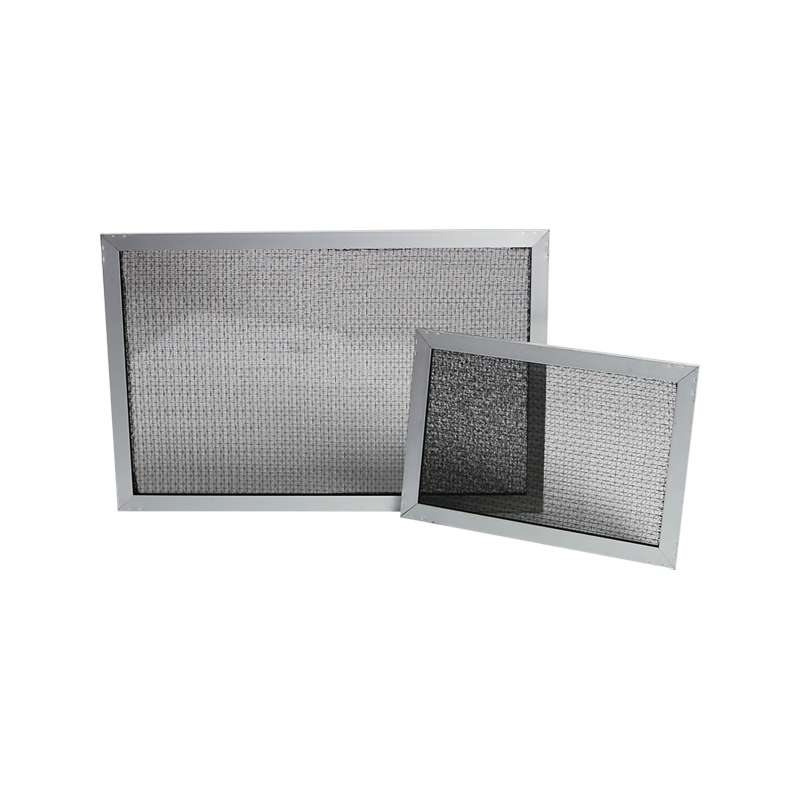
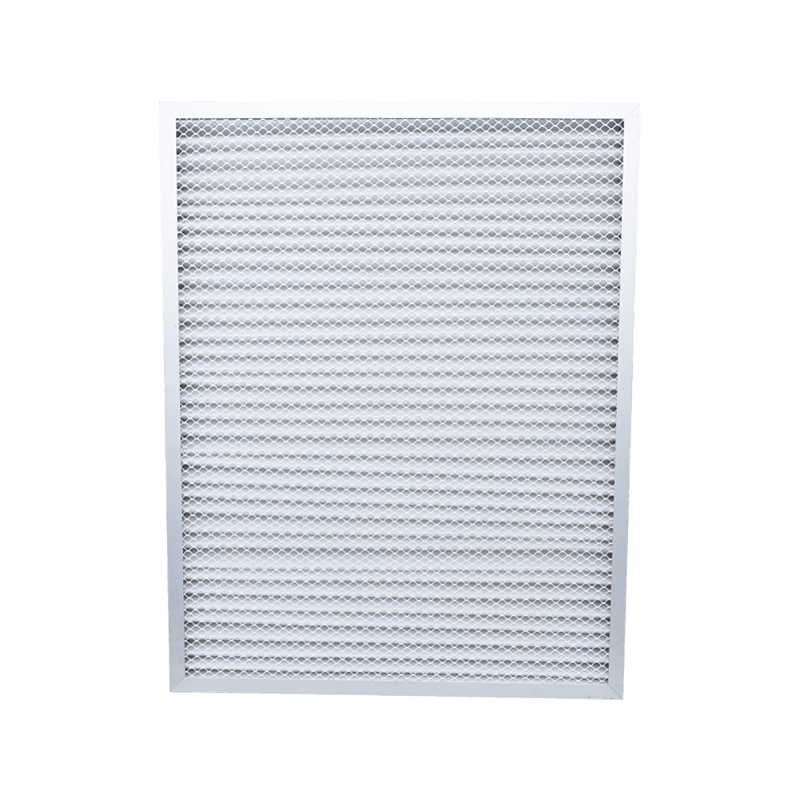
Panel filters — flat or lightly pleated rectangular frames containing filter media — are the standard primary filter format in residential and commercial HVAC systems. They are sized to fit standard duct dimensions and rated by the MERV (Minimum Efficiency Reporting Value) scale, which runs from MERV 1 (lowest efficiency, coarsest particle capture) to MERV 16 (high efficiency, fine particle capture). Residential primary air filters typically range from MERV 5 to MERV 13, with lower MERV ratings used where maximum airflow is prioritized and higher ratings where air quality improvement is the primary objective. The filter media in panel filters ranges from spun fiberglass for low-MERV applications to electrostatically charged synthetic fiber for mid-range MERV ratings and finely graded composite media for high-MERV performance.
Key Performance Parameters for Evaluating Primary Air Filters
Comparing primary air filters requires evaluating a consistent set of performance parameters that determine how well the filter will serve its function in a specific application. The following table defines the most important specifications and their practical significance:
| Parameter | Definition | Why It Matters |
| Filtration Efficiency (%) | Percentage of target particle size captured by the filter media | Determines how effectively the filter protects downstream equipment or air quality |
| Initial Pressure Drop (Pa) | Airflow resistance of a clean filter at rated flow rate | Lower initial pressure drop reduces energy consumption and maintains system airflow |
| Dust-Holding Capacity (g) | Total mass of test dust the filter can hold before reaching service limit pressure drop | Higher capacity extends service intervals, especially important in dusty environments |
| Service Limit Restriction (kPa) | Maximum allowable pressure drop before filter must be replaced | Defines the end-of-life signal for engine and industrial applications |
| MERV Rating | Standardized HVAC filter efficiency rating (ASHRAE 52.2) | Enables direct comparison of HVAC panel filters across manufacturers |
| ISO 5011 / ISO 16890 Compliance | Test standard under which the filter's performance was measured | Ensures performance data is measured by a recognized, reproducible methodology |
Primary Air Filter Applications Across Industries
Primary air filters are found in virtually every system or machine that moves air through a mechanical process. Each application imposes distinct requirements on the filter's physical format, efficiency specification, and service environment.
- Automotive Engines: Every gasoline and diesel passenger vehicle engine has a primary air filter in its intake system — typically a flat panel or cylindrical element housed in the airbox. Replacement intervals range from 15,000 km in severely dusty environments to 30,000–50,000 km under normal driving conditions. A blocked primary air filter on a passenger car reduces engine power, worsens fuel economy, and in turbocharged engines can cause turbocharger compressor surge.
- Heavy-Duty Diesel Engines: Trucks, buses, and large diesel-powered equipment use large cylindrical primary filter elements — often 300 mm in diameter and 500 mm long — to handle the high airflow volumes of big displacement engines while maintaining adequate service intervals. Many heavy-duty applications use a restriction indicator (service indicator) connected to the intake system that signals when the primary filter's restriction has reached the manufacturer's service limit, preventing premature replacement and maximizing filter utilization.
- Agricultural and Construction Equipment: Tractors, combine harvesters, excavators, and loaders operate in some of the most severe dust environments possible — fine silica-rich soil dust, grain chaff, concrete dust, and coal particulate. Primary air filters on agricultural and construction equipment must combine very high dust-holding capacity with robust structural integrity to survive vibration, temperature extremes, and the rough handling of field service. Many machines in these applications also employ pre-cleaners — cyclonic or centrifugal separators positioned ahead of the primary filter — to remove the coarsest fraction of airborne contamination before it even reaches the primary element, dramatically extending primary filter service life.
- HVAC and Building Ventilation: Commercial and residential HVAC systems use primary panel filters to protect air handling unit components and maintain indoor air quality. In healthcare facilities, clean rooms, and commercial buildings, the primary filter is typically the first of a two or three stage filtration train — coarse primary filter followed by a medium-efficiency secondary filter and possibly a final HEPA stage for critical environments. The primary filter in these systems does the heavy lifting of removing coarse dust and extending the life of the more expensive downstream stages.
- Industrial Compressors and Turbines: Air compressors used in manufacturing plants, pneumatic tools, and process industries use primary inlet filters to prevent abrasive particles from entering compression stages where they would cause catastrophic wear to pistons, rings, valves, and rotors. Gas turbines used for power generation have particularly demanding primary filtration requirements because even small amounts of fine particulate can cause erosion of turbine blades operating at tip speeds approaching the speed of sound.
How to Determine When a Primary Air Filter Needs Replacing
One of the most common and costly maintenance mistakes with primary air filters is replacing them on a fixed calendar or mileage interval regardless of actual condition. In low-dust environments, a primary filter may remain fully serviceable well beyond its nominal replacement interval; in high-dust conditions, it may reach its service limit in a fraction of the recommended interval. Both over-replacement and under-replacement carry costs — the first wastes money and generates unnecessary waste, the second risks equipment damage and performance degradation.
Restriction Indicators for Engine Applications
The most reliable method for determining primary filter service intervals in engine applications is the restriction indicator — a simple mechanical or electronic device installed in the intake system downstream of the primary filter that measures the vacuum (negative pressure) created by airflow through the increasingly loaded filter. As dust accumulates on the filter media, restriction increases and intake vacuum rises. When the restriction reaches the engine manufacturer's specified service limit — typically 3.75 kPa for naturally aspirated engines and up to 6.25 kPa for turbocharged engines — the restriction indicator triggers a visual warning (typically a red flag or LED that latches in the triggered position) indicating that the primary filter requires replacement. Using a restriction indicator to govern primary filter replacement ensures maximum filter utilization, eliminates premature replacement, and prevents operation with a critically overloaded filter that would starve the engine of air.
Visual Inspection for HVAC Filters
For HVAC panel filters, visual inspection combined with differential pressure measurement across the filter provides the most practical service guidance. A filter that shows heavy gray or brown dust loading across its entire face area, with visible blockage of the media surface, has reached the end of its useful service life regardless of the time elapsed since installation. In systems with higher-MERV filters where media loading is harder to assess visually, a simple differential pressure gauge installed across the filter housing — reading the pressure difference between upstream and downstream — provides an objective measurement. Most HVAC equipment manufacturers specify a maximum allowable pressure drop across the primary filter; when this limit is approached or exceeded, replacement is necessary to maintain system airflow and prevent the fan motor from operating at excessive current draw trying to overcome excess filter restriction.
Can Primary Air Filters Be Cleaned and Reused?
The question of whether primary air filters can be cleaned and reused is one of the most frequently asked — and most frequently mishandled — maintenance topics across both engine and HVAC applications. The answer depends critically on the filter media type, the cleaning method used, and the condition of the filter after cleaning.
Dry paper element filters in engine applications can be cleaned by tapping the element gently against a hard surface to dislodge loose surface dust, or by carefully blowing compressed air from the clean side (inside) outward through the media at low pressure — typically 200 to 300 kPa maximum. This procedure can restore a measurable portion of the filter's remaining capacity and is an acceptable emergency measure when a replacement element is unavailable. However, it does not restore the filter to its original performance specification: compressed air cleaning does not remove fine particles deeply embedded in the media fibers, it cannot reverse the gradual reduction in media pore size caused by progressive clogging, and it risks creating micro-tears in the paper media that create particle bypass pathways invisible to visual inspection. For this reason, most engine manufacturers specify that primary paper elements must not be cleaned more than a limited number of times — typically once or twice — and must be replaced on condition, not extended indefinitely through cleaning cycles.
Washable primary air filters — either oiled foam pre-filters or synthetic fiber filters marketed specifically as cleanable — are designed from the outset for repeated cleaning and re-oiling cycles. These filters offer an economic advantage for vehicle owners who service their own air filters regularly, but they typically offer lower filtration efficiency than equivalent-size dry paper elements and require careful adherence to the manufacturer's cleaning and re-oiling procedure to maintain their performance specification. Using too little oil after cleaning reduces efficiency; using too much oil risks contaminating mass airflow sensors and throttle bodies with oil residue carried into the intake stream.
Selecting the Right Primary Air Filter for Your Application
Choosing an appropriate primary air filter involves matching the filter specification to the demands of the specific application across several dimensions simultaneously. The following practical guidelines apply across the most common selection scenarios:
- Match the Filtration Efficiency to the Application's Sensitivity: Precision engines, turbocharged diesel power units, and gas turbines require primary filters with efficiency ratings of 99.5 percent or higher at the target particle size. HVAC primary filters in office environments are typically adequate at MERV 8 to MERV 11. Using a higher efficiency than necessary increases pressure drop and operating costs without proportional benefit; using insufficient efficiency risks equipment damage or air quality failure.
- Prioritize Dust-Holding Capacity in Dusty Environments: For equipment operating in quarries, on construction sites, in grain harvesting, or in industrial environments with high airborne particulate, prioritize dust-holding capacity over initial efficiency when selecting between competing filter options of similar efficiency. A filter with double the dust-holding capacity may allow double the service interval, significantly reducing service frequency and associated downtime costs.
- Use OEM-Equivalent or OEM-Specified Filters for Engine Applications: Engine manufacturers specify primary air filters that are matched to the airflow requirements, housing geometry, and filtration performance targets of that specific engine. Substituting a lower-cost generic filter that fits the housing but does not match the OEM filtration efficiency or media quality can void engine warranties and reduce protection against abrasive wear. Always verify that aftermarket filters meet or exceed the OEM filtration efficiency specification — not just the dimensional specification.
- Consider Media Type for the Moisture Environment: In high-humidity environments, or in applications where the air intake may encounter rain, morning dew, or condensation, synthetic fiber or nanofiber media primary filters offer better moisture resistance than standard cellulose paper. Wet cellulose media can collapse or develop mold growth during extended storage between service intervals, both of which compromise filter performance and introduce contamination risks.
- Verify Filter Certification and Testing Standard Compliance: For applications where filtration performance directly affects safety, regulatory compliance, or equipment warranty validity, confirm that the selected primary filter is certified under the applicable standard — ISO 5011 for engine air filters, ISO 16890 or ASHRAE 52.2 for HVAC filters, or application-specific standards for gas turbines and clean room equipment. Performance claims on uncertified filters cannot be independently verified and should be treated with caution.
The primary air filter is a low-cost component with outsized consequences for the systems it protects. Selecting the correct specification, monitoring its condition accurately rather than replacing on arbitrary time intervals, and replacing it promptly when it reaches its service limit are the three practices that translate directly into lower maintenance costs, longer equipment life, and consistently reliable performance across every application where clean air is a fundamental operational requirement.
Cylindrical Filter Cartridge: Types, Materials, and How to Select the Right One
What Do Primary Air Filters Do and How Do You Choose the Right One?
related products

 Tel: +86-13813766750
 E-mail:
  Add: 5169, Bin'gang Ave, Binjiang Subdistrict, Haimen City, Jiangsu, China
partners














Copyright 2023 Nantong Henka Environment Solutions Co.,Ltd. All Rights Reserved
 HEPA Air Filters Manufacturers Customized HEPA Air Filters Factory