


 English
 русский
 Español
 简体中文
简体中文
From solutions to productions, we’re specialized in making the products you need.
Industry News
Apr 22,2026
What Do HEPA Filters Actually Capture and How Do They Work?
Content
- 1 What Is a HEPA Filter and Where Did It Come From?
- 2 How Does a HEPA Filter Actually Capture Particles?
- 3 What Particles and Contaminants Do HEPA Filters Remove?
- 4 Understanding HEPA Filter Grades and Standards
- 5 Where Are HEPA Filters Used?
- 6 How to Maintain and Replace HEPA Filters Correctly
- 7 How to Choose the Right HEPA Filter Product for Your Needs
What Is a HEPA Filter and Where Did It Come From?
HEPA stands for High Efficiency Particulate Air, and it refers to a filtration standard rather than a specific material or brand. A filter qualifies as true HEPA only when it can capture at least 99.97% of airborne particles that are 0.3 microns in diameter — a threshold established because particles of this size are the most difficult to trap and represent the worst-case scenario for filter penetration. Particles both larger and smaller than 0.3 microns are actually captured at even higher efficiency rates due to the different physical mechanisms at work within the filter media.
The technology has its roots in the Manhattan Project during World War II, when scientists needed a reliable method to contain radioactive particles in research facilities. The original filters were developed by the U.S. Atomic Energy Commission and were classified for decades before being adapted for commercial and residential use. Today, HEPA filtration is a cornerstone technology in hospitals, pharmaceutical manufacturing, semiconductor fabrication, and an ever-expanding range of consumer air purification and vacuum products.
How Does a HEPA Filter Actually Capture Particles?
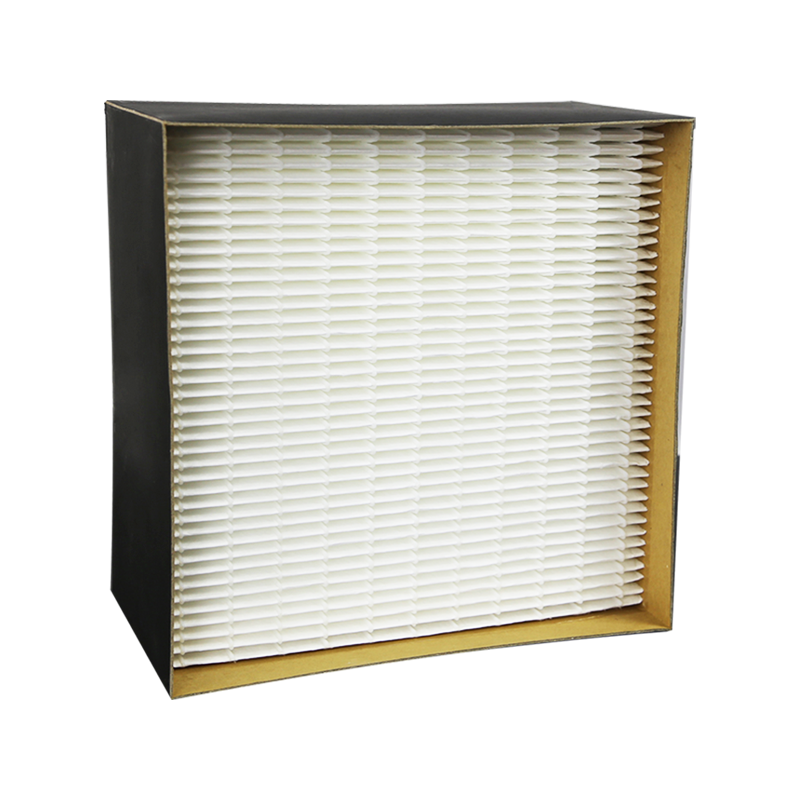
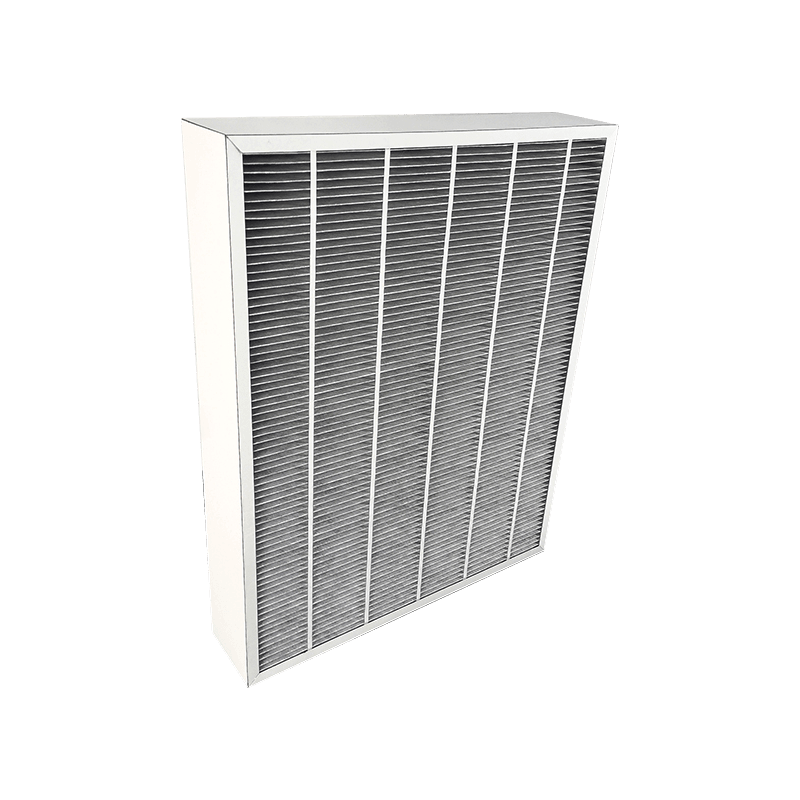
Many people assume HEPA filters work like a simple physical sieve — blocking particles too large to pass through the holes in the filter material. While this mechanism does play a role, the reality is more sophisticated. HEPA filter media is constructed from a dense mat of randomly arranged borosilicate glass fibers, and it captures particles through four distinct physical mechanisms that operate simultaneously.
Interception
Medium-sized particles traveling through the filter follow the airstream closely but come into direct contact with a fiber as they pass near it. Because the particle is large enough to physically touch the fiber while following its flow path, it adheres to the fiber surface and is removed from the air. This mechanism is most effective for particles in the 1 to 10 micron range.
Impaction
Larger, heavier particles have enough inertia that they cannot follow the rapid changes in airflow direction as the air weaves through the fiber matrix. Instead of curving around fibers with the airstream, these particles travel in a straighter path and collide directly with fibers. Impaction is the dominant capture mechanism for particles larger than 1 micron and becomes more effective as air velocity increases.
Diffusion
Very small particles — those below approximately 0.1 microns — do not travel in predictable straight lines. Instead, they undergo Brownian motion, a random zigzagging movement caused by collisions with air molecules. This erratic path dramatically increases the probability that a tiny particle will contact and adhere to a fiber before making it through the filter. Diffusion is actually more effective at lower air velocities, which is why some high-performance air purifiers use slower fan speeds to optimize capture efficiency for ultrafine particles.
Electrostatic Attraction
Some HEPA filter media incorporates an electrostatic charge within the fibers that attracts and holds charged particles through electrostatic attraction. This mechanism supplements the purely mechanical capture methods and can improve efficiency for particles in the most difficult 0.1 to 0.3 micron range. However, this charge can diminish over time as the filter loads with particles, which is one reason filter replacement schedules are important even when a filter does not appear visibly clogged.
What Particles and Contaminants Do HEPA Filters Remove?
The 0.3-micron efficiency standard of HEPA filtration translates into highly effective removal of a wide range of airborne contaminants that are relevant to human health. Understanding what HEPA can and cannot remove helps set realistic expectations and informs decisions about whether additional filtration technologies are needed alongside HEPA.
- Dust and dust mite allergens: Household dust particles and the fecal matter of dust mites — a primary trigger for allergic rhinitis and asthma — range from 0.5 to 50 microns and are captured with very high efficiency by HEPA filters.
- Pollen: Most pollen grains measure between 10 and 100 microns in diameter, making them among the easiest particles for HEPA filters to capture. Seasonal allergy sufferers can benefit significantly from HEPA air purifiers run continuously during high pollen periods.
- Pet dander: Pet allergens consist of microscopic protein fragments shed from skin, saliva, and urine that dry and become airborne. These particles range from 0.5 to 10 microns and are effectively captured by HEPA filtration, making it a valuable tool for pet owners managing allergies.
- Mold spores: Mold spores typically range from 1 to 30 microns and are reliably captured by true HEPA filters. This is particularly relevant in damp environments where airborne mold concentrations can trigger respiratory symptoms and allergic reactions.
- Bacteria: Most bacteria measure between 0.2 and 10 microns. While HEPA filters are not a sterilization system, they can capture a substantial proportion of airborne bacterial particles, which is why HEPA filtration is standard in hospital isolation rooms and operating theaters.
- Fine particulate matter (PM2.5): Combustion byproducts, vehicle exhaust, and wildfire smoke contain fine particles smaller than 2.5 microns that penetrate deep into lung tissue. HEPA filters capture these particles effectively, providing meaningful protection in areas with poor outdoor air quality.
- Viruses (partially): Individual virus particles range from 0.02 to 0.3 microns — below the nominal HEPA capture size — but viruses almost always travel attached to larger respiratory droplet nuclei or dust particles, which HEPA does capture. Standalone virus capture through HEPA alone should not be considered complete protection against airborne disease transmission.
It is equally important to understand what HEPA filters do not remove. Gases, volatile organic compounds (VOCs), odors, and chemical vapors pass through HEPA media entirely because they consist of individual molecules rather than particles. Applications that require removal of these contaminants — such as homes with smokers, new construction off-gassing, or high VOC environments — require activated carbon filtration in addition to HEPA.
Understanding HEPA Filter Grades and Standards
The term "HEPA" is not uniformly regulated in consumer markets, and significant variation exists between filter grades. The European standard EN 1822 defines a clear grading system that is widely referenced internationally, while the U.S. Department of Energy (DOE) standard specifies the familiar 99.97% at 0.3 microns threshold for true HEPA. Many budget products use marketing terms like "HEPA-type," "HEPA-like," or "99% HEPA" that do not meet true HEPA performance criteria.
| Filter Class | Minimum Efficiency | Typical Application |
| E10 | 85% | Pre-filtration, HVAC systems |
| E12 | 99.5% | Industrial pre-filtration |
| H13 (True HEPA) | 99.95% | Residential air purifiers, medical facilities |
| H14 (True HEPA) | 99.995% | Hospitals, pharmaceutical cleanrooms |
| U15–U17 (ULPA) | 99.9995% and above | Semiconductor manufacturing, nuclear facilities |
For most residential and light commercial applications, an H13-rated true HEPA filter provides more than sufficient performance. H14 and above are typically used only in controlled environments where even microscopic contamination has serious consequences. When purchasing consumer products, look specifically for "H13 True HEPA" or "meets DOE HEPA standard" language to ensure you are getting genuine performance rather than a marketing approximation.
Where Are HEPA Filters Used?
HEPA filtration appears across an enormous range of applications, from sophisticated industrial systems to everyday household appliances. The common thread is any situation where removing fine airborne particles matters for health, product quality, or process integrity.
- Residential air purifiers: Standalone HEPA air purifiers are widely used in bedrooms, living areas, and home offices to reduce allergens, dust, and fine particulate matter, particularly in urban areas or homes with pets and allergy sufferers.
- Vacuum cleaners: HEPA-certified vacuum cleaners prevent fine particles from being exhausted back into the room during cleaning, which is particularly important for allergy and asthma management. Without HEPA filtration, vacuuming can actually increase airborne particle concentrations temporarily.
- HVAC systems: Commercial and residential HVAC systems can incorporate HEPA-grade filtration modules to clean all recirculated air throughout a building, providing whole-home or whole-building air quality improvement.
- Hospitals and cleanrooms: Medical facilities use HEPA filtration in ventilation systems for isolation rooms, operating theaters, and intensive care units to minimize infection risk from airborne pathogens.
- Automobiles: Many premium vehicles now incorporate HEPA or near-HEPA cabin air filtration systems that filter incoming air before it reaches the passenger compartment, providing protection from urban pollution and allergens.
How to Maintain and Replace HEPA Filters Correctly
HEPA filters are not washable in most consumer applications. Attempting to wash a true HEPA filter with water will damage the delicate fiber matrix, collapse the structure of the pleated media, and render the filter ineffective — even if it appears intact and dries out. Some manufacturers market "washable HEPA" filters, but these typically use a different, lower-efficiency filtration media and do not meet true HEPA standards after washing.
Replacement frequency depends on the application, usage intensity, and the particle load in the environment. As a general guideline, residential air purifier HEPA filters should be replaced every 12 to 18 months under normal use, while vacuum cleaner HEPA filters typically last 6 to 12 months with regular use. Environments with high dust loads, heavy pet shedding, or smokers will require more frequent replacement. Most modern air purifiers include filter life indicators that monitor airflow resistance — a more accurate guide to replacement timing than a fixed calendar schedule.
When replacing a HEPA filter, handle it carefully to avoid disturbing the captured particles. Place the old filter directly into a sealed plastic bag before disposal to prevent releasing the trapped contaminants back into the room air. Always replace with a filter that matches the original specifications — using an undersized or incompatible replacement filter can create bypass airflow gaps that allow unfiltered air to pass around the filter media entirely, defeating its purpose.
How to Choose the Right HEPA Filter Product for Your Needs
Selecting an effective HEPA filtration solution requires matching the product's capacity and design to the specific space and air quality challenge you are addressing. The most important technical specification to check is the Clean Air Delivery Rate (CADR), which measures how quickly a portable air purifier can filter particles from a room of a given size. Match the purifier's recommended room coverage to the actual room size, and for best results, choose a unit rated for a room 20 to 30 percent larger than your space to ensure adequate air changes per hour at lower, quieter fan speeds.
Consider whether you need additional filtration stages beyond HEPA. For households dealing with cooking odors, pet smells, smoke, or new furniture off-gassing, a combined HEPA and activated carbon filter system addresses both particulate and gaseous pollutants. For pure allergen and dust control without odor concerns, a true HEPA filter alone is sufficient and typically more cost-effective to maintain. Always verify that the product carries independent certification — such as from the Association of Home Appliance Manufacturers (AHAM) or a comparable testing body — rather than relying solely on manufacturer claims for performance data.
Are You Getting the Most Out of Your HEPA Filter — Or Just Thinking You Are?
Does a HEPA Filter Remove Smoke — and Is It Enough to Keep Your Air Clean?
related products

 Tel: +86-13813766750
 E-mail:
  Add: 5169, Bin'gang Ave, Binjiang Subdistrict, Haimen City, Jiangsu, China
partners













Copyright 2023 Nantong Henka Environment Solutions Co.,Ltd. All Rights Reserved
 HEPA Air Filters Manufacturers Customized HEPA Air Filters Factory