


 English
 русский
 Español
 简体中文
简体中文
From solutions to productions, we’re specialized in making the products you need.
Home / News / Industry News / Does a HEPA Filter Remove Smoke — and Is It Enough to Keep Your Air Clean?
Content
Before evaluating whether a HEPA filter can remove smoke, it helps to understand what smoke is made of. Smoke is not a single substance — it is a complex mixture of solid particles, liquid droplets, and gaseous chemical compounds suspended in air simultaneously. When wood, tobacco, cooking oils, or wildfire fuels combust, they release fine particulate matter (PM2.5 and smaller), ultrafine particles below 0.1 microns, carbon monoxide, volatile organic compounds (VOCs), formaldehyde, benzene, acrolein, and polycyclic aromatic hydrocarbons (PAHs), among hundreds of other chemical species.
This dual nature — particles and gases existing together — is precisely what makes smoke so challenging for any single filtration technology. Particle filters capture particles; they do not remove gases. Gas-phase filtration media absorb gases; they do little for particles. A complete solution to smoke contamination requires addressing both components, which is why understanding what a HEPA filter actually does — and does not do — is essential before relying on one to protect your indoor air quality.
HEPA stands for High Efficiency Particulate Air. A true HEPA filter, as defined by the U.S. Department of Energy standard, must capture at least 99.97% of airborne particles at 0.3 microns in diameter. This specific size — 0.3 microns — is known as the Most Penetrating Particle Size (MPPS), the point at which particles are hardest to capture because they are too small to be effectively intercepted by inertial impaction or gravitational settling, yet too large to be strongly influenced by diffusion. HEPA filters are actually more efficient at capturing particles both larger and smaller than 0.3 microns.
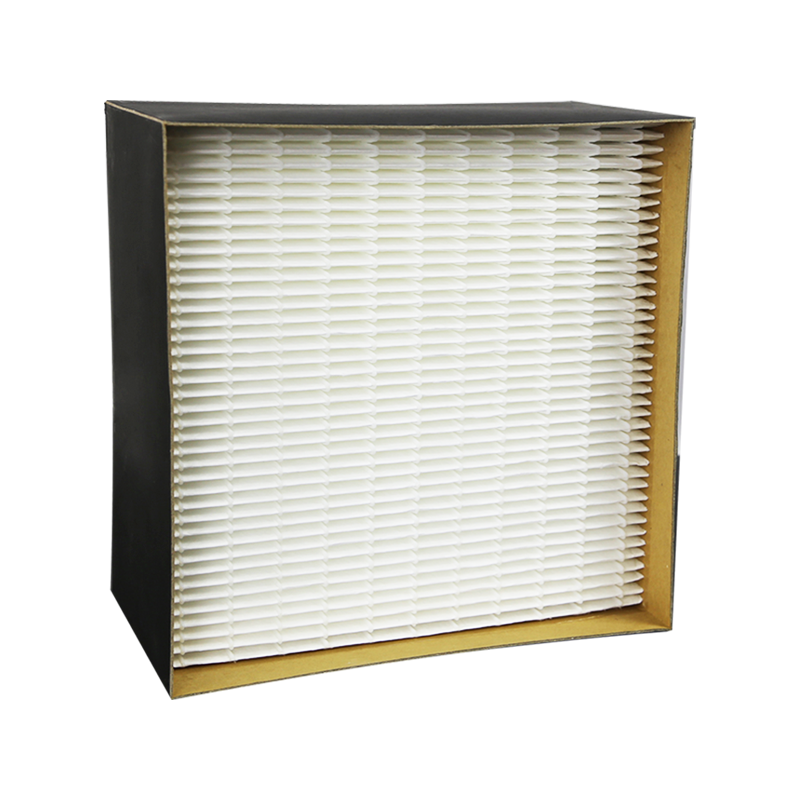
HEPA media is constructed from a dense mat of randomly oriented glass fibers. As air passes through the filter, particles are captured through four distinct physical mechanisms: inertial impaction (large particles unable to follow airflow curves and hitting fibers), interception (mid-size particles following airflow but grazing and sticking to fibers), diffusion (ultrafine particles moving erratically due to Brownian motion and colliding with fibers), and electrostatic attraction in filters with charged media. These combined mechanisms make HEPA filtration extremely effective at removing the solid and liquid particulate fraction of smoke.
Yes — a true HEPA filter removes smoke particles with high efficiency. The fine particulate matter in smoke, including PM2.5 particles (2.5 microns and below) that pose the greatest health risk, falls well within the size range that HEPA filters capture effectively. Studies have consistently shown that HEPA air purifiers can reduce indoor PM2.5 concentrations by 50–85% or more in rooms with significant smoke exposure, depending on the purifier's Clean Air Delivery Rate (CADR), the room size, and the rate of smoke infiltration from outside.
Wildfire smoke, cigarette smoke, and cooking smoke all contain abundant PM2.5 that HEPA filtration addresses directly. When wildfires produce heavy outdoor smoke events — such as those increasingly common across the western United States, Australia, and southern Europe — indoor PM2.5 levels can rise to multiples of outdoor concentrations if no filtration is used. Running a properly sized HEPA air purifier in enclosed rooms during these events has been documented to substantially reduce particle concentrations and associated health risks including respiratory irritation, cardiovascular stress, and reduced lung function.
The critical limitation of HEPA filtration is that it has no meaningful effect on the gaseous components of smoke. VOCs, formaldehyde, benzene, carbon monoxide, and other toxic gas-phase pollutants pass straight through HEPA media without being captured. This matters significantly because the gas-phase fraction of smoke is responsible for much of its odor, and many of the most toxic compounds in cigarette smoke and wildfire smoke — including known carcinogens — exist in the gas phase rather than bound to particles.
This means that a HEPA-only air purifier will noticeably reduce visible haze and measurable PM2.5 concentrations in a smoky room, but it will not eliminate smoke odor and it will not remove the chemical gases that contribute to long-term health risks from chronic smoke exposure. Anyone relying solely on a HEPA filter in a heavily smoke-affected environment — such as a home adjacent to wildfire activity or a room where cigarettes are regularly smoked — will have cleaner air in terms of particles, but not fully clean air in terms of total pollutant load.
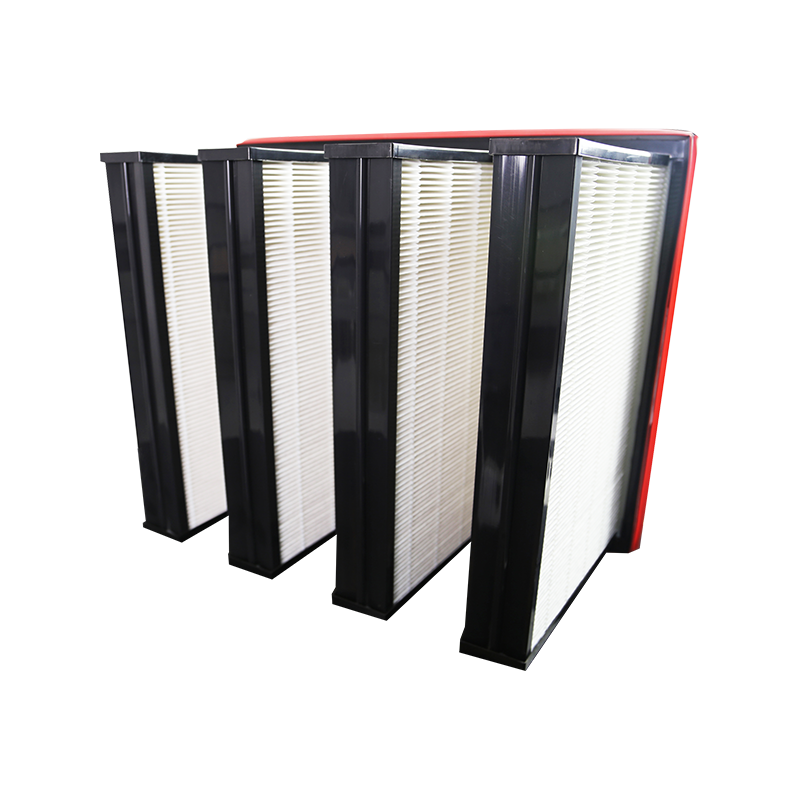
The standard solution to HEPA's gas-phase limitation is pairing it with an activated carbon filter. Activated carbon (also called activated charcoal) is a highly porous material — typically derived from coconut shell, coal, or wood — with an enormous internal surface area, often exceeding 1,000 square meters per gram. This vast surface area adsorbs gas-phase molecules through Van der Waals forces, trapping VOCs, odor compounds, and many chemical pollutants within the carbon's pore structure as air passes through.
Most quality air purifiers designed for smoke removal combine a true HEPA filter with a substantial activated carbon stage. The amount of activated carbon matters significantly: thin carbon-coated pre-filters containing just a few grams of carbon provide minimal gas adsorption capacity and saturate quickly. Effective smoke-rated purifiers typically contain 1–5 lbs (0.5–2.3 kg) or more of granular activated carbon, providing meaningful adsorption capacity that lasts months rather than days under moderate smoke exposure. Some units also incorporate additional gas-phase media such as potassium permanganate (effective against formaldehyde) for broader chemical coverage.
Not all smoke is identical in composition, and HEPA performance varies slightly depending on the smoke source. Understanding these differences helps set realistic expectations for different use scenarios.
| Smoke Type | Primary Particle Size | HEPA Particle Removal | Key Gases Present | Carbon Filter Needed? |
| Wildfire / Wood smoke | 0.1–1.0 μm (PM2.5) | Excellent (99%+) | VOCs, PAHs, CO, formaldehyde | Strongly recommended |
| Cigarette / tobacco smoke | 0.01–1.0 μm | Excellent (99%+) | Nicotine, benzene, ammonia, CO | Essential |
| Cooking smoke / grease | 0.1–10 μm (varied) | Very good | Acrolein, VOCs, aldehydes | Recommended |
| Incense smoke | 0.5–2.5 μm | Very good | VOCs, particulate PAHs | Recommended |
Selecting an air purifier for smoke control involves more than just confirming that the unit contains a HEPA filter. Several additional factors determine whether the unit will actually deliver meaningful air quality improvement in a real-world room.
The Clean Air Delivery Rate (CADR) is the most important sizing metric for an air purifier. CADR measures the volume of filtered air delivered per minute (in cubic feet per minute, CFM) for a specific pollutant — smoke CADR is one of the three standard ratings alongside dust and pollen. To adequately clean a room, the purifier's smoke CADR should be at least two-thirds of the room's square footage (assuming standard 8-foot ceilings). For a 300 sq ft room, look for a smoke CADR of at least 200 CFM. During heavy wildfire smoke events, sizing up further — aiming for 4–5 air changes per hour — provides faster and more consistent particle reduction.
The label "HEPA-type," "HEPA-like," or "99% HEPA" on lower-priced purifiers does not meet the 99.97% at 0.3 micron standard of a true HEPA filter. These filters may capture 85–95% of particles, which sounds high but means significantly more fine particulate matter passes through — a meaningful difference for health protection in smoke-heavy environments. Always verify that the unit carries a true HEPA designation, ideally with test data from an independent laboratory rather than manufacturer claims alone.
As discussed, the mass of activated carbon in the filter stage determines how effectively and how long the unit controls smoke odors and gas-phase pollutants. Check manufacturer specifications for carbon weight, not just carbon layer presence. For continuous or heavy smoke exposure — such as homes in wildfire-prone regions or households with smokers — plan to replace carbon filters more frequently than the manufacturer's standard recommendation, since saturated carbon not only loses effectiveness but can re-release previously adsorbed compounds back into the air.
Even the best HEPA air purifier performs only as well as the conditions in which it operates allow. Several practical measures significantly improve outcomes during smoke events.
For brief, low-intensity smoke exposure — occasional cooking smoke, a single incense stick, or a neighbor briefly burning yard waste — a HEPA-only purifier will typically clear the particulate fraction quickly and the residual gas-phase pollutants will dissipate on their own through ventilation once the source is removed. In these scenarios, the absence of activated carbon is a minor limitation rather than a significant health concern.
However, for any chronic or concentrated smoke exposure — indoor tobacco smoking, regular wildfire season events, homes with wood-burning stoves, or occupational smoke environments — relying on HEPA alone is genuinely inadequate. The accumulated gas-phase pollutants, particularly VOCs and formaldehyde, represent real health risks that particle filtration does not address. In these cases, a combined HEPA and substantial activated carbon system is not optional — it is the minimum appropriate intervention for meaningful indoor air quality protection.
What Do HEPA Filters Actually Capture and How Do They Work?
What Do You Need to Know About Air Filters for Better Air Quality and System Performance?














Copyright 2023 Nantong Henka Environment Solutions Co.,Ltd. All Rights Reserved
 HEPA Air Filters Manufacturers Customized HEPA Air Filters Factory
 Tel: +86-13813766750
 E-mail:
  Add: 5169, Bin'gang Ave, Binjiang Subdistrict, Haimen City, Jiangsu, China