


 English
 русский
 Español
 简体中文
简体中文
From solutions to productions, we’re specialized in making the products you need.
Home / News / Industry News / How Can You Build a Box HEPA Filter That Effectively Cleans Indoor Air of Smoke?
Content
Wildfire smoke, tobacco smoke, and cooking fumes introduce fine particulate matter — particularly PM2.5 particles measuring 2.5 micrometers or smaller — into indoor air at concentrations that commercial air purifiers costing hundreds of dollars are designed to address. A box HEPA filter, sometimes called a Corsi-Rosenthal box after the engineers who popularized the design, achieves comparable particulate removal performance using standard furnace filters and a box fan that together cost a fraction of a commercial unit. The principle is straightforward: multiple HEPA-rated or high-MERV filters are arranged in a cube configuration around a box fan, which draws air inward through all four filter faces simultaneously, dramatically increasing the total filter surface area compared to a single-filter design and reducing airflow resistance so the fan can move more clean air per minute.
The effectiveness of this approach has been validated by independent researchers, public health agencies, and university engineering departments. During wildfire smoke events and the COVID-19 pandemic, box HEPA filter builds became widely recommended by indoor air quality specialists as practical, low-cost interventions that genuinely reduce indoor particle concentrations to levels that significantly lower health risks. Understanding how to build one correctly — including filter selection, fan matching, and sealing technique — determines whether your unit performs at its potential or falls short due to avoidable construction errors.
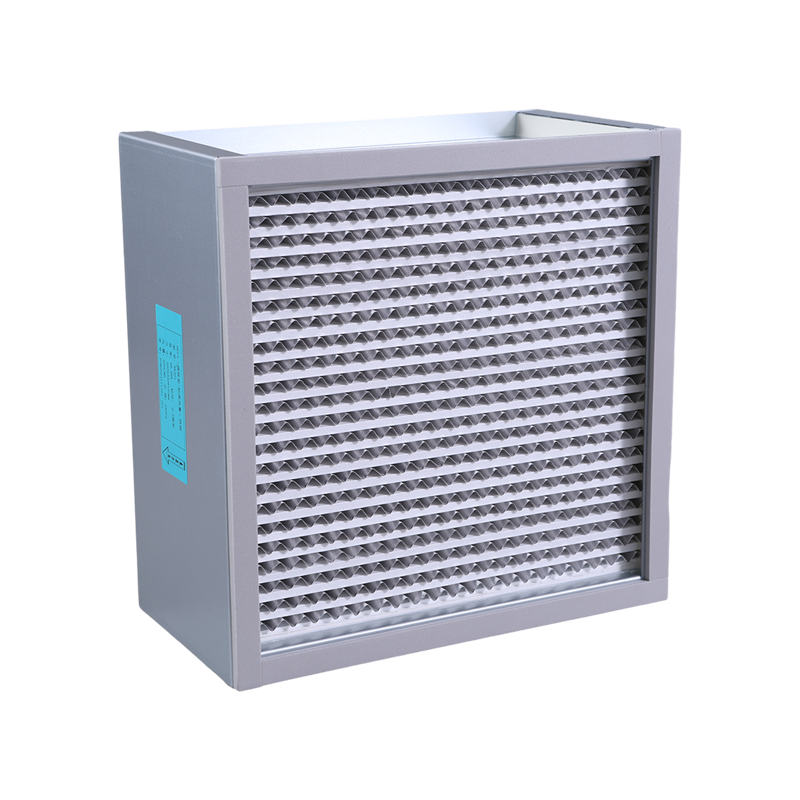
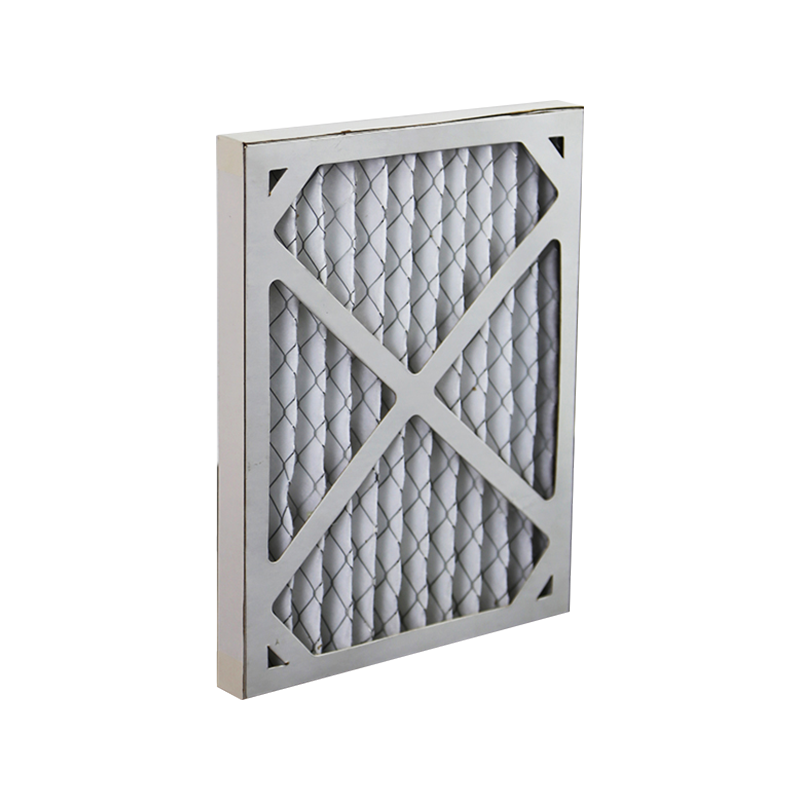
True HEPA filters capture 99.97% of airborne particles at 0.3 micrometers in diameter — the most penetrating particle size for fibrous filtration media. In the context of a DIY box filter, "HEPA-type" or "HEPA-rated" furnace filters are commonly used rather than rigid HEPA cassettes, because standard furnace filters are flat, flexible, and designed to be assembled into box configurations easily. The performance of furnace filters is rated using the MERV (Minimum Efficiency Reporting Value) scale, where higher numbers indicate finer filtration.
For smoke particle removal, MERV 13 filters are the widely recommended minimum standard. MERV 13 filters capture at least 75% of particles in the 0.3–1.0 micrometer range and at least 90% of particles in the 1.0–3.0 micrometer range — the size range that encompasses the bulk of smoke particulate matter. MERV 14 and MERV 16 filters offer progressively better fine particle capture but create greater airflow resistance, which reduces the volume of air the fan can move through the filter assembly. For most smoke situations, MERV 13 represents the optimal balance between filtration efficiency and airflow throughput in a box fan configuration.
The materials required for a standard four-filter box HEPA build are inexpensive, widely available at hardware stores and home improvement centers, and require no specialized tools or skills to assemble. Gathering everything before you start ensures a smooth build process.
Building a box HEPA filter correctly takes approximately 15 to 30 minutes. The most important principle throughout assembly is ensuring that airflow direction through each filter is correct and that every potential bypass gap is sealed completely. Rushing the sealing process is the most common cause of underperforming DIY air filters.
Every furnace filter has a designated airflow direction printed on its cardboard frame, indicated by an arrow. Air must enter through the upstream face — typically the less dense-looking side — and exit through the downstream face toward the fan. In a box configuration, all four side filters must be oriented so that their upstream (dirty air intake) faces point outward away from the center of the box, and their downstream faces point inward toward the fan. Installing even one filter backwards significantly reduces its filtration efficiency and can overload the filter media.
Stand the four filters on their edges and arrange them into a square tube, with the cardboard frames of adjacent filters touching at each corner. The downstream (clean air) faces should all face inward. For 20×20×1 inch filters, the resulting square cross-section measures approximately 20×20 inches on the inside — matching the face of a standard 20-inch box fan. Hold the assembly together temporarily with bungee cords or have a second person assist while you begin taping. Apply wide tape firmly across every seam where adjacent filter frames meet, covering the full height of each corner joint on the outside of the box. Press the tape firmly into any recesses in the cardboard frame to ensure an airtight seal.
The bottom of the filter cube — the end opposite the fan — must be closed to prevent unfiltered air from entering the assembly from below and bypassing the filter media entirely. If you are using a fifth filter for the top position and placing the fan on top, the bottom of the box needs to be sealed with cardboard cut to fit the opening, taped firmly in place on all four edges. Some builders instead orient the box with the fan on the side and the fifth filter closing the face opposite the fan, which works equally well. Whatever orientation you choose, the key is that there must be only one opening in the completed box — the face where the fan attaches.
Position the box fan so that it sits centered over the open top of the filter cube, with the fan blowing air upward and away from the box — drawing air inward through the four filter sides and exhausting clean filtered air out through the fan. The fan grille should face outward (the direction clean air exhausts), not inward toward the filters. Apply tape around the entire perimeter where the fan frame contacts the top edges of the filter frames, sealing this joint completely. If the fan face is slightly smaller than the filter opening, cut a cardboard border to bridge the gap and tape it firmly to both the fan frame and the filter edges before sealing the entire joint.
Before operating the unit, visually inspect every taped joint under good lighting, pressing on all tape edges to confirm adhesion. Turn the fan on high speed and slowly pass your hand around all seams — any airflow felt at a joint indicates a leak that needs additional tape. Pay particular attention to the corners where three filter frames meet, and to the joint between the fan frame and the filter assembly, as these are the locations most prone to bypass leakage. A well-sealed box filter should show no detectable airflow at any seam when operating.
The clean air delivery rate (CADR) of a properly built four-filter MERV 13 box with a 20-inch fan running on high speed typically falls in the range of 400 to 600 CFM for smoke particles, depending on the specific fan and filter brand used. This compares favorably with commercial air purifiers in the $200–$500 price range. The number of air changes per hour (ACH) this provides depends on room volume.
| Room Size (sq ft) | Ceiling Height | Room Volume (cu ft) | ACH at 500 CFM |
| 150 sq ft | 8 ft | 1,200 cu ft | 25 ACH |
| 250 sq ft | 8 ft | 2,000 cu ft | 15 ACH |
| 400 sq ft | 8 ft | 3,200 cu ft | 9.4 ACH |
| 600 sq ft | 8 ft | 4,800 cu ft | 6.25 ACH |
| 900 sq ft | 8 ft | 7,200 cu ft | 4.2 ACH |
Public health guidelines generally recommend a minimum of 4–6 air changes per hour for effective smoke particle reduction in occupied spaces. The table above shows that a single well-built box HEPA filter comfortably achieves this target in rooms up to approximately 900 square feet with 8-foot ceilings, and exceeds it significantly in smaller spaces. For open-plan living areas or larger rooms, building two units and placing them in different locations within the space provides more uniform particle reduction than a single centrally placed unit.
HEPA and MERV 13 filters capture particulate matter extremely effectively but do not adsorb gaseous pollutants — the volatile organic compounds (VOCs), carbon monoxide precursors, and aromatic compounds that give smoke its characteristic odor and contribute to its toxic gas-phase effects. To address smoke odor as well as particles, activated carbon filtration can be incorporated into the box filter build.
The simplest approach is to place one or two layers of activated carbon pre-filter sheets — available in roll form from HVAC suppliers — on the outside face of each MERV 13 filter before assembly. The carbon layer captures gaseous pollutants as air first passes through it, while the MERV 13 filter behind it captures particulates. Some builders use combination MERV 13 plus carbon furnace filters that integrate both media layers in a single filter unit, simplifying construction. For high smoke concentration environments such as rooms adjacent to active wildfires or homes with regular tobacco smoke exposure, dedicated carbon filtration meaningfully improves overall air quality beyond what particle filtration alone achieves.
A box HEPA filter requires minimal maintenance but does need periodic filter replacement to sustain its performance. As smoke particles accumulate on the filter media, airflow resistance gradually increases and the fan moves progressively less air through the assembly — reducing CADR without any visible indication that performance has declined.
Where you place the box HEPA filter within a room significantly affects how quickly and thoroughly it reduces smoke particle concentrations. Optimal placement maximizes air circulation through the filter and minimizes the volume of room air that remains stagnant in dead zones away from the filter's intake pattern.
Can You Really Clean a HEPA Filter Instead of Replacing It?
Are You Getting the Most Out of Your HEPA Filter — Or Just Thinking You Are?















Copyright 2023 Nantong Henka Environment Solutions Co.,Ltd. All Rights Reserved
 HEPA Air Filters Manufacturers Customized HEPA Air Filters Factory
 Tel: +86-13813766750
 E-mail:
  Add: 5169, Bin'gang Ave, Binjiang Subdistrict, Haimen City, Jiangsu, China